

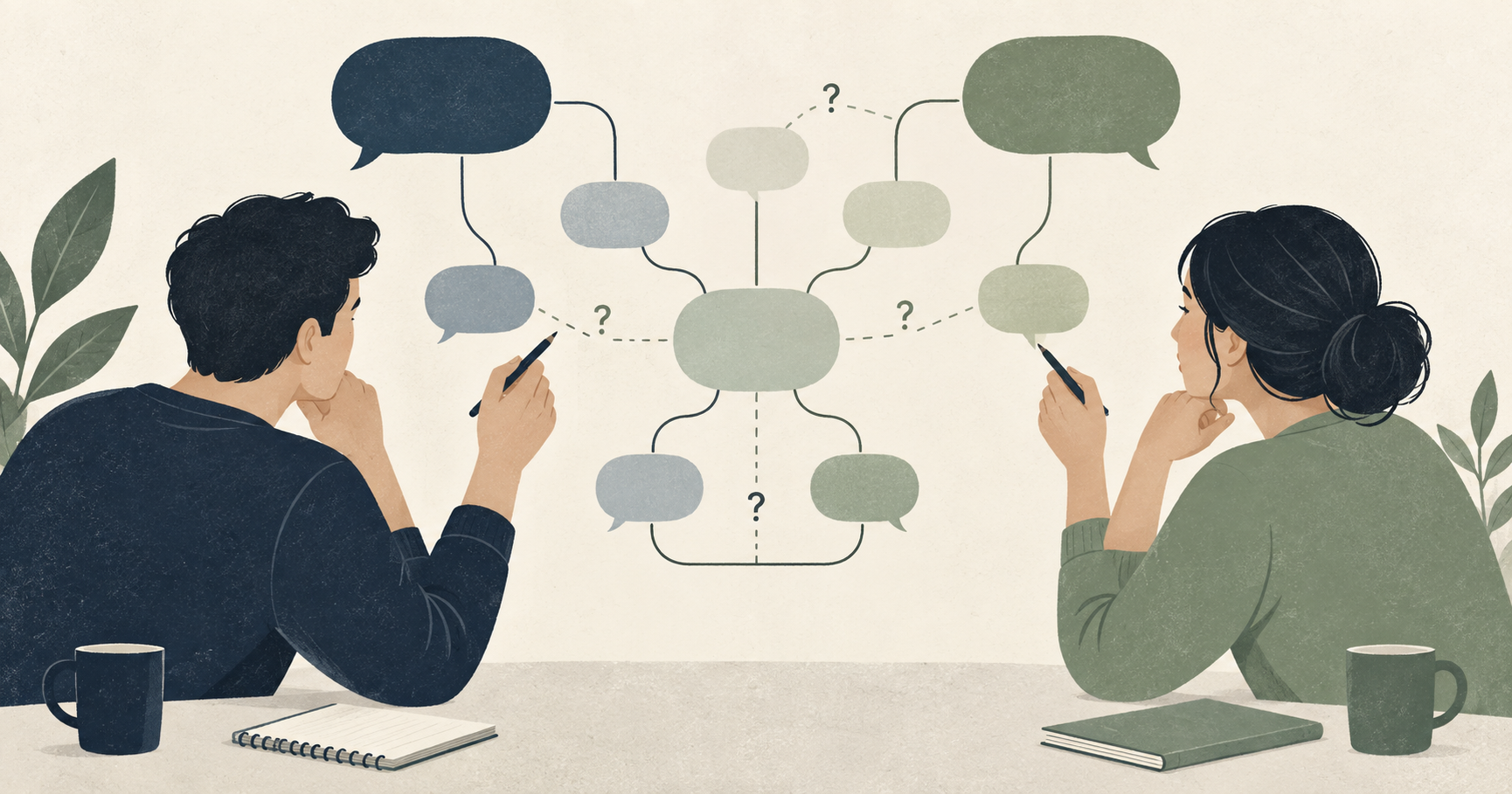

A confident argument can leave you wondering where to start. Challenge the conclusion? Question the example? Ask how the speaker got from one to the other? A logical fallacies checklist offers a practical starting point: slow down and examine the connection between a claim and the reasons offered for it.
The approach is worth considering as a thinking exercise. Keep the ambition modest, though. Use it to examine a disagreement, without expecting a vocabulary lesson to settle it.
What makes this approach useful
The appeal is its manageable scope. You have eight patterns to consider, a few questions to ask, and opportunities to practice in everyday conversations. There is no elaborate setup involved.
Its usefulness also depends on what you bring to the discussion. Knowing a label leaves the underlying topic to investigate. In a conversation about computers, for example, you still need to examine the actual technical claim.
Treat the checklist as a prompt for critical thinking. Apply the same questions to your own position, especially when you already feel certain about the answer.
Eight prompts for checking an argument
The following scenarios are practice exercises. For each one, focus on the question you could ask before deciding whether the argument holds up.
- Ad hominem: does the personal detail matter here? Imagine someone dismissing Steve’s computer ideas because he left college. Ask which specific idea they disagree with and how his education bears on that claim. A useful response might be: “What is the problem with the proposal itself?” Keep attention on the point that needs evaluating, without getting pulled into a separate debate about Steve.
- Straw man: is that the position being proposed? Suppose a preference for digital books gets recast as a desire to close libraries. Before defending anything, clarify the original statement: “Are we discussing reading preferences or whether libraries should exist?” Give the other person room to restate their view, too. The next exchange should address a position both participants recognize.
- Slippery slope: what connects each predicted step? Consider a discussion in which two days of remote work supposedly leads to permanent remote work and eventually the end of collaboration. Ask what supports each transition. “Why would this policy necessarily produce that outcome?” keeps the prediction open to examination. Assess the proposed arrangement and its possible consequences separately, rather than accepting the entire sequence at once.
- Bandwagon: what supports the recommendation beyond agreement? When a recommendation rests on how many people endorse it, ask what those people are responding to. What reasons could you examine yourself? If the discussion concerns a preference, establish whose preferences matter. Try: “What do they like about it, and does that match what we are trying to decide?”
- Appeal to authority: what is the endorsement meant to establish? Before accepting an expert’s recommendation, ask what question their experience helps answer. A claim that something is “best” also needs a criterion. Best for what purpose? A useful follow-up is: “What supports that recommendation?” Keep the endorsement attached to a specific claim that the discussion can examine.
- False dichotomy: are the choices complete? Imagine being asked to choose between being a cat person and a dog person. Before picking a side, consider whether the question allows your actual preference. You might ask: “Can I choose both, or neither?” Use that same habit when a discussion presents two options: check whether the available choices have been established.
- Red herring: does this answer the question? Suppose you ask about a smartphone’s camera and receive an answer about its weight. Acknowledge the additional consideration, then return to the unresolved question: “How does the camera perform?” Weight might deserve its own discussion during a purchase decision. Give each concern space without treating an answer about one as an answer about the other.
- False cause: what would establish the connection? Imagine someone claiming that ice cream sales cause shark attacks because both rise during summer. Ask whether another factor could explain the apparent pattern and what evidence would distinguish those explanations. The task is to examine the proposed causal link. Observing two things together, by itself, does not establish that one caused the other.
Putting the checklist into practice
Start with the conversation in front of you. There is little value in remembering every label if you have misunderstood the claim you are answering.
- Pause before responding. Take a breath and decide which point needs attention. Aim for a response you would still stand behind after the disagreement cools.
- Listen and clarify. Restate the other person’s position and ask whether you have understood it. Resolve any mismatch before preparing your rebuttal.
- Prepare on the topic. Examine the relevant facts and consider how someone could reasonably challenge your position. Identify assumptions that need support.
- Make your reasoning visible. Lead with your strongest point, explain what supports it, and show how it connects to your conclusion. Leave room for questions.
For practice, watch a debate and pause at a claim that seems questionable. Write down the claim, the reason offered, and the follow-up question you would ask. Try the exercise on a speaker you agree with as well.
Verdict: useful for practice, dependent on preparation
This checklist is a reasonable fit for readers who want a repeatable way to examine disagreements. Its strongest feature is the invitation to ask a more precise question. Its limitation is the work that follows: you still have to investigate the subject, listen carefully, and assess the answer.
Readers interested in exploring legal argument further can consider The Tools of Argument by Joel P. Trachtman as optional further reading.
The Tools of Argument
Consider Joel P. Trachtman’s The Tools of Argument for further reading on legal argument. As you read, practice identifying a claim, its supporting reasons, and a follow-up question.
As an Amazon Associate I earn from qualifying purchases.
Start by taking one question from the checklist into your next discussion. Apply it to your own reasoning, then use it to clarify the point you disagree about.