

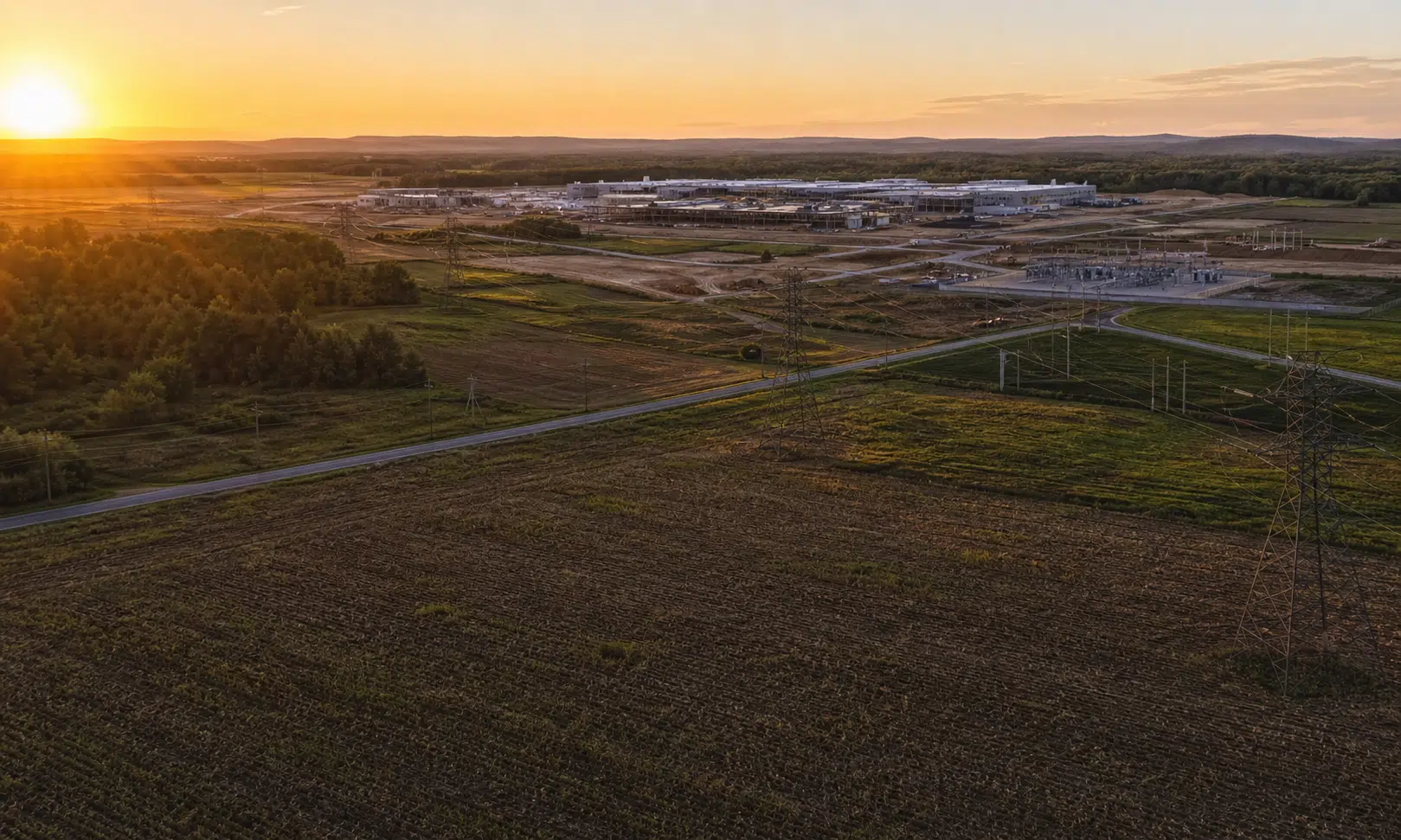

AI data center developers are paying closer attention to rural and unincorporated county land as they try to move large projects through approval processes faster. The attraction is straightforward: outside city limits, a project may avoid some municipal approval steps, including city council hearings, town rezoning votes, or urban land-use reviews, depending on the local rules.
That does not mean these sites are free of oversight. County commissions, planning boards, water authorities, utilities, state agencies, and other local bodies can still play a major role. But for developers trying to build power-hungry AI infrastructure on tight timelines, removing even one layer of political review can matter.
The shift also reflects a larger problem for the data center industry. In many communities, residents have become more skeptical of large data center proposals because of concerns over electricity use, water demand, noise, utility costs, and air quality. Some local governments have responded with moratoriums, tighter rules, or outright resistance to new projects.
Why Rural Sites Look Attractive
Rural county land can offer larger parcels, fewer nearby residents, and less direct municipal involvement. For AI data center developers, that combination can make a site look easier to assemble and easier to push through early planning stages.
The reported trend, highlighted by industry observers, is that some developers are looking beyond cities and towns for the path of least resistance. That framing should be treated carefully: each project still depends on local law, utility access, political support, and public response. Still, the pattern is plausible because a rural site can shift the approval fight from city hall to county government.
For hyperscalers and data center investors, speed is not a minor detail. AI infrastructure requires massive amounts of electrical capacity, specialized equipment, transmission access, cooling plans, and construction labor. Delays can stretch across years when a project needs new grid connections or major utility upgrades.
That helps explain why developers may accept higher upfront infrastructure costs in exchange for a faster route to approval. A remote site may require more spending on roads, substations, transmission lines, water access, or on-site power. But if the alternative is a stalled city approval process or a local ban, the extra infrastructure work may look like a business tradeoff rather than a dealbreaker.

Professional Clamp Meter for Electrical Load Checks
For professionals evaluating supporting electrical systems, a clamp meter can help measure current and troubleshoot equipment loads. It is not a substitute for utility-scale engineering studies, but it fits the practical power-planning context.
As an Amazon Associate I earn from qualifying purchases.
The Costs Do Not Disappear
Moving a data center farther from population centers may reduce the number of immediate neighbors affected by noise, traffic, and construction. Larger land parcels can also make it easier to create buffers around equipment yards, backup generators, cooling systems, and power infrastructure.
But rural development does not erase the impact. It often moves the debate to a different group of stakeholders. Farmers, county residents, utility customers, water districts, and local officials may still have concerns about how a major AI campus would affect land values, agricultural use, electric bills, groundwater, tax revenue, and air emissions.
Some recent high-profile projects have been cited as examples of this broader rural push, including large proposed or approved data center developments in places such as Box Elder County, Utah, and rural northern Louisiana. Those project details should be handled with care unless independently verified, but they fit the larger discussion around AI data centers seeking land, power, and faster approvals outside dense urban areas.
The economics can also be stark for landowners. Reports have described unusually large offers for farmland in areas being considered for data center development, including one Kentucky farming family said to have received a multimillion-dollar offer for hundreds of acres. Those cases show how AI infrastructure demand can collide with agricultural identity, family land decisions, and local expectations about what rural property is for.
County-Level Fights Are Likely to Grow
The political battle around AI data centers is not going away simply because developers look outside cities. It is more likely to move to county meetings, planning hearings, utility proceedings, and state-level infrastructure debates.
That matters for buyers, investors, landowners, and local officials watching the sector. A rural location can reduce some approval friction, but it can also create new questions:
- Can the local grid support the load without raising costs for nearby customers?
- Will the project rely on new transmission, on-site generation, or natural gas turbines?
- How much water will the site need, and who controls that supply?
- What happens to nearby roads, farmland, tax revenue, and emergency services?
- How much public review will county residents actually get before approval?
Those questions are becoming more important as public opinion hardens in some places. The source article cited polling that found significant opposition to data centers being built near respondents’ neighborhoods. Even where that figure varies by survey, the direction is clear enough: local acceptance can no longer be assumed.

Data Center Planning and Operations Handbook
Readers who want deeper context on data center design, site selection, energy use, UPS systems, cooling, and operations may benefit from a technical handbook. It is best suited to professionals, officials, or investors who need more than a general overview.
As an Amazon Associate I earn from qualifying purchases.
For developers, rural land may still offer the quickest viable route for some AI campuses. For counties, it can bring tax revenue, construction jobs, and infrastructure investment, but also long-term obligations and public scrutiny. For residents, the central issue is whether local approval processes are strong enough to weigh economic benefits against power, water, land-use, and quality-of-life concerns.
The practical takeaway is that AI data center siting is becoming less of a purely technical real estate problem and more of a county-level political and infrastructure test. Developers may be looking beyond city limits, but the hard questions follow them there.