

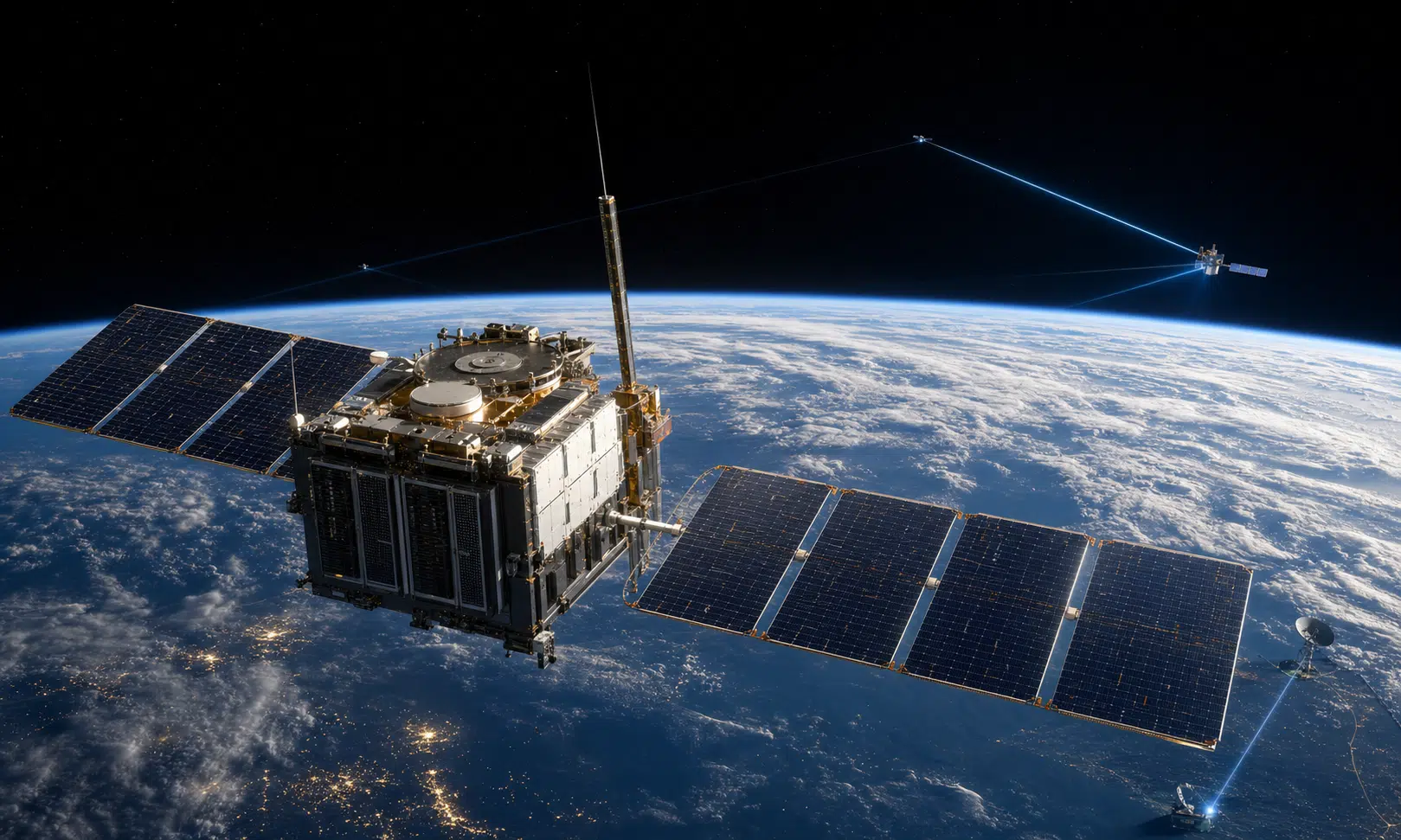

Beijing has approved a new Space Computing Industry Innovation Center, a coordinated effort meant to pull together companies and institutions across rockets, satellites, semiconductors, and AI. The goal is not simply to launch more satellites. It is to build the industrial base for space AI computing: chips that can survive orbit, payloads that can move data quickly, satellite platforms that can host compute, and networks that connect orbital systems with infrastructure on the ground.
The center is expected to formally launch later this month. Its stated mission is to connect the industrial chain around space computing and support the satellite Internet of Things sector, a phrase that points to a broader ambition than conventional cloud infrastructure. Instead of treating satellites as communications relays, Beijing is framing orbit as a place where computing itself can happen.
That puts China into a fast-forming race around orbital compute, where the promise is obvious and the practical problems are still severe. AI data centers on Earth are running into power, land, cooling, permitting, and grid-connection constraints. Space offers abundant solar exposure and removes some terrestrial siting problems, but it brings different limits: radiation, heat rejection, launch cost, maintenance, data transfer, and reliability.
A coordinated bet on computing in orbit
The center’s research agenda is broad, but the pieces fit together around one idea: orbital infrastructure needs to be designed as a system rather than as a collection of disconnected hardware projects.
Its six focus areas include highly reliable, heat-resistant computing chips built for space; high-performance interconnected space computing payloads; satellite platforms and related standards; large AI models that can operate under tight power limits; integrated measurement and control networks spanning space and ground systems; and service models for selling or allocating space-based computing capacity.
Those priorities show why orbital AI is not just a launch problem. A satellite that runs meaningful AI workloads needs processors that can tolerate temperature swings and radiation, power systems that can support sustained compute, thermal hardware that can shed heat without air or water cooling, and communications links that can move useful data without erasing the benefit of putting compute in orbit in the first place.
The emphasis on chips is especially important. Ground data centers can swap servers, add liquid cooling, and expand electrical infrastructure. Space systems have to be engineered before launch for a much harsher operating environment. If a processor throttles, fails, or cannot be cooled, the entire business case weakens.
Why China’s approach matters
The notable part of Beijing’s move is the organizing structure. Rather than leaving the work entirely to one company, the center is meant to coordinate multiple parts of the technology stack. That could help align satellite makers, launch providers, chip designers, AI developers, and network operators around shared technical standards.
It also fits China’s broader pattern of using state-backed coordination to accelerate strategic technologies. Space-based computing is still speculative, and no firm deployment timeline has been publicly confirmed. But creating a dedicated center signals that Beijing sees orbital compute as more than a lab concept or a branding exercise.
The timing also lands amid rising interest from private space and AI companies in moving some computing beyond the ground. Elon Musk has discussed the idea of AI workloads in orbit, and SpaceX’s satellite manufacturing scale gives it a natural role in any future version of that market. But the Chinese initiative is different in structure: it is being framed as an industrial-chain project, not just a single-company product roadmap.
That distinction could matter if space AI computing moves from concept to infrastructure. The hardest problems will require more than satellites. They will require chip packaging, radiation tolerance, inter-satellite networking, ground stations, software orchestration, and commercial models that make sense despite launch and maintenance costs.
For now, the center should be read as an early strategic move rather than proof that orbital AI data centers are ready for commercial deployment. The technical barriers remain high, and the economics are still uncertain. But Beijing is putting formal weight behind the idea that future AI infrastructure may not be limited to terrestrial data centers. If that bet proves viable, the competition will be about who can assemble the full stack first: compute, satellites, networks, power, cooling, and customers.