


Anthropic is making a more direct push into Wall Street with a new set of AI agents built for financial-services work, including pitchbook drafting, financial-model support, market research, valuation review and compliance-related tasks.
The company introduced 10 finance-focused agent templates this week, positioning them as tools for some of the repetitive work that fills the days of bankers, analysts, investors, finance teams and operations staff. The launch moves Anthropic beyond selling general-purpose AI access into a more specific pitch: Claude can be configured for the workflows banks and investment firms already run every day.
That distinction matters. Wall Street has been experimenting with AI assistants for research summaries, email drafting, coding and document preparation for years. The new Anthropic offering is aimed at narrower jobs that have defined inputs, familiar outputs and high labor costs. In finance, those jobs often include gathering data from filings, building first-pass materials, checking assumptions and preparing client-facing work that still needs review by experienced employees.
The rollout also lands in a market that is already crowded. Large banks have built internal AI tools. Specialist startups are selling finance-native platforms. Data providers and workflow software companies are racing to embed AI into the places analysts already work. Anthropic is entering that race with the advantage of a major foundation model company, but buyers will still care about integration, controls, auditability and whether the output is reliable enough for regulated work.
What Anthropic Is Offering Finance Teams
Anthropic’s new finance agents are intended to handle repeatable tasks that often require pulling together information from filings, spreadsheets, analyst notes, market data and internal documents. They are not being pitched as a replacement for judgment. The value proposition is speed: produce a first draft, assemble comparable information, review a model or prepare a meeting brief faster than a human team could do from scratch.
The announced finance agents cover both front-office and back-office work. They include templates for pitch building, meeting preparation, earnings review, financial model building, market research, valuation review, general ledger reconciliation, month-end close, financial statement auditing and know-your-customer screening.
- Pitch builder: drafts early versions of client or deal materials.
- Meeting preparer: assembles briefings and talking points before client discussions.
- Earnings reviewer: helps summarize and compare company earnings materials.
- Financial model builder: supports model creation from filings, notes and other source material.
- Market researcher: gathers and organizes sector, company and market information.
- Valuation reviewer: checks valuation methods and assumptions.
- General ledger reconciler: helps compare accounting records and flag differences.
- Month-end closer: supports routine closing workflows for finance departments.
- Financial statement auditor: reviews statements and supporting material for inconsistencies.
- KYC screener: assists with customer due diligence and related checks.
Those are attractive targets because they are expensive, frequent and document-heavy. They are also risky enough that most financial institutions will want human review, especially where the work feeds into client materials, investment decisions, regulatory obligations or financial reporting.
Anthropic has described the agents as configurable building blocks rather than one-size-fits-all bots. That framing is important for banks, asset managers and insurers, where the same task can look very different depending on the business line, jurisdiction, data source and approval process.
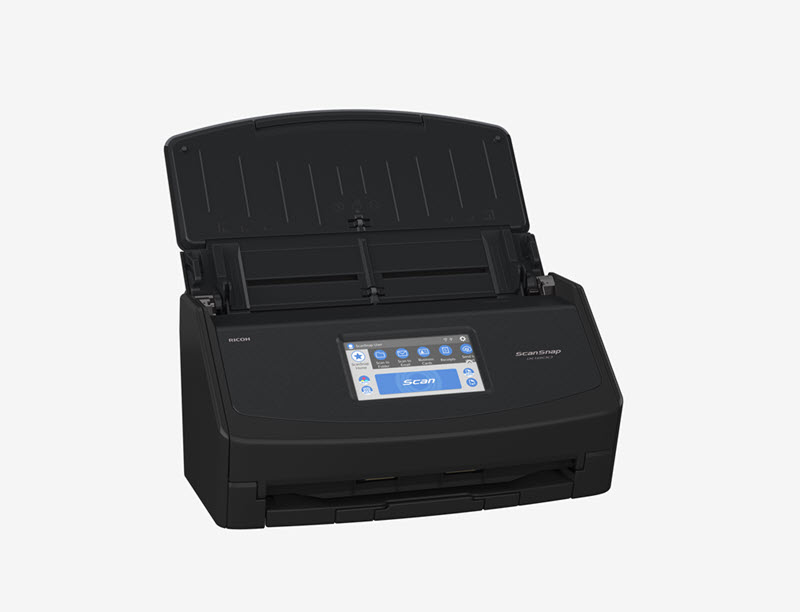
Ricoh ScanSnap iX1600 Document Scanner
A duplex document scanner can help turn paper filings, receipts, statements and deal materials into searchable files before they move into research, audit or review workflows. It is most relevant for small finance teams or home-office analysts still handling paper records.
As an Amazon Associate I earn from qualifying purchases.
Why Wall Street Is a Natural Market for AI Agents
Finance is full of work that looks tailor-made for AI: long documents, structured data, recurring memos, spreadsheet-heavy analysis and constant pressure to move quickly. A junior banker may spend hours turning company filings and market data into a pitch deck. An equity analyst may need to compare earnings releases across a peer group. A finance team may repeat similar reconciliation and close procedures every month.
AI agents promise to reduce the manual assembly work around those tasks. Instead of asking a user to write a single prompt and wait for a general answer, an agent can be designed around a workflow: collect data, call tools, apply instructions, produce a draft and check certain parts of the work before handing it back.
That is the appeal for financial institutions. The best use cases are not abstract. They are practical jobs with measurable time savings:
- Preparing a first draft of a pitchbook before a banker edits it.
- Summarizing a company’s latest filings and earnings commentary.
- Comparing valuation multiples across a selected peer set.
- Drafting a credit memo from approved source material.
- Reviewing financial statements for missing or inconsistent information.
- Screening customer information as part of compliance workflows.
Banks have already been moving in this direction. Major Wall Street firms have rolled out internal AI assistants that can help employees summarize research, draft documents, prepare communications and write code. Those capabilities are widely discussed across the industry, though the exact performance and adoption levels vary by firm and are not always independently visible.
The main question is whether finance-specific agents can become trusted parts of production workflows, not just impressive demos. In banking, a tool that saves time but creates review burdens may not be worth much. A tool that saves time, works inside existing systems and leaves a clear trail for review is more likely to survive procurement, compliance and risk checks.
A Crowded Race for Finance AI
Anthropic is not walking into an empty market. Startups such as Rogo and Hebbia have already built businesses around AI tools for finance, law and investment research. Their pitch is that finance teams need more than access to a powerful model. They need domain-specific workflows, curated data connections and software that understands the way bankers, investors and analysts actually work.
Rogo, founded by former investment bankers, has promoted tools for pitch decks, research, meeting preparation and model building. Its argument is that being model-agnostic can be an advantage because the platform can route different tasks to different models while layering finance-specific expertise on top.
Hebbia has focused on letting users query large document sets and structured files, including spreadsheets and filings, to create comparisons, summaries and drafts. That type of product competes for the same budget category: tools that reduce the hours spent reading, extracting, comparing and drafting.
Anthropic’s advantage is different. It owns the foundation model and can package Claude with agent templates, connectors and broader enterprise relationships. That can make it attractive to institutions that want a major AI provider involved directly in the workflow. But finance buyers rarely choose technology on model quality alone. They also ask whether the product fits their data stack, permissioning rules, recordkeeping needs and internal risk framework.
Consultants and technology leaders in the sector have been pointing toward that same pattern: the model provider matters, but differentiation may shift to workflow design, domain data, controls and integration. In other words, the winning tool may not be the one that writes the flashiest answer. It may be the one that can sit inside the bank’s existing systems without creating new governance headaches.

Yubico YubiKey 5C NFC Security Key
A hardware security key can support phishing-resistant multi-factor authentication for accounts that touch sensitive financial data. It belongs near the governance discussion because AI workflows are only as safe as the access controls around them.
As an Amazon Associate I earn from qualifying purchases.
The Job Question Is Still Unsettled
The finance industry’s AI push is happening alongside anxiety about headcount. The tasks Anthropic is targeting are often associated with junior employees, operations teams and support roles. If software can draft a pitch deck, build a first-pass model or summarize a stack of filings, firms may need fewer people doing the initial version of that work.
So far, the largest banks have not announced broad layoffs explicitly tied to these kinds of AI tools. Some executives have said they expect hiring patterns to change, and some have talked about redeploying workers as automation improves. JPMorgan CEO Jamie Dimon has publicly discussed redeployment plans for employees affected by AI, though specific outcomes remain uncertain and should not be treated as settled across the industry.
The near-term impact may be uneven. At many firms, AI is more likely to change the shape of entry-level work before it eliminates it entirely. Junior employees may spend less time formatting slides and more time checking outputs, refining assumptions and preparing materials for senior review. That could make some jobs more efficient, but it could also reduce the traditional training ground where analysts learn by doing repetitive work themselves.
There is also a quality-control issue. Financial work can be unforgiving. A wrong number in a model, an unsupported claim in a client deck or a weak compliance screen can create real risk. That means the human role does not disappear simply because an AI agent can produce a draft. Someone still has to know what good work looks like.
What Buyers Should Watch
For banks, investment firms and finance departments, the most important test is not whether an AI agent can complete a polished demo. It is whether the system can perform consistently on messy internal workflows, with the right data permissions and enough transparency for review.
A buyer evaluating tools like Anthropic’s finance agents should look closely at several practical questions:
- Can the agent connect to the firm’s approved data sources without exposing sensitive information?
- Does it show which sources it used and where important numbers came from?
- Can employees review, edit and approve outputs before they move downstream?
- Does the tool fit existing recordkeeping, compliance and audit requirements?
- Can the institution customize workflows by team, region or business line?
- How does the vendor handle errors, hallucinations and disputed outputs?
Those questions are especially important because finance has little tolerance for vague accountability. A model-generated paragraph in a memo is still part of a business record. A model-supported valuation still needs defensible assumptions. A model-assisted KYC process still has regulatory consequences.
Anthropic has also said finance is an important enterprise category for the company and has presented figures suggesting a significant share of its largest customers are in the sector. Those figures have not been independently verified, but the broader direction is clear enough: AI companies see financial services as one of the most lucrative enterprise markets.
The Bottom Line
Anthropic’s finance-agent launch is another sign that AI competition is moving from general chatbots into job-specific enterprise workflows. Wall Street is a logical place for that shift because the work is document-heavy, expensive and repetitive, but also valuable enough to justify premium software.
The strongest version of the pitch is practical: let AI handle first drafts, data gathering, comparisons and routine checks, while humans keep control over judgment, client advice and final approval. The weakest version is the assumption that agents can be dropped into financial workflows without careful oversight.
For now, Anthropic’s move raises the pressure on banks, startups and rival AI firms. The next phase will depend less on whether the agents sound impressive and more on whether they can survive the daily realities of regulated finance: messy data, strict controls, skeptical users and work where small mistakes can become expensive.

3M 14-Inch Laptop Privacy Filter
A laptop privacy filter is a simple safeguard for analysts and finance staff who review sensitive documents outside a controlled office setting. It is a practical complement to the article’s broader point about protecting financial data.
As an Amazon Associate I earn from qualifying purchases.