


Anthropic’s new compute agreement with SpaceX is not just another AI infrastructure headline. It is a practical response to a visible capacity problem for Claude users, and it may also show how quickly first-generation AI supercomputers can move from strategic trophy assets to rentable infrastructure.
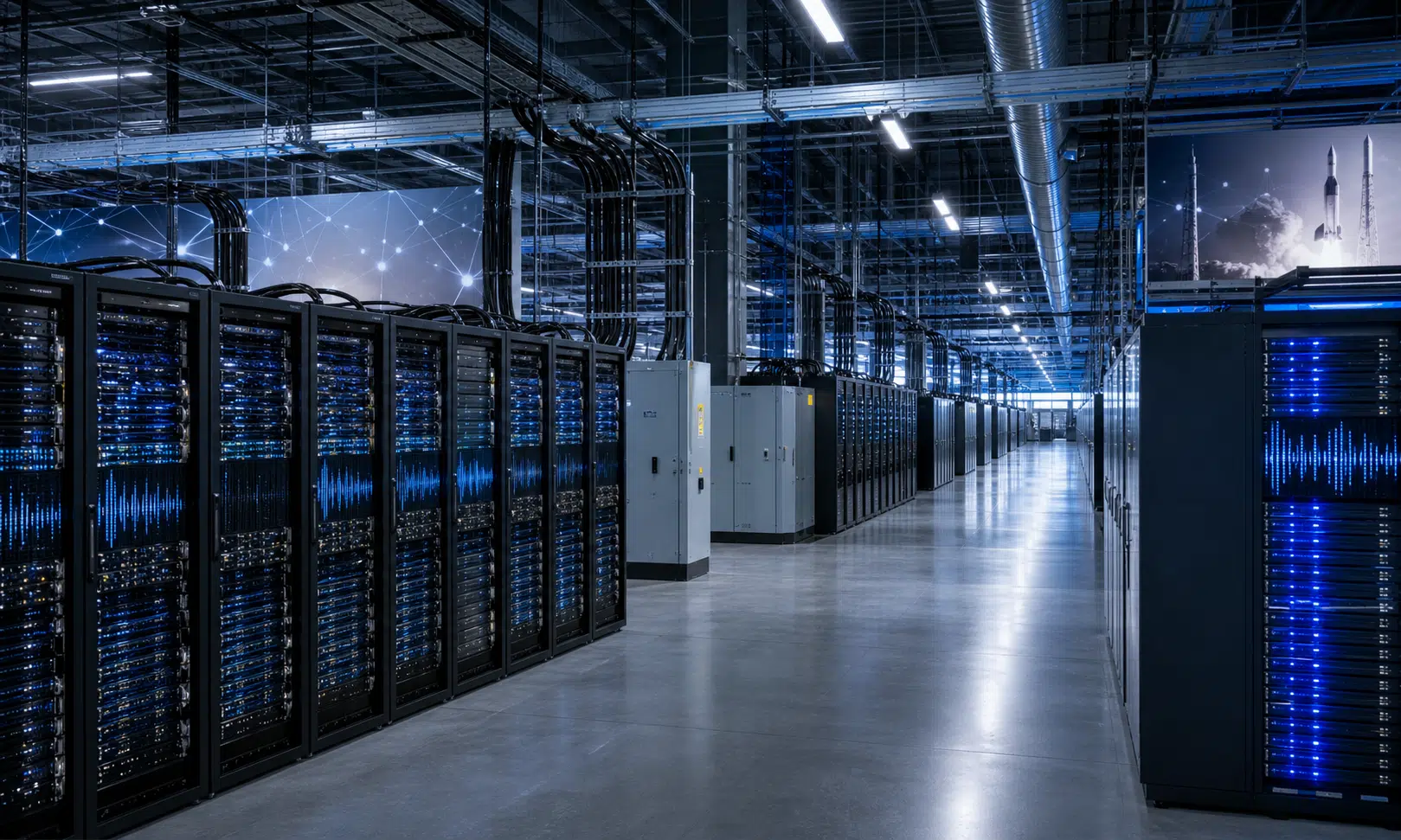
Anthropic says it has signed an agreement to use all of the compute capacity at SpaceX’s Colossus 1 data center. The company describes the capacity as more than 300 megawatts and over 220,000 Nvidia GPUs, with availability expected within the month. The near-term customer impact is straightforward: higher Claude Code limits, less peak-hour pressure for some paid users, and larger API limits for Claude Opus models.
The more interesting question is why a Musk-controlled infrastructure asset associated with xAI’s frontier ambitions is now being used by one of xAI’s most visible competitors. Some of the answer appears simple: Anthropic needs inference capacity immediately. The rest is more speculative. Analysts have pointed to Colossus 1’s mixed GPU architecture as a possible reason the cluster may be more useful as leased inference capacity than as a long-term training platform for xAI.
What Anthropic Says It Is Getting From Colossus 1
Anthropic framed the SpaceX deal as part of a broader push to increase Claude capacity. The company said the agreement gives it access to all compute capacity at Colossus 1, adding more than 300 megawatts of new capacity and over 220,000 Nvidia GPUs.
The company also tied the agreement directly to customer-facing changes. Claude Code’s five-hour rate limits are being doubled for Pro, Max, Team, and seat-based Enterprise plans. Peak-hour limit reductions are being removed for Claude Code on Pro and Max accounts. API rate limits for Claude Opus models are also being raised.
| Area | Announced change | Who it affects |
|---|---|---|
| Claude Code | Five-hour rate limits doubled | Pro, Max, Team, and seat-based Enterprise users |
| Claude Code peak hours | Peak-hour limit reduction removed | Pro and Max users |
| Claude Opus API | API rate limits raised | Developers and businesses using Opus models |
| Infrastructure | Access to Colossus 1 capacity | Anthropic’s Claude service and platform customers |
For buyers and technical teams, that matters more than the drama around the deal. If Claude Code has been central to a development workflow, usage limits have been a real planning constraint. More capacity does not automatically mean unlimited use, but it does make Claude’s paid tiers easier to evaluate for teams that were previously blocked by throttling or short work sessions.

Elgato Stream Deck MK.2
A programmable macro pad can help developers keep recurring terminal commands, meeting controls, build scripts, and research shortcuts within reach during long AI-assisted coding sessions. It is most useful for people who already have repeatable workflows they want to trigger without context switching.
As an Amazon Associate I earn from qualifying purchases.
The timing also fits a broader industry pattern. Training a model is expensive, but serving that model at scale can become a constant capacity requirement as usage grows. That does not prove every reported bottleneck around Claude, but it explains why Anthropic would value ready-made compute instead of waiting only for new data centers and long-term hyperscaler projects.
Why Colossus 1 May Be Better For Inference Than Training
The central technical claim around Colossus 1 is that it may not be an ideal training cluster because it reportedly combines different Nvidia GPU generations. The reported mix includes H100, H200, and GB200-class hardware, although the exact configuration and operational details have not been fully disclosed publicly by SpaceX or xAI.
That matters because large-scale AI training usually rewards uniformity. In distributed training, many GPUs work together on synchronized steps. If some chips finish their part faster than others, they may spend time waiting for slower hardware to catch up. In a very large cluster, that waiting time can become a serious efficiency problem.
Analysts have described this as a possible issue for Colossus 1. Some third-party estimates have suggested low real-world utilization compared with what a more uniform training system might achieve, but those figures should be treated as analyst estimates rather than confirmed operating data.
Inference is different. Running user queries through an already-trained model does not require the same kind of tightly synchronized full-cluster behavior. That makes a mixed-GPU environment less damaging, especially if workloads can be scheduled across hardware types according to model size, latency targets, and customer priority.
In practical terms, the same hardware can look inefficient for one job and valuable for another. A heterogeneous cluster may be frustrating if the goal is to train frontier models as fast as possible across the entire system. It can still be useful if the job is to serve large volumes of Claude traffic, API calls, and coding sessions.
The Colossus 2 Angle
The SpaceX-Anthropic deal also points toward xAI’s next phase. Multiple reports have described Colossus 2 as a larger, newer system focused on Nvidia Blackwell hardware. If that system is indeed more uniform, it would be a more natural fit for frontier model training than a first-generation cluster assembled rapidly from several GPU generations.
That does not mean Colossus 1 was a failure. It means the economics of AI infrastructure are changing quickly. GPUs are expensive to buy, costly to power, and not useful when they sit underused. If xAI has moved its most important training work to a newer environment, leasing older or less suitable capacity could be a rational way to turn depreciation into revenue.
For Musk’s companies, that could also support a broader infrastructure story. SpaceX and xAI have already been presented as tightly connected parts of the same ecosystem. A large compute lease to Anthropic suggests another possibility: AI infrastructure itself may become a commercial product, not just an internal advantage.
That point is especially relevant if SpaceX moves toward a public offering, though the timing and structure of any IPO remain outside the facts confirmed by the companies in this announcement. A large external compute customer would be useful evidence that the infrastructure has market value beyond Musk’s own AI products.
What This Means For Claude Customers
For Claude users, the deal is less abstract. Anthropic is using the extra compute to ease limits in areas where paid customers often feel capacity constraints most directly: Claude Code sessions, Opus API usage, and peak-hour access.
That makes the agreement relevant to several types of buyers:
- Developers using Claude Code for long work sessions who need fewer interruptions.
- Small teams deciding whether Claude Pro or Max is enough for daily coding and research work.
- Businesses building on Claude Opus through the API and planning around rate limits.
- Enterprise customers comparing Claude against other AI platforms where capacity and reliability are part of the buying decision.
The deal does not remove the need to test actual limits against real workflows. Teams should still measure how many requests, coding sessions, and long-context tasks they can run under their plan. But it does improve Anthropic’s position in one of the most practical AI buying questions: can the service stay available when people actually need it?

CalDigit TS4 Thunderbolt 4 Dock
A Thunderbolt dock can simplify a developer workstation by connecting external displays, wired networking, storage, and peripherals through one laptop connection. That matters most for engineers using AI coding tools alongside browsers, terminals, IDEs, and monitoring dashboards throughout the day.
As an Amazon Associate I earn from qualifying purchases.
For developers and technical managers, the right takeaway is not that Colossus 1 suddenly makes Claude unlimited. It is that Anthropic has found a large near-term capacity source at a time when demand for AI coding tools and model APIs is rising quickly. That may make Claude easier to justify for teams that liked the model quality but were wary of usage ceilings.
The Bigger Infrastructure Bet
Anthropic also said it has expressed interest in working with SpaceX on orbital AI compute capacity. That idea is early and should not be treated as a near-term product plan. Still, it reflects a real pressure point: large AI systems are increasingly constrained by power, land, cooling, networking, and chip supply.
Anthropic has also announced other major compute arrangements, including large capacity plans with Amazon, Google and Broadcom, Microsoft and Nvidia, and Fluidstack. Those projects point to the same conclusion: AI companies are no longer competing only on model design. They are competing on access to electricity, GPUs, data center construction, and the ability to bring capacity online before customers hit service limits.
For SpaceX and xAI, Colossus 1 may now serve a different purpose than originally expected. Rather than standing only as a symbol of xAI’s training ambitions, it becomes a commercial asset that can be leased to another major AI company. If the reported Colossus 2 strategy is accurate, that gives Musk’s AI operation a cleaner split: newer, more uniform infrastructure for training, and first-generation capacity monetized where it still performs well.
Bottom Line
The cleanest reading of the deal is practical. Anthropic needed more compute for Claude, especially for paid users and API customers. SpaceX had a huge AI data center that could be put to work. A cluster that may be awkward for synchronized frontier training can still be valuable for inference-heavy workloads.
The more speculative reading is that Colossus 1 marks the beginning of a broader AI infrastructure business around Musk’s companies. That may prove true, but the confirmed customer impact is already clear: Claude users are getting higher limits, and Anthropic has secured a large block of capacity without waiting years for new facilities to come online.