

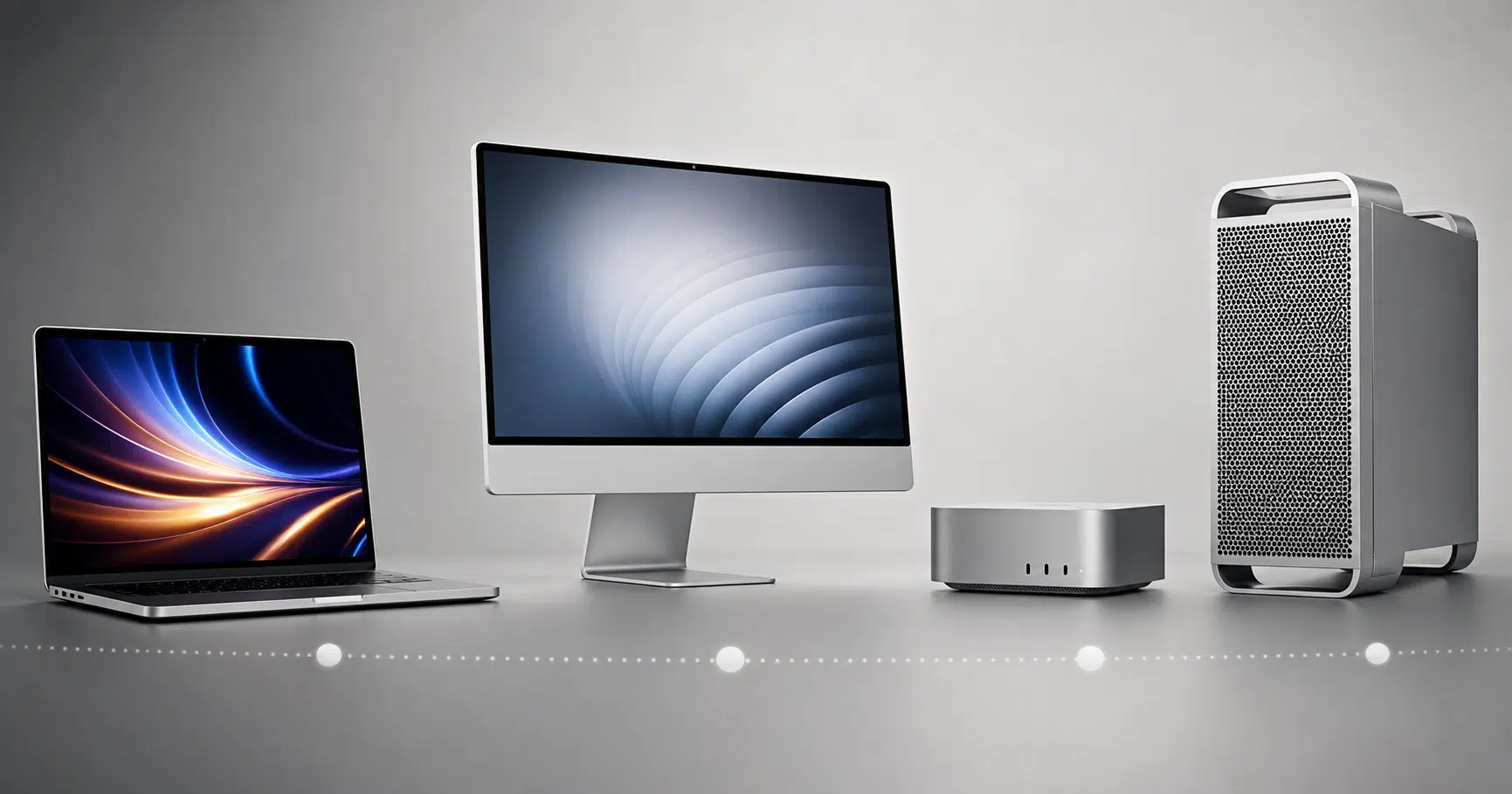

The Apple Mac lineup could be heading into a sweeping refresh cycle, with an unconfirmed roadmap outlining 11 updates across the company’s laptops and desktops. The possible releases range from a conventional iMac update and an M6-powered entry-level MacBook Pro to more ambitious OLED MacBooks with touchscreens.
None of the configurations or release dates has been publicly confirmed by Apple. Some products are attached to broad windows stretching into 2028, while the Mac mini, Mac Studio, MacBook Neo, and OLED iMac do not have dependable launch dates at all. Buyers should therefore treat the roadmap as an indication of Apple’s possible direction—not as a fixed release calendar.
The most consequential prospect is an redesigned high-end MacBook with an OLED touchscreen. That would be a more meaningful change than a routine processor upgrade, but it is also surrounded by some of the roadmap’s biggest questions. Pricing, ports, battery life, dimensions, and final availability remain unknown.
Verdict: most buyers should not put an urgent purchase on hold
If you need a Mac for work, school, or an aging-computer replacement, this roadmap is not firm enough to justify an open-ended wait. The rumored schedule could change, individual models could slip, and some machines may arrive with relatively modest differences from their predecessors.
Waiting makes more sense for a narrower group: buyers specifically interested in an OLED touchscreen MacBook, people whose existing computer can comfortably last another year, or iMac shoppers willing to see whether the rumored fall refresh materializes. Even then, there is no firm public timeline on which to base a purchase.
A current MacBook Pro buying guide will be more useful for anyone choosing a machine for an immediate workload. The rumored models can help identify what may be worth waiting for, but they cannot answer practical questions about price, real-world performance, or final configuration options.
The rumored 11-model Mac roadmap at a glance
The roadmap contains 11 product entries, although several cover more than one screen size or configuration. Every detail in the table remains unconfirmed.
| Mac update | Rumored window | Possible changes | Buyer takeaway |
|---|---|---|---|
| Entry-level 14-inch MacBook Pro | Fall 2026 | M6 chip; internal identifier J804 | A potentially straightforward processor refresh, but the release window is not firm. |
| Mac mini | Unclear | Configurations under consideration with M5 Pro and M6 chips | There is no dependable timetable for desktop buyers deciding whether to wait. |
| Mac Studio | Unclear | Possible M5 Max and M5 Ultra configurations | The rumored chips matter for demanding workloads, but neither configuration nor timing is confirmed. |
| iMac | Fall 2026 | Two configurations associated with identifiers J833 and J834 | A near-term refresh is possible, although the processor and final specifications remain unspecified. |
| High-end 14- and 16-inch MacBooks | Late 2026 to early 2027 | Redesigned chassis, OLED touchscreen, M5 Pro and M5 Max options; identifiers K114 and K116 | This is the biggest prospective upgrade and the strongest reason for high-end buyers to consider waiting. |
| 13- and 15-inch MacBook Air | Early 2027 | Designs similar to the existing machines; identifiers J913 and J915 | The roadmap points to continuity rather than an immediate redesign. |
| Entry-level 14-inch MacBook Pro | 2027 | Design resembling the higher-end models, paired with a standard M7 chip; identifier K104 | Potentially a route to the newer design without buying a Pro or Max processor. |
| MacBook Neo | Unclear | A19 Pro chip, additional memory, and possible new colors | The rumored changes focus on capability and choice rather than a clearly defined redesign. |
| Follow-up high-end MacBooks | Late 2027 to early 2028 | Possible M7 Pro and M7 Max successors to K114 and K116 | Too distant and uncertain to influence most purchases. |
| OLED MacBook Air | 2028 at the earliest | OLED panel and a possible accompanying redesign | A long-range prospect, not a practical reason to delay an Air purchase for several years. |
| OLED iMac | Unclear | OLED display | A separate, longer-term product with no confirmed launch window. |
Internal identifiers such as J804 or K114 can help distinguish one rumored project from another, but they do not tell buyers what the finished machines will cost or whether every project will reach stores. They should not be mistaken for official model names.
The MacBook Pro decision comes down to the display
The roadmap suggests two distinct entry-level 14-inch MacBook Pro updates. The first is associated with an M6 chip and a possible fall 2026 window. A later version, identified as K104, could adopt the design of the higher-end models while using a standard M7 processor.
That creates a potentially awkward sequence for buyers. An initial M6 model could deliver the expected processor progression without the more substantial redesign, while the later M7 machine could bring the entry-level configuration closer to the appearance of Apple’s premium laptops. Neither sequence nor timing is confirmed, however.
The rumored high-end 14- and 16-inch machines are more interesting. They are associated with OLED touchscreens, a new design, and M5 Pro or M5 Max chips. Those changes would make the display and physical design—not merely processor speed—the central reasons to wait.
Rumored internal testing with macOS 27.1 is not a dependable launch signal, and the suggested late-October software timing remains unconfirmed. Software used during development does not provide buyers with a firm hardware release date.
There are also too many missing details for a complete purchase comparison. The roadmap does not establish pricing, display specifications beyond OLED and touch support, port selection, battery life, weight, or whether every current configuration will have a direct replacement. Anyone waiting should be comfortable doing so without answers to those questions.
MacBook Air buyers face a less dramatic choice
The possible early-2027 MacBook Air refresh covers both 13- and 15-inch models. Those machines are expected to remain similar to the existing designs, although that expectation has not been confirmed. If the roadmap holds, the update would be more evolutionary than transformative.
That makes the waiting decision relatively simple. Buyers who primarily care about getting the newest available processor may prefer to wait for more concrete information. Those who need an Air sooner have less reason to fear that an imminent model will introduce the kind of sweeping design change rumored for the high-end MacBooks.
The more substantial Air change appears much farther away. An OLED MacBook Air is listed for 2028 at the earliest and could bring a redesign with it. That timing is too distant and uncertain to serve as a sensible buying deadline for most people.
In other words, an OLED Air belongs in long-term product planning, not an immediate shopping comparison. Waiting multiple years for an unconfirmed display change usually makes sense only when the existing computer is already meeting every important need.
The MacBook Neo could get more practical upgrades
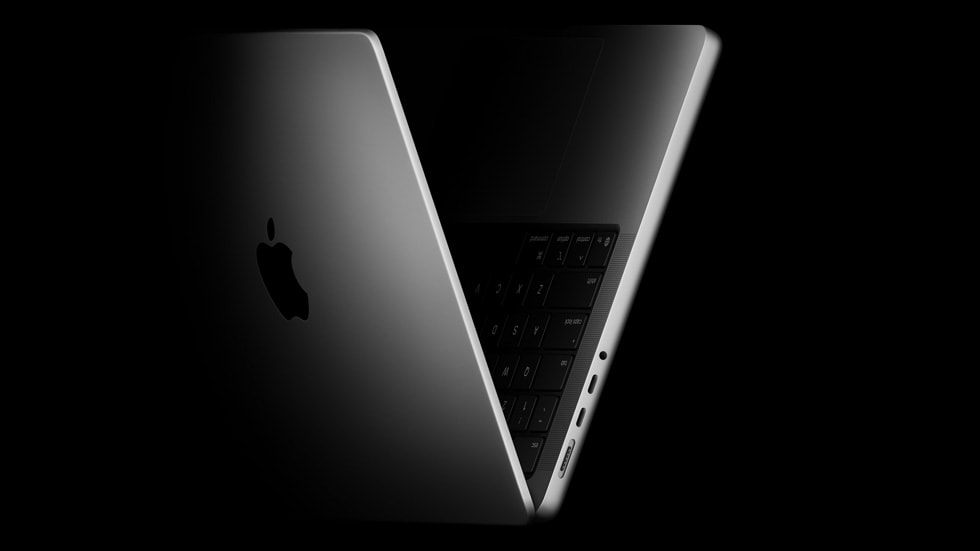
Apple 14-inch MacBook Pro with M5
The 14-inch MacBook Pro with M5 is a practical starting point for buyers who need a capable Mac now. Check the memory and storage configuration carefully against your workload before ordering.
As an Amazon Associate I earn from qualifying purchases.
A refreshed MacBook Neo is linked to an A19 Pro chip, more memory, and additional color options. No firm timing has been publicly established.
Of those rumored changes, the memory increase would have the clearest day-to-day relevance. More memory can influence how comfortably a laptop handles demanding applications and multitasking, while new colors are largely a matter of preference. The roadmap does not provide enough confirmed detail to quantify the performance difference or identify the final memory configuration.
The use of an A-series chip would also keep the Neo on a different track from Macs built around Apple’s M-series processors. Buyers comparing the Neo with a MacBook Air should focus on the workloads each finished configuration is designed to handle rather than assuming that a newer chip name automatically makes the machines equivalent.
Because the next Neo lacks a dependable release window, it should not be treated as an imminent replacement. The practical decision remains whether the available model satisfies the buyer’s present needs and budget.
Mac mini and Mac Studio timing is the biggest desktop question
The desktop portion of the roadmap is unusually difficult to plan around. The Mac mini is associated with possible M5 Pro and M6 configurations, while the Mac Studio is linked to M5 Max and M5 Ultra chips. Neither update has a firm public schedule.
The mixed processor generations may look unusual, but the names alone do not reveal how the final systems would compare. The Mac mini and Mac Studio address different performance tiers, and buyers will still need final specifications, configuration limits, and pricing before judging their value.
For someone choosing between a Mac mini and Mac Studio, the workload remains the most useful dividing line. A product name or rumored processor generation is less informative than the amount of sustained CPU, GPU, and memory performance the finished system can provide. Those details are not established by this roadmap.
There is no reliable successor timetable that would let desktop buyers plan around a specific date. Anyone with an urgent professional requirement should judge the available machines on their published capabilities instead of assuming an unannounced replacement will arrive within a particular month.
The iMac appears to have two separate upgrade paths
The roadmap distinguishes between a conventional iMac refresh and a later OLED model. The nearer update is associated with two configurations, identified as J833 and J834, and a possible fall 2026 window. The processor has not been specified, and the timing is not confirmed.
A separate OLED iMac is described as a longer-term project without a release window. Treating these as distinct updates matters: shoppers should not assume that the nearer iMac will receive the OLED panel mentioned elsewhere in the roadmap.
For buyers who specifically want an all-in-one desktop, a short wait for clearer information may be reasonable if their existing computer remains adequate. Waiting indefinitely for the OLED version is a much harder recommendation because the roadmap provides no dependable date, price, size, or final design.
OLED is the roadmap’s central theme—but not an immediate lineup-wide change
OLED appears in three parts of the possible plan: the redesigned high-end MacBooks, a future MacBook Air, and a future iMac. The timing differs substantially between them.
The high-end MacBook is positioned as the earliest and most developed of those prospects, with a broad late-2026-to-early-2027 window. The OLED Air is not expected before 2028 under the tentative schedule, while the OLED iMac has no stated window.
Buyers should therefore avoid treating OLED as a change that will reach every Mac at once. Even if the roadmap proves accurate, Apple’s transition would appear to unfold by product tier over an extended period. The conventional iMac and MacBook Air refreshes could arrive without the display technology reserved for later models.
Touch support is also attached specifically to the high-end MacBook proposal. Nothing in the roadmap establishes that the OLED Air or OLED iMac would receive touch input, so that feature should not be assumed across all three product families.
Who should wait—and who should buy based on today’s options
The roadmap is most useful as a way to identify possible product directions. It is much less useful as a calendar. A practical decision can be reduced to a few buyer profiles:
- Wait for more information if you specifically want an OLED touchscreen MacBook. That combination represents the largest rumored change and may justify patience for buyers whose existing laptop remains capable.
- Consider a shorter wait if you are shopping for an iMac without urgency. A conventional refresh has been associated with a fall window, but Apple has not confirmed the date or processor.
- Do not delay an Air purchase solely for the OLED model. Its earliest suggested window is 2028, and both the timing and final design remain uncertain.
- Be cautious about waiting for a desktop replacement. The Mac mini and Mac Studio updates lack dependable schedules, making the delay potentially open-ended.
- Buy for an urgent workload when an available Mac meets it. Confirmed specifications, pricing, and availability carry more weight than an unannounced configuration.
The broad direction is clear enough to frame the tradeoffs: conventional chip updates may arrive before the more ambitious OLED redesigns, and different Mac families could move on separate schedules. What remains missing is the information that completes a real buying decision—official configurations, final prices, availability, and tested performance.
Until Apple supplies those details, the rumored 11-model overhaul is best viewed as a reason to watch the lineup closely, not a reason for every Mac buyer to stop shopping.