

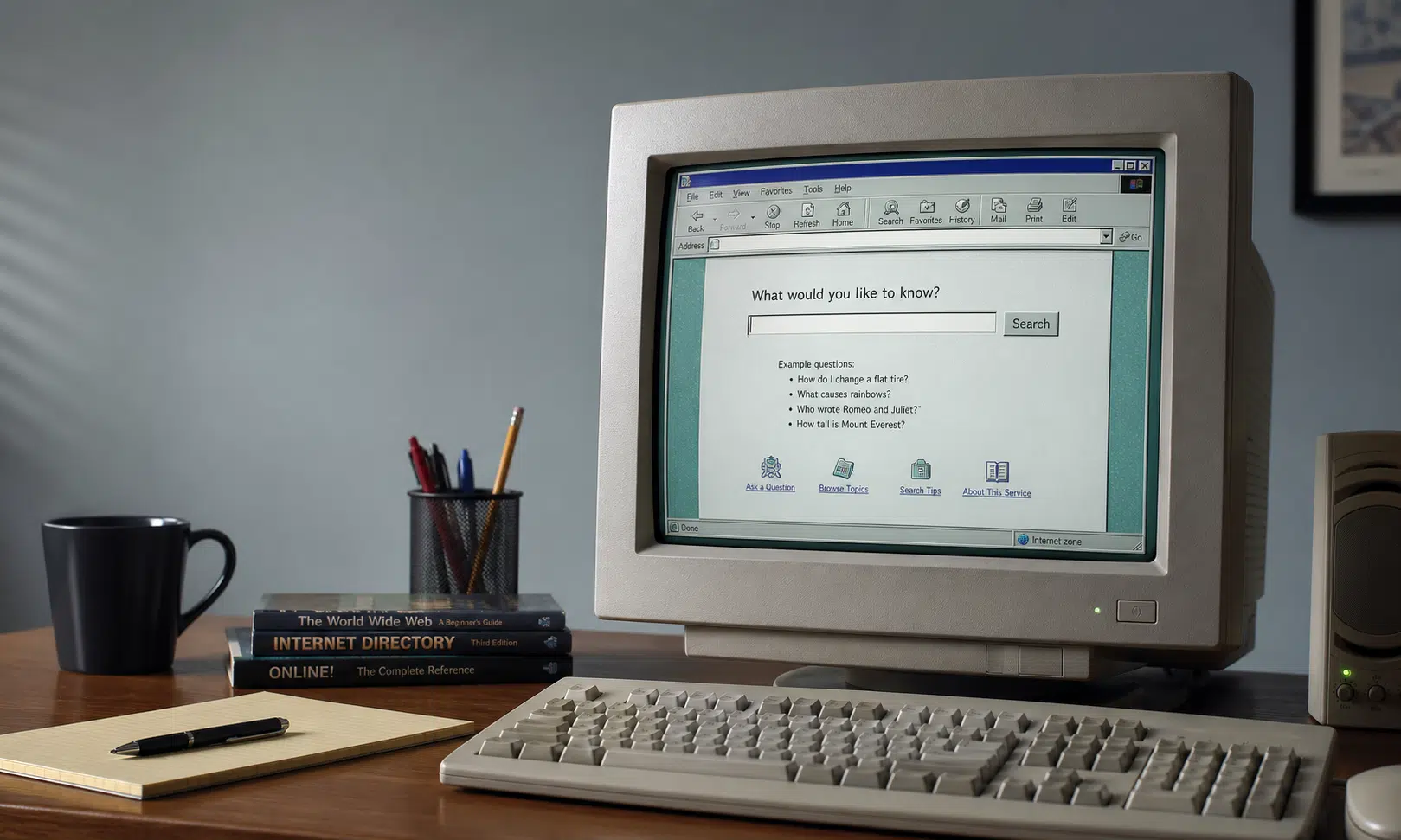

Ask.com has shut down after nearly three decades online, closing a long-running chapter in search history that many internet users may have forgotten was still active.
The service was once one of the more recognizable names in web search, especially in its original Ask Jeeves form. Its pitch was simple and memorable: users could type full questions instead of clipped keyword strings, while Jeeves, the site’s butler mascot, stood in as a friendly guide to the web.
That idea made sense in the late 1990s, when search was still awkward, uneven, and far less standardized than it is today. Ask Jeeves gave the early web a more conversational face, even if the technology behind search would soon move in a different direction.
Why Ask.com mattered in early search
Ask Jeeves arrived during a period when no single search experience had fully won the market. Users were still moving between portals, directories, keyword engines, and question-based tools, trying to find whatever would surface the best answer fastest.
In that environment, Ask Jeeves had a clear identity. It was not just another blank search box. The name, the butler character, and the promise of asking a normal question helped it stand out at a time when many web services were still trying to explain what they were for.
For a while, that brand recognition mattered. Ask Jeeves became part of the everyday internet vocabulary for many users, especially those who came online before Google became the default answer to almost every search habit.
But search quality, speed, indexing, and ranking quickly became more important than personality. As algorithm-driven search engines improved, the market moved toward tools that could crawl more of the web, rank pages more effectively, and return useful results with less friction.
Ask Jeeves could still be useful at times, particularly when users wanted a different set of results from the dominant search providers. But it gradually lost cultural weight as Google and other competitors shaped what people expected search to feel like.
From Ask Jeeves to Ask.com
The company later moved away from the Jeeves identity and became Ask.com. The rebrand gave the site a cleaner, more modern name, but it also removed the part of the service many people remembered most.
That change reflected a larger problem. Ask.com was no longer competing only on novelty or branding. It had to compete on result quality, speed, trust, and habit. Those are difficult areas to win once users have already settled into another search engine as their default.
Over time, Ask.com faded from the center of web search. The site continued operating, but it was no longer a major part of how most people found information online. For many younger users, Ask.com was likely more of an internet-history reference than a tool they had ever used directly.
That is part of what makes the shutdown feel unusual. Ask.com did not vanish suddenly after a dramatic collapse. It remained online long after its mainstream relevance had declined, becoming one of those older web names that still existed in the background.
A quiet end to a familiar old name
IAC has said it is ending its search business, a move that includes Ask.com. Some details around the service’s early timeline have been reported differently over the years, with Ask Jeeves generally associated with the mid-to-late 1990s before its later Ask.com rebrand.
The closure brings an end to a brand that once helped define how ordinary users thought about asking the web for information. It also underlines how unforgiving the search market became. A recognizable name was not enough once a handful of platforms trained users to expect faster answers, broader indexing, and more reliable ranking.
For people who used Ask Jeeves in its earlier years, the shutdown is likely to feel less like the loss of a daily tool and more like the retirement of an old internet landmark. The butler, the question-first approach, and the slightly gentler search experience belonged to a web that felt smaller and less settled.
For everyone else, the bigger surprise may be that Ask.com lasted this long. Many once-prominent web brands disappeared completely, were folded into larger companies, or survived only as redirects and archives. Ask.com remained visible enough to remind people that the early search market was once far more open than it feels now.
What Ask.com leaves behind
Ask.com’s shutdown is not likely to change how most people search today. The modern search market has already moved through several eras since Ask Jeeves first appeared, from classic ranked links to mobile search, voice assistants, answer boxes, and now AI-driven discovery.
Still, its disappearance is a useful reminder that search was not always shaped by the same few names. There was a time when companies tried very different ways to help users navigate the web, and Ask Jeeves’ question-based approach was one of the more memorable attempts.
The idea of typing a natural question into a box no longer feels unusual. In that sense, Ask Jeeves was early to a behavior that later became normal across search engines, assistants, and AI tools. The difference is that the company did not become the platform that carried that habit into the modern era.
Ask.com lasted far longer than its place in daily internet culture. Its shutdown closes the book on a search brand that once felt distinctive, then familiar, then increasingly distant. For an older generation of web users, it marks the final exit of Jeeves. For everyone else, it is a small but telling piece of internet history finally coming to rest.