



A Practical System for Longevity Habits
The Blue Zones framework is one of the most popular ways people think about healthy aging. It points to five regions often associated with unusually long-lived populations: Okinawa in Japan, Sardinia in Italy, Nicoya in Costa Rica, Ikaria in Greece, and Loma Linda in California.
The idea has been widely promoted through Dan Buettner’s Blue Zones work, including his books and screen projects. The exact longevity claims behind these regions are debated, so it is better to treat the framework as a practical lifestyle lens rather than a promise that any one habit will help you live past 100.
That said, the habits themselves are mostly grounded in common-sense patterns: move often, eat mostly whole foods, manage stress, keep close relationships, and build a life that does not require heroic discipline every day.
The Core Blue Zones Habits
1. Move Naturally
The most useful takeaway is not “exercise harder.” It is “design your day so movement happens without needing a perfect workout plan.” Walking, gardening, housework, taking stairs, carrying groceries, and doing small errands on foot all count.
This is the difference between fitness as an appointment and movement as part of the environment. A person who walks frequently throughout the day may build a stronger baseline than someone who sits for ten hours and then tries to fix it all in one gym session.
2. Have a Reason to Get Up
Purpose is not always grand. It can be a craft, a role in the family, a service commitment, a project, or a reason to stay useful. The point is to have something that pulls you forward when routine gets heavy.
A simple way to start is to write one sentence: “I want to stay healthy so I can…” The answer may be more practical than poetic, and that is fine.
3. Downshift Daily
Stress is unavoidable. Recovery is the part most people skip. The Blue Zones framework often highlights simple downshifting rituals such as prayer, rest, naps, quiet time, or mindful pauses.
For a modern workday, a shutdown ritual can help. Close your laptop, plug in the charger, clear your desk for two minutes, and say out loud that work is done. It sounds small, but the signal matters: the day needs an ending.
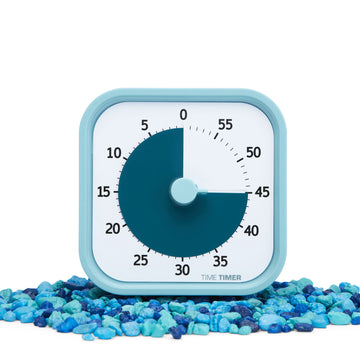
Visual Timer for Daily Downshifting
A visual timer can make a five- or ten-minute reset easier to start and easier to end. It fits the article’s practical downshift habit without turning stress recovery into another complicated routine.
4. Eat Until Satisfied, Not Stuffed
The “80% full” idea is usually tied to the Okinawan phrase hara hachi bu. Whether or not you follow it literally, the behavior is useful: slow down, notice fullness earlier, and stop before the meal turns into discomfort.
One practical version is to serve a normal plate, eat without rushing, and pause before going back for more. You are not trying to create a rulebook. You are trying to build awareness.
5. Eat Mostly Plants
Blue Zones eating patterns are commonly described as plant-forward, with beans, lentils, vegetables, fruits, whole grains, nuts, and other minimally processed foods playing a central role. This does not require becoming perfect overnight.
Start with one repeatable meal: lentil soup, beans and rice, oatmeal with nuts, a big salad with chickpeas, or roasted vegetables with a protein you enjoy. The system gets easier when the default meal is already a decent choice.
6. Be Careful With the Wine Habit
“Wine at 5” is often included in the Blue Zones list, but this one deserves caution. Current public-health guidance is much more careful about alcohol than older wellness writing often was. If you do not drink, there is no health reason to start.
If alcohol is already part of your life, moderation and context matter. Drinking less, drinking with food, and avoiding alcohol when it conflicts with medication, sleep, pregnancy, driving, or personal history are all more important than copying a romanticized ritual.
Build the Social Side of Health
7. Belong Somewhere
A faith community, volunteer group, neighborhood circle, recovery group, class, or recurring gathering can give people a sense of rhythm and support. The exact setting is personal. The useful pattern is regular presence with people who notice when you are missing.
8. Put Family and Close Relationships First
The Blue Zones framework often emphasizes family closeness and intergenerational support. In practice, this can mean shared meals, regular calls, helping older relatives stay involved, or protecting time with a partner and children instead of treating them as leftovers after work.
Relationships do not stay strong by accident. They need calendar space.
9. Choose Your Circle Carefully
Habits spread through social life. If your closest people walk, cook, rest, volunteer, and show up for each other, those behaviors become easier to repeat. If every gathering revolves around exhaustion, overeating, heavy drinking, or complaint, that also has a cost.
This does not mean cutting people off casually. It means being honest about the rooms you spend the most time in.

Guided Gratitude Journal
A guided journal can support a brief morning or evening pause without requiring long-form writing. It works best as a cue for reflection, not as a promise of better health outcomes.
A Simple Three-Month Setup
Trying to overhaul your entire life at once usually fails. A better approach is to pick three habits where the gap is most obvious and assign one to each of the next three months.
Month one might be movement: a daily walk after lunch, a standing errand, or ten minutes outside after dinner. Month two might be food: beans twice a week, vegetables at breakfast, or a reliable plant-forward lunch. Month three might be stress: a shutdown ritual, a short nap, evening prayer, or ten quiet minutes before bed.
The point is not to imitate a Blue Zone perfectly. The point is to make your normal day less hostile to your long-term health.
The Real Lesson
The best longevity system is not built on one supplement, one meal, or one dramatic life reset. It is built from repeated cues: a walkable routine, simple food, a reason to stay engaged, a way to release stress, and people who make healthy choices feel normal.
Living longer is uncertain. Living better is something you can design for.