


A torpedo-shaped undersea monitoring device found near Indonesia’s Lombok Strait has turned a specialist defence question into a practical procurement issue: what should governments, ports, maritime operators and security teams buy when the seabed is becoming part of the surveillance contest?
The object, reportedly about 3.7 metres long, was recovered by a fisherman near a waterway that matters because deep-draft submarines can use it to move between Australian waters and the South China Sea without surfacing. Its exact origin, operator and mission remain unclear. Beijing has said there is no need for excessive suspicion and that marine research equipment can drift into other countries’ waters after faults or other problems.
Even with those uncertainties, the discovery is a useful warning for buyers. Undersea monitoring is no longer a niche research problem. It sits at the intersection of oceanography, naval operations, unmanned systems, acoustic sensing, seabed mapping and data fusion.
For anyone assessing maritime domain awareness systems, the question is no longer simply whether a sensor can collect useful data. The real decision is whether a system can help detect, classify, protect, recover and interpret activity across a difficult, layered environment.
What Was Found Near Bali, And Why It Matters
The device found near the Lombok Strait appeared to be a monitoring system capable of gathering ocean data. Maritime analyst H I Sutton identified it as a deep-sea real-time transmission mooring system, a type of device associated with measurements such as temperature, depth, current and sound. That identification should still be treated as an expert assessment rather than a confirmed official finding.
The practical significance is not that one recovered device proves the existence of a complete hostile sensor network. It does not. The stronger conclusion is that undersea devices of this kind can sit in places where oceanographic data and military relevance overlap.
Water temperature, salinity, depth, currents and background noise can all affect how sound travels underwater. That matters because submarines rely heavily on stealth, and anti-submarine warfare relies heavily on understanding the water column. Better environmental knowledge can improve planning, sensor placement and acoustic modelling.
That does not make every ocean sensor a weapon. It does mean buyers should stop treating civilian marine sensing, undersea research platforms and defence surveillance as wholly separate markets.
Buyer Verdict: What This Event Should Change
For defence and maritime security buyers, the lesson is straightforward: undersea monitoring should be assessed as a full system, not as a collection of individual sensors.
A useful purchase decision should consider four linked needs:
- Finding and identifying objects already in the water.
- Monitoring chokepoints, ports, approaches and cable routes over time.
- Separating routine oceanographic equipment from suspicious or undeclared systems.
- Turning sensor data into decisions fast enough to matter.
For Australia and nearby states, the Lombok Strait case also points to a regional problem. Important waterways are too large and too busy to watch manually, yet too strategically important to ignore. A procurement plan built only around crewed ships and aircraft will struggle to provide persistent coverage. A plan built only around small drones and sensors may lack endurance, authority and survivability.
The best-fit answer is likely a layered mix: seabed sensors, mobile autonomous systems, patrol aircraft, surface vessels, satellites, data processing tools and trained analysts.
Marine Field And Inspection Gear Compared
| Image | Product | Best fit | Link |
|---|---|---|---|
 |
CHASING GLADIUS MINI S Underwater Drone | A tethered underwater drone can help with visual checks around hulls, piers, moorings and shallow infrastructure. It should be treated as an inspection aid, not a substitute for military undersea detection systems. | Check Price on Amazon |
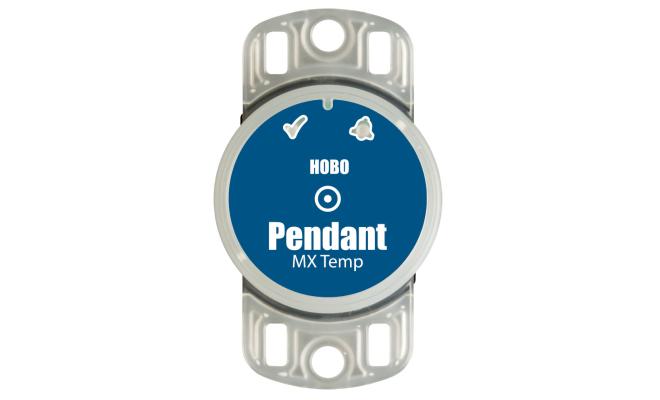 |
HOBO Pendant MX2201 Water Temperature Logger | A waterproof temperature logger is useful for building a local environmental baseline around docks, test sites or monitored waterways. Buyers should still document calibration, placement and recovery procedures. | Check Price on Amazon |
 |
Getac ZX10 Rugged Field Tablet | A rugged tablet can support field teams reviewing maps, logging inspections and sharing imagery in harsh marine environments. Check software compatibility, connectivity and device management before standardizing on a model. | Check Price on Amazon |
 |
Garmin inReach Mini 2 Satellite Communicator | A satellite communicator can help small field teams stay reachable when cellular coverage is unreliable. It is most relevant for safety and coordination, not sensor collection. | Check Price on Amazon |
As an Amazon Associate I earn from qualifying purchases.
Comparison Table: What Different Maritime Surveillance Tools Do Best
| Capability | Best use | Strength | Tradeoff |
|---|---|---|---|
| Fixed seabed or moored sensors | Persistent monitoring of chokepoints, ports and known routes | Can collect data continuously in a defined area | Hard to install discreetly and may be difficult to recover or maintain |
| Autonomous underwater vehicles | Surveying, inspection and mobile sensing | Can move through areas that fixed sensors do not cover | Limited by endurance, communications and recovery requirements |
| Uncrewed surface vessels | Patrol, relay and surface-based sensing | Can extend coverage without placing crews at risk | More visible and exposed than underwater systems |
| Satellites and aircraft | Wide-area maritime awareness | Useful for tracking surface vessels and activity patterns | Cannot directly solve every undersea detection problem |
| Data fusion and acoustic analysis software | Turning sensor feeds into operational insight | Helps connect weak signals across many sources | Only as good as the data, models and analyst workflow behind it |
The Bigger Context: China’s Undersea Awareness Push
Several analysts connect the Bali-area discovery to China’s long-running interest in improving undersea awareness. One commonly discussed initiative is the Transparent Ocean Program, although public reporting on its exact scope, deployments and operational links should be treated carefully.
Chinese oceanographer Wu Lixin has been associated with proposals for a real-time, three-dimensional ocean observation system across the western Pacific, Indian Ocean and South China Sea. Public descriptions of the concept refer to layers that may include satellites, unmanned surface vessels, autonomous underwater vehicles and seabed observation networks. Some accounts also describe a data-processing layer sometimes called a “Deep Blue Brain”, using artificial intelligence to help manage information. These details have been reported by specialists, but they should not be read as independently confirmed operational facts.
The distinction matters for buyers. A public research program, a scientific sensor network and a military surveillance architecture are not the same thing. But the data they collect can overlap. Oceanographic information that helps climate research or weather prediction can also help submarines, sonar operators and naval planners understand underwater conditions.
That is why the procurement question is not simply “is this military?” A better question is: “could this data improve military undersea awareness if combined with other information?”
Why Civilian Ocean Data Can Have Military Value
Underwater detection is hard because the ocean is not a uniform space. Sound bends, fades, reflects and travels differently depending on local conditions. A submarine may be easier to detect in one patch of water than another, even when the sensor and target are unchanged.
Variables that can matter include:
- Temperature layers that affect sound propagation.
- Salinity changes that alter water density.
- Depth and seabed shape.
- Currents and turbulence.
- Background noise from shipping, weather and marine activity.
- Seasonal changes that shift acoustic conditions over time.
This is why a device measuring ordinary ocean conditions can still interest defence planners. It may not be tracking a submarine directly. It may be improving the map of where and when detection is easier.
For commercial and public-sector buyers, that creates a classification problem. A device may be described as scientific, environmental or navigational, while also producing data that has strategic value. Procurement teams need policies that account for dual-use systems rather than relying only on the label attached to a product.
Decision Criteria For Maritime Surveillance Buyers
A practical buying process should start with the mission, not the hardware. The right system for a port authority inspecting approaches will differ from the right system for a navy tracking submarines or an energy company protecting subsea infrastructure.
1. Define The Water You Actually Need To Watch
Buyers should separate wide-area awareness from persistent monitoring. A satellite, aircraft or patrol vessel can help identify patterns across a large region. A fixed or moored sensor can watch one area continuously. An underwater drone can inspect, survey or investigate, but may not provide permanent coverage.
The Lombok Strait example shows why chokepoints matter. Narrower routes, deep-water passages and approaches to naval bases are high-value monitoring areas because they constrain movement.
2. Decide Whether You Need Detection, Attribution Or Deterrence
Not every buyer needs the same evidentiary standard.
- Detection means knowing something unusual is present.
- Classification means understanding what kind of object it may be.
- Attribution means connecting it to an operator or origin.
- Deterrence means making covert deployment riskier or less attractive.
A low-cost sensor may help with detection but fail on attribution. A high-end integrated system may support stronger conclusions, but only if it is backed by recovery capability, records, chain-of-custody procedures and trained analysis.
3. Treat Recovery And Inspection As Part Of The System
Finding an object is only the first step. If a suspicious device is discovered, authorities need a way to inspect, secure, move and analyze it without damaging evidence or exposing personnel to unnecessary risk.
That means procurement should consider remotely operated vehicles, lifting equipment, explosive ordnance procedures, forensic handling, storage and specialist analysis. A sensor contract that ignores recovery may leave the hardest part unfunded.
4. Build For Data Fusion, Not Sensor Collecting
A common procurement mistake is buying more sensors without improving the system that interprets them. Undersea monitoring can produce ambiguous signals. Buyers need workflows that combine acoustic data, environmental measurements, vessel movement, satellite imagery, patrol reports and historical baselines.
Data fusion tools should be judged by whether they reduce uncertainty for operators, not by whether they produce impressive dashboards.
What This Means For Australia’s AUKUS Debate
The discovery near the Lombok Strait has fed into a larger argument about Australia’s defence investment priorities. Some analysts argue that advances in undersea sensing and unmanned systems should push Australia to spend more on drones and distributed surveillance. Others argue that nuclear-powered submarines remain central because range, endurance and independent operation still matter in a crisis.
Both positions can be true at once. Better detection technology may make submarine operations more complex, but it does not automatically make submarines obsolete. It does increase the value of decoys, unmanned companions, improved acoustic discipline, better route planning and a wider mix of platforms.
Under AUKUS, Australia is expected to acquire nuclear-powered Virginia-class submarines from the United States in the 2030s. Supporters see crewed submarines as essential for long-range operations and deterrence. Critics worry that heavy investment in traditional platforms may leave too little funding for drones, sensors and cheaper distributed systems.
A buyer-aware reading of the dispute is less ideological: submarines, drones and sensors answer different parts of the problem. A submarine can perform missions that a small undersea drone cannot. A distributed sensor network can provide persistence that a crewed submarine cannot. An autonomous vehicle can take risks that a crewed platform should avoid.
The procurement risk is overbuying any one category and underfunding the links between them.
What To Look For In Undersea Drone And Sensor Purchases
For organisations now reviewing undersea monitoring requirements, the following criteria are more useful than headline performance claims.
| Buying question | Why it matters | Weak answer | Stronger answer |
|---|---|---|---|
| How does the system communicate underwater? | Undersea communications are difficult and can limit real-time usefulness. | Vague claims about live data without explaining constraints. | Clear explanation of acoustic, tethered, surfacing or relay methods. |
| How long can it operate? | Endurance determines whether the system suits patrol, survey or persistent monitoring. | Best-case endurance with no mission profile. | Endurance tied to speed, sensors, depth and reporting schedule. |
| What can it actually detect? | Detection claims vary widely depending on conditions. | Fixed range claims without environmental assumptions. | Performance described across depth, noise, seabed and seasonal conditions. |
| How is data analyzed? | Raw data is not the same as usable intelligence. | Manual review with limited workflow detail. | Analyst tools, baselines, alerts and audit trails. |
| Can it be recovered and serviced? | Maintenance affects lifetime cost and reliability. | Deployment-focused sales pitch. | Clear recovery, battery, calibration and repair plan. |
Red Flags In Vendor Claims
Buyers should be cautious when suppliers make broad claims about making the ocean “transparent.” The phrase is useful as a concept, but the real ocean is messy. Weather, seabed conditions, biological noise, shipping traffic, sensor failure and adversary countermeasures all affect performance.
Red flags include:
- Detection ranges quoted without environmental assumptions.
- AI claims that do not explain training data, false positives or operator review.
- Systems that collect data but lack a practical analysis workflow.
- Hardware that cannot be maintained in the buyer’s operating area.
- Security architecture that ignores tampering, spoofing or data exfiltration.
- Contracts that separate sensors, software and support so sharply that no one owns the full outcome.
For sensitive maritime environments, cyber security and supply-chain review should sit beside acoustic performance. A sensor network that cannot be trusted may create more risk than coverage.
Where Affiliate Product Blocks Could Fit Naturally
This topic is not a normal consumer shopping guide, but there are legitimate buyer needs around maritime safety, field inspection, rugged communications and professional monitoring equipment. Any product placement should stay practical and clearly separated from strategic claims.
A natural product section could cover professional-grade marine inspection tools, rugged field tablets, waterproof data logging equipment, satellite communicators for remote marine work, or training resources for maritime security teams. Consumer gadgets should not be presented as substitutes for defence-grade undersea surveillance.
Bottom Line For Buyers
The device found near Bali does not prove every worst-case theory about Chinese undersea surveillance. Its exact mission remains unclear, and several claims around wider programs and deployments should be treated as expert assessments rather than settled public facts.
But the strategic direction is hard to ignore. Undersea data is becoming more valuable. Chokepoints such as the Lombok Strait deserve close attention. Civilian oceanographic sensing and military undersea awareness increasingly overlap. Autonomous systems and fixed sensors are becoming part of the same procurement conversation as submarines, patrol aircraft and surface fleets.
For buyers, the best response is not panic buying. It is disciplined system design: know the area, define the mission, choose the right mix of fixed and mobile sensors, fund the analysis layer, plan for recovery, and test performance in the water where the system will actually operate.
The ocean is not transparent. But it is becoming more instrumented, more contested and more commercially relevant. Procurement plans need to catch up.