

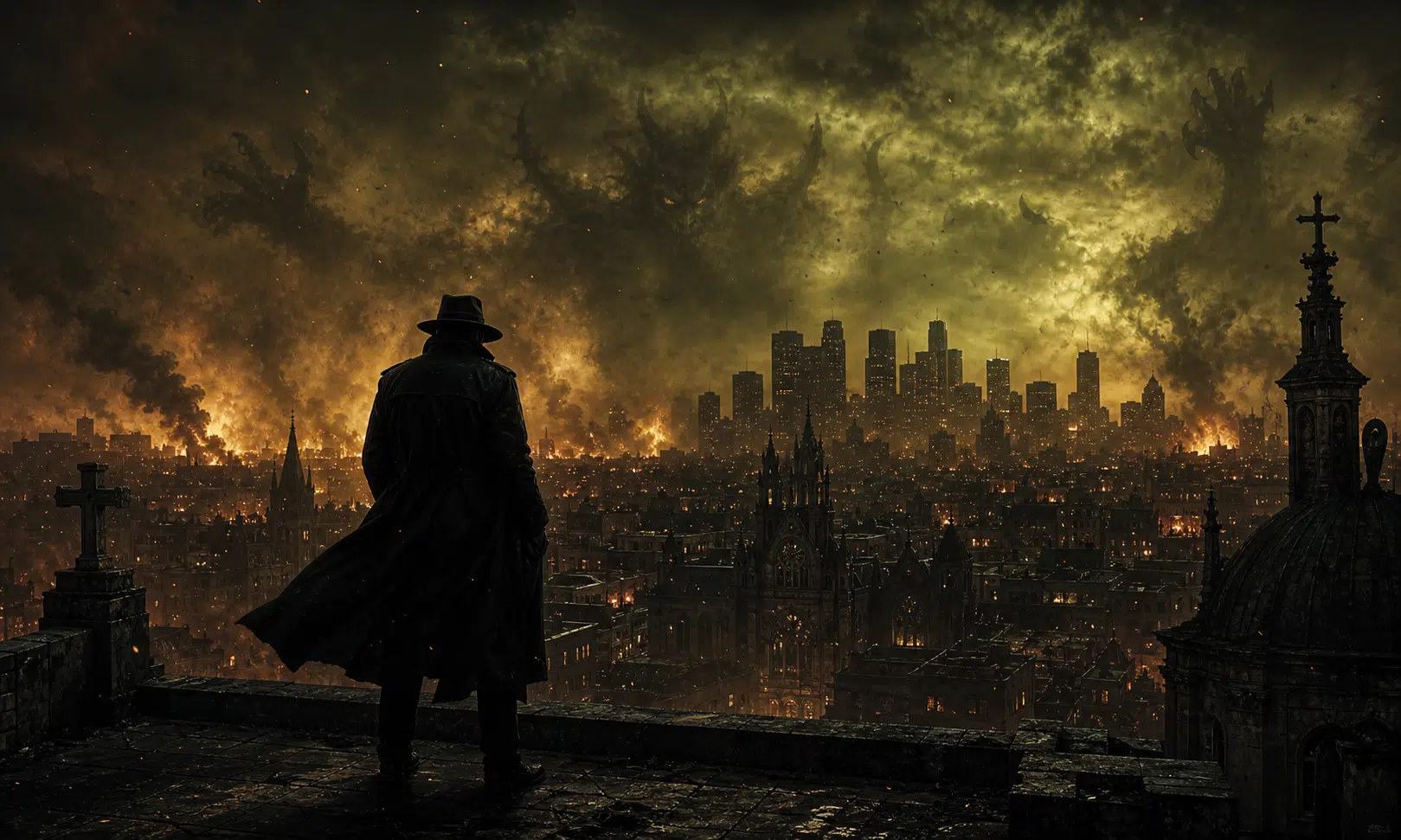

Francis Lawrence’s 2005 DC adaptation Constantine has always occupied an unusual corner of superhero cinema. It is a comic book movie, but it rarely feels like the bright, quippy, franchise-shaped model that would dominate the genre later. Instead, it works closer to supernatural noir: smoky rooms, terminal guilt, demonic rules, Catholic imagery, and a version of Los Angeles that seems permanently stained by heat and sin.
That difference is a major reason the Constantine movie has held onto a devoted audience. The film did not arrive as a universally embraced critical favorite, and some of its choices remain divisive. But for viewers drawn to dark fantasy, occult detective stories, and comic book films with a stronger visual identity than usual, it remains easy to understand why Constantine keeps being rediscovered. internal-link-topic: best dark fantasy movies
Constantine Works Because It Has a Specific Mood
The film follows John Constantine, played by Keanu Reeves, as a cynical exorcist and demonologist pulled into a case involving police detective Angela Dodson, played by Rachel Weisz. Angela is trying to understand her twin sister’s death, while Constantine is trying to navigate a world where angels, demons, damnation, and loopholes all matter.
The plot is not the main reason people keep returning to the movie. What gives Constantine its staying power is the atmosphere. Lawrence treats the material with a straight face, building a grimy spiritual underworld where the supernatural does not feel shiny or weightless. The movie’s Los Angeles is not just a backdrop; it feels like a city pressed thin between heaven and hell.
The visual choices are heavy, sometimes theatrical, and often memorable. Rooms glow in sickly yellows and greens. Shadows feel sticky rather than sleek. Demonic encounters are staged less like standard action beats and more like intrusions from a rule-bound horror universe. Even when the effects show their age in places, the film still has a recognizable shape and texture, which is more than can be said for many more expensive comic book films.
The Supernatural Design Is Still the Film’s Biggest Strength
Constantine is at its best when it leans into religious horror and occult imagery. Its angels and demons are not presented as vague fantasy creatures. They belong to a dirty, transactional mythology where power has limits, bargains have consequences, and salvation can hinge on technicalities.
Tilda Swinton’s Gabriel is central to that mood. The performance gives the film an eerie calm, with Gabriel appearing neither warmly divine nor conventionally villainous. The character’s presence adds tension because the movie’s spiritual order is not cleanly comforting. Heaven and hell may be real here, but that does not make the world feel fair.
Peter Stormare’s appearance as Satan is another reason the film has lingered in memory. The performance is brief, but it pushes the movie into something stranger and more theatrical. Rather than playing the devil as a grand, roaring figure, Stormare makes him intimate, amused, and physically unpleasant. It is a small stretch of screen time, but it gives the climax a personality that a more generic version of the scene would not have had.
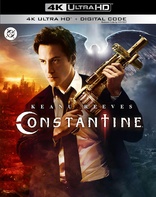
Constantine 4K Ultra HD Blu-ray
The 4K Ultra HD Blu-ray edition is a fitting option for revisiting Constantine’s smoky visuals, religious horror imagery, and noir-influenced Los Angeles setting. Check your player compatibility if you specifically want the 4K disc.
As an Amazon Associate I earn from qualifying purchases.
The film’s vision of hell also shows why Constantine remains so visually discussed. The underworld is imagined through a blasted version of Los Angeles, turning a familiar city into a scorched spiritual wasteland. The idea is simple, but effective: damnation is not an abstract fantasy kingdom. It is the same world, ruined and exposed.
Keanu Reeves Gives the Movie Its Center
Reeves’ John Constantine is not a direct translation of every version of the comic book character, and that has always been part of the film’s debate. This Constantine is less a sharp-tongued British occult trickster than a weary American exorcist with a cigarette, a death sentence, and a long list of grievances against the divine order.
Still, Reeves gives the movie a useful restraint. His performance is dry, irritated, and emotionally closed off, which fits a man who has seen too much and expects very little. The film asks him to carry scenes built around pain, guilt, sickness, and reluctant sacrifice, and his stillness often works better than a more demonstrative performance might have.
That restraint also helps the movie avoid collapsing under its own style. Constantine is full of big images and loaded mythology, but Reeves plays John as someone exhausted by all of it. He knows the rules, hates the rules, and keeps moving anyway. That attitude gives the film a human anchor even when the story is dealing with demons, half-breeds, relics, possession, and the afterlife.
Why It Still Feels Different From Many Superhero Movies
The most interesting thing about Constantine now is how little it feels designed to fit a larger machine. It gestures toward a bigger mythology, and it certainly leaves room for more stories, but the film still functions as a self-contained dark fantasy. It has a beginning, a mood, a set of images, and a conclusion that belongs to this particular version of John Constantine.
That matters because many superhero movies live or die by continuity, crossover potential, or brand management. Constantine is messier than that. It is more uneven, but also more singular. Its best moments are not about setting up future installments; they are about mood, performance, and the pleasure of watching a comic book world filtered through horror-noir instincts.
The film’s reputation has also benefited from the way superhero cinema changed after it. As the genre became bigger, brighter, and more standardized, Constantine’s abrasive personality began to look more valuable. It is not a perfect movie, and it does not need to be called one to make the case for its appeal. Its value lies in how committed it is to being strange, dour, stylish, and spiritually nasty.
For viewers interested in the darker side of comic book adaptations, Constantine remains worth seeking out. It is a superhero film with a horror pulse, a noir posture, and enough memorable imagery to explain why it continues to attract fans years after its original release.