


The cotton T-shirt is one of the easiest things to buy without thinking. It is cheap, familiar, replaceable and often sold as a basic rather than a considered purchase. The problem is that the reported water footprint behind that basic garment is anything but small.
A widely repeated estimate puts the water required to produce a single cotton T-shirt at about 2,700 litres, roughly comparable to one person’s drinking water over two and a half years. That figure has not been independently verified here, and water use varies by cotton source, irrigation method, dyeing process and factory conditions. Even with that caution, the estimate is useful for one reason: it forces buyers to look past the retail price and ask what a garment costs before it reaches the shelf.
The wider fashion industry is often reported to consume tens of billions of cubic metres of fresh water each year, with one commonly cited estimate around 79 billion cubic metres. That number should also be treated as an estimate rather than a precise, universally agreed total. Still, it points to the same buyer-facing conclusion: the biggest environmental issue with cotton clothing is not only what happens after it is bought, but how much water may be used before the first wear.
Verdict: Buy Fewer Cotton Basics, And Make Them Count
For shoppers, the practical verdict is simple. A cotton T-shirt is not automatically a bad purchase. It can be durable, breathable, repairable and easier to wear for years than many trend-led synthetic garments. But it is a poor purchase when it is bought casually, worn a few times, then replaced.
The best case for buying cotton is strongest when the shirt is well made, fits a real gap in the wardrobe and is likely to be worn often. The weakest case is the impulse multipack, the novelty print, the colour bought for one outfit, or the ultra-cheap basic that loses shape quickly.
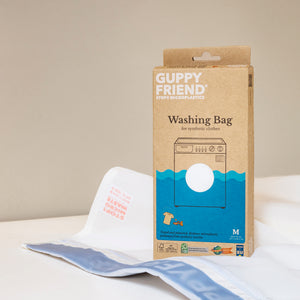
GUPPYFRIEND Washing Bag
For fleece, activewear and other synthetic items, a microfiber-catching wash bag can help reduce fibre release during washing. It also separates delicate garments, which may help them last longer when used with gentle wash settings.
As an Amazon Associate I earn from qualifying purchases.
A buyer-aware approach does not require treating every T-shirt like a luxury item. It does mean asking better questions before checkout:
- Will this replace something worn out, or simply add another duplicate?
- Is the fabric weight and stitching good enough for repeated washing?
- Can the colour be worn across seasons, not just once?
- Does the brand give meaningful material or supply-chain information?
- Would a second-hand, recycled-fibre or lower-impact alternative do the same job?
Why Cotton Can Carry A Large Water Footprint
Cotton’s water burden begins in the field. The crop is grown in hot regions, and many cotton-growing areas rely heavily on irrigation. Claims about exactly how much water a garment uses should be handled carefully, because the answer depends on climate, rainfall, irrigation efficiency, yield, soil conditions and processing methods. A T-shirt made from cotton grown in a water-stressed region may have a different footprint from one made with cotton grown under more efficient systems.
Some accounts state that garments produced where drip irrigation is used may require less water, while garments linked to flood irrigation may require more. Those claims are plausible but have not been independently verified here, so they should be read as directional rather than definitive. The important point for buyers is that cotton is not a single uniform material. Two shirts that look almost identical on a hanger may have very different upstream impacts.
After harvest, cotton also has to be processed. The fibre is spun into yarn, made into fabric, then dyed, printed, treated and finished. Those steps use water as part of washing, rinsing, chemical treatment and colour application. The source material attributes a significant share of the industry’s water-related impact to dyeing and finishing, but the exact percentage should be treated as an estimate rather than a settled figure.
This is where the purchasing decision becomes less obvious. A plain undyed or minimally treated cotton garment may carry a different processing burden from a heavily dyed or treated item. A low-quality shirt that twists, fades or shrinks quickly can also be worse in practice than a better-made shirt with a higher initial price, because it sends the buyer back into the replacement cycle sooner.
The Hidden Cost Is Not Just Water Volume
Water use is only part of the issue. Textile processing can also create wastewater, especially where dyeing and finishing are poorly controlled. The source material describes concerns about dyes, oils, chemical residues and other pollutants entering local water systems in major garment-producing regions. Those details have not been independently verified here, so they should not be read as a facility-level finding against any specific factory or brand.
The broader risk is clear enough: when clothing is produced at very high volume, even ordinary processing steps can become serious local pressures. A factory’s total water use matters less in the abstract than where that water comes from, whether the surrounding area is already water-stressed and whether wastewater is properly treated before discharge.
That distinction matters for shoppers reading sustainability claims. A brand may talk about lower-impact materials while saying little about dye houses, wet processing or wastewater treatment. A shirt labelled cotton, organic cotton, recycled cotton or responsibly sourced cotton can still leave unanswered questions about the processing stage.
How Cotton Compares With Jeans And Synthetics
The source material also refers to reported estimates of roughly 9,000 to 10,000 litres of water for a pair of jeans and around 25,000 litres per kilogram of cotton fibre. Those figures have not been independently verified here, so they are best used as rough comparisons rather than precise shopping math.
Even as estimates, they explain why cotton denim is often discussed alongside T-shirts in sustainability debates. Jeans use more material than a lightweight shirt, usually involve heavier dyeing and finishing, and are often treated to create colour fades or surface effects. The environmental case for denim therefore depends heavily on durability. A pair of jeans worn for years can be a more defensible purchase than a cheaper pair that fails quickly or is bought mainly because a trend has shifted.
| Item or stage | Reported water concern | Buyer takeaway |
|---|---|---|
| Cotton T-shirt | Often cited at about 2,700 litres, though not verified here | Buy only when it fills a real need and will be worn repeatedly |
| Jeans | Reported estimates are much higher than a T-shirt | Prioritise fit, durability and long-term wear |
| Dyeing and finishing | Frequently described as a major water and wastewater stage | Be cautious with heavily treated, ultra-cheap garments |
| Synthetic clothing | Less tied to cotton irrigation but linked to microfibre shedding | Consider wash habits, durability and fibre tradeoffs |
Synthetic clothing changes the tradeoff rather than removing it. Polyester and other synthetic fibres do not need cotton irrigation, but the source material points to microfibre shedding during washing as another environmental concern. It also notes that synthetic fibres have become a much larger share of global clothing over time. The exact percentages should be treated cautiously, but the direction is familiar to any shopper: wardrobes contain far more stretch blends, fleece, performance fabrics and low-cost synthetics than they once did.
The Fast-Fashion Problem Is Volume
The most important number in this discussion may not be the water footprint of one shirt. It is the number of shirts being made, bought and discarded.
The source material describes a long growth pattern in clothing production and a consumer shift toward buying more items while keeping each one for less time. Exact global production and disposal figures vary by methodology, and several claims in the source should be read as estimates. The pattern, however, is the practical problem: lower prices, faster trend cycles and constant online availability have made clothing feel disposable.
That matters because even a modest per-item footprint becomes significant when multiplied across billions of garments. A buyer does not control global production alone, but buying habits do influence demand. The most effective consumer move is not swapping one slogan for another. It is slowing the replacement loop.
For shoppers, the useful hierarchy is straightforward:
- Wear what is already in the wardrobe for longer.
- Repair, tailor or restyle garments before replacing them.
- Buy second-hand when condition and fit make sense.
- Choose better-made basics when buying new.
- Avoid trend purchases that are unlikely to survive more than a season.
What To Look For Before Buying A Cotton T-Shirt
The label rarely tells the full story, but it can still help. Start with fabric feel, stitching and transparency. A shirt that is too thin, poorly sewn or already twisting at the side seam is unlikely to become a long-term staple. A shirt from a brand that gives no useful information about materials, factories or care may also deserve more scrutiny.
Organic cotton can reduce some agricultural concerns, but it is not a magic answer to every water question. Recycled cotton may reduce the need for virgin fibre, but it can have limits in strength, availability and blend composition. Certifications and brand claims can be useful, yet they should be treated as signals to examine rather than guarantees that a garment has no environmental cost.
A practical buyer checklist looks like this:
- Choose colours you already wear often.
- Check the collar, shoulder seams and hem before buying.
- Avoid buying multiples until one shirt has survived several washes.
- Follow care instructions to reduce shrinkage, fading and fabric stress.
- Be wary of prices so low that replacement feels built into the model.
The Bottom Line
The reported 2,700-litre water footprint of a cotton T-shirt has not been independently verified here, and it should not be treated as a precise measurement for every shirt in every supply chain. But it remains a useful warning sign. Cotton clothing can carry a large hidden water cost, especially when production, dyeing, finishing and disposal are considered together.
The buyer decision is not simply cotton versus synthetic, or new versus second-hand. It is whether the garment is likely to earn its place. A well-used cotton T-shirt is easier to justify than five cheap ones bought on impulse. A durable pair of jeans worn for years is a different purchase from denim bought for one short trend cycle.
The shirt is small. The buying pattern is not. For anyone trying to reduce the environmental cost of clothing, the first move is to treat basics as products worth choosing carefully, wearing fully and replacing slowly.