

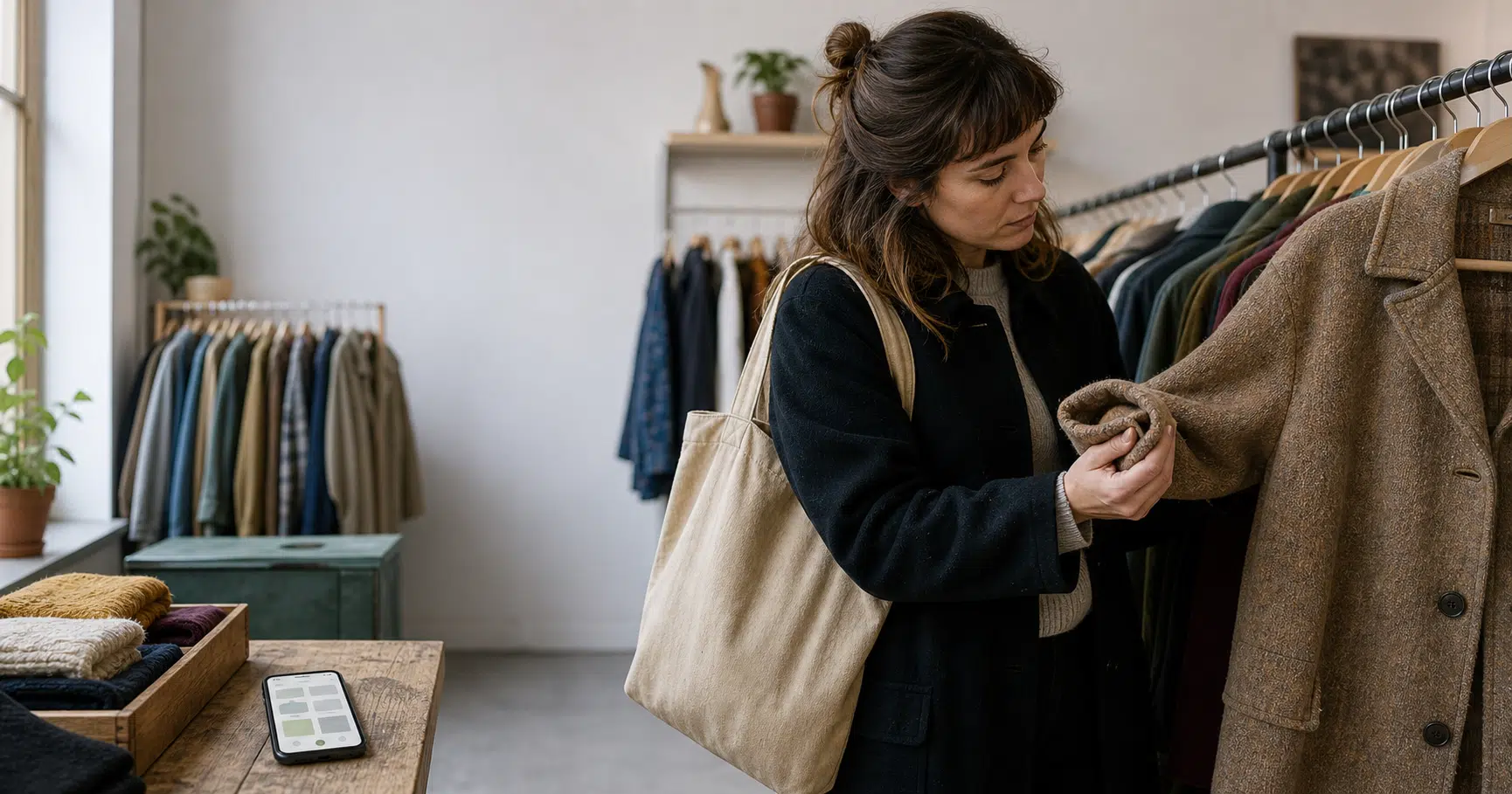

Secondhand fashion can stretch a clothing budget and keep wearable garments in circulation. It can also become another channel for impulse purchases, overflowing closets, and rapidly changing trends. The difference comes down to how—and why—you shop.
Resale is often framed as the natural counterweight to fast fashion. That framing is too convenient. Buying a used garment may reduce the need for one new purchase, but resale alone does not slow production or guarantee that shoppers will consume less. It works best when it changes what a buyer purchases, how long that item is used, and what happens to it afterward.
For shoppers, the practical goal is not to find the busiest marketplace or the lowest sticker price. It is to identify clothing that fills a real need, survives inspection, fits properly, and is likely to be worn enough to justify the total cost.
Start with the purchase, not the platform
A resale app can make browsing feel inexpensive because every listing appears to be a limited opportunity. Low prices and one-of-a-kind inventory create urgency, even when the buyer does not need another garment. That is how secondhand shopping can reproduce the same behavior encouraged by fast fashion: frequent purchases, short ownership cycles, and a constant search for something new.
Begin by defining the item before opening an app or visiting a thrift store. Specify the category, intended use, preferred materials, acceptable colors, and maximum total price. A request such as a dark wool coat for regular winter use is more useful than a vague plan to look for bargains.
A simple purchase brief should answer four questions:
- What gap in the wardrobe will this item fill?
- How often is it likely to be worn?
- What condition problems are acceptable or repairable?
- What is the maximum price after fees, shipping, cleaning, and repairs?
That last question matters because a cheap listing can become an expensive purchase once the full transaction is counted. The relevant number is the cost of getting the garment ready to wear, not merely the price displayed beside the photo.
Use a repeatable secondhand buying process
Buying used clothing usually requires more judgment than ordering a new item with standardized photos and fresh inventory. The process becomes easier when each listing is evaluated in the same order.
- Confirm the need. Decide what the garment will replace or add before considering its brand, rarity, or discount. If there is no clear use for it, the bargain is probably beside the point.
- Check measurements. Tagged sizes can vary between brands, product lines, and production periods. Compare the listing measurements with a similar garment that already fits instead of relying on the size label alone.
- Inspect the high-wear areas. Look closely at collars, cuffs, hems, underarms, pockets, knees, fasteners, and interior linings. Ask for additional photographs when those areas are missing or unclear.
- Identify repair work. Loose buttons and minor seam problems may be manageable. Persistent odors, extensive fabric damage, failing coatings, or missing proprietary hardware can turn a low-cost purchase into a poor candidate.
- Calculate the all-in cost. Include marketplace charges, delivery, cleaning, alterations, and likely repairs. Compare that figure with the usefulness of the garment rather than with an advertised original price.
- Review transaction protections. Check the return window, dispute procedure, payment protection, and rules for items that differ materially from their description. Do this before paying, particularly for expensive or frequently counterfeited products.
- Pause before checkout. Give the item enough time to lose its sense of urgency. A purchase that still solves the same wardrobe need after the pause is easier to defend than one driven by scarcity alone.
This process does not eliminate risk, but it directs attention toward fit, condition, and expected use—the factors that determine whether a secondhand purchase becomes part of a working wardrobe.
Choose a resale channel that matches the risk
Not every secondhand channel offers the same balance of price, convenience, inspection, and buyer protection. The best choice depends on how much uncertainty you are prepared to manage.
Local thrift and consignment stores let shoppers inspect fabric, construction, and fit before paying. Selection is unpredictable, however, and return policies may be restrictive. These stores work well when the buyer can visit without expecting a specific model or size to be available.
Peer-to-peer marketplaces can provide broader selection, including older styles and niche labels. They also place more importance on listing quality, seller communication, platform fees, and dispute rules. Buyers should treat photographs and descriptions as part of the product, not as decoration around it.
Managed resale services may handle more of the listing, fulfillment, or condition-grading process. That convenience can be useful for shoppers who want less direct negotiation, but buyers still need to understand how the service defines condition and handles returns.
Brand-run resale programs are narrower by design. They may appeal to shoppers seeking a familiar label, a discontinued style, or a more controlled brand experience. A company operating its own resale channel can also retain a relationship with the product after its first sale, rather than leaving the entire secondary transaction to an outside marketplace.
Flexible Tailor’s Measuring Tape
Use a flexible tailor’s tape to measure a garment that already fits, then compare its chest, waist, rise, inseam, and length with the seller’s measurements.
As an Amazon Associate I earn from qualifying purchases.
Whichever channel you choose, compare the actual transaction terms. A seller-friendly fee model may encourage more listings, while buyer-side charges can make the checkout total meaningfully different from the displayed price. Neither structure is automatically better for the shopper; clarity about the final cost and available protection matters more.
Do not confuse resale growth with lower consumption
The central sustainability problem is not whether a garment has one owner or two. It is the combination of how many garments are produced, how frequently they are purchased, how long they remain useful, and how quickly they are discarded.
Resale can extend the useful life of an item. Its environmental value is less convincing when a shopper uses the money saved to purchase several additional garments or treats the ability to resell as permission to buy more frequently. Passing an item to another owner does not erase the effects of producing it, and a functioning secondary market does not require manufacturers to reduce their output.
This is a familiar tension in the circular economy: reuse is helpful, but it cannot compensate indefinitely for a business model built around accelerating consumption. A durable garment that remains in regular use serves a different purpose from a trend-driven item moving rapidly between closets.
Shoppers can respond by applying the same standards to used clothing that they should apply to new clothing:
- Prefer construction and materials suited to the intended use.
- Avoid buying solely because an item is inexpensive or scarce.
- Repair suitable garments before replacing them.
- Resell or donate items while they are still wearable and accurately describe their condition.
- Track repeated purchasing mistakes, such as unreliable sizes or fabrics that go unworn.
These habits are not as effortless as clicking through a stream of listings. They are more likely to produce the outcome resale promises: fewer unnecessary purchases and longer use from the clothing already in circulation.
Brands benefit from resale, but incentives still matter
Retailers have clear reasons to participate in the secondary market. A resale program can keep customers inside a brand’s ecosystem, create another transaction around an existing product, and give the company more influence over presentation and authentication.
That does not automatically change how the original products are designed or how many collections enter the market. A resale initiative can sit alongside a high-volume production strategy without challenging it. The program’s sustainability value therefore depends on more than the existence of a trade-in page or a preloved section.
For buyers, the relevant questions are concrete. Does the program provide useful condition information? Are prices and fees transparent? Can the garment be returned? Does the product appear durable enough for another ownership cycle? Is the purchase replacing something, or merely adding to the total?
The answers matter more than the branding around the program. Resale should be evaluated as a shopping channel with costs, policies, and trade-offs—not as an automatic guarantee of responsible consumption.
The practical verdict
Secondhand shopping can be a sensible way to find better value, obtain older styles, and keep usable clothing in circulation. It is most effective when the buyer enters with a defined need and evaluates the garment as carefully as any other significant purchase.
What resale cannot do by itself is resolve fashion’s dependence on frequent production and frequent consumption. That requires fewer unnecessary purchases, more durable products, longer ownership, and slower replacement cycles.
The useful question is therefore not whether secondhand fashion is good or bad. It is whether a specific used garment will be worn, maintained, and kept long enough to make the purchase worthwhile. If the answer is unclear, the most practical move may be to leave it for the next buyer.