

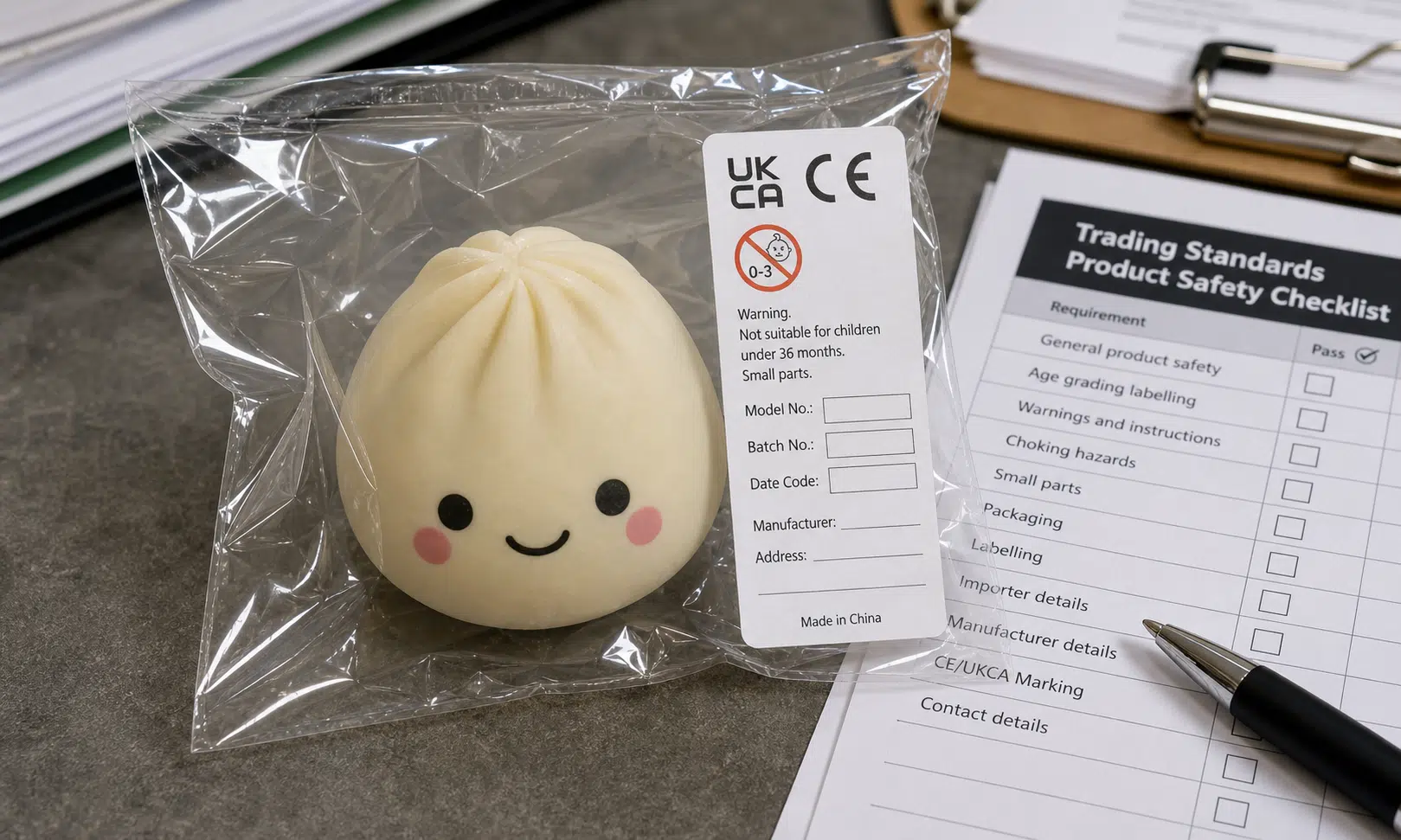

A council warning has followed the reported seizure of about 5,900 counterfeit squishy toys from a warehouse in Glasgow, with trading standards officers raising concerns about products that may not meet safety rules.
The toys are described as small, soft collectibles that resemble dumplings and are often sold in blind-packed dim sum-style boxes, meaning buyers do not know which version they have until the packaging is opened. That format has helped make similar toys popular in online unboxing videos, although the reported link between social media popularity and counterfeit versions has not been independently verified.
What Buyers Are Being Warned About
Glasgow City Council said the seized items posed a serious danger to people using or playing with them. The council linked its warning to a reported recovery of roughly 5,900 items from a warehouse on Commerce Street, near the Kingston Bridge.
Officials said unsafe versions may contain substances such as phthalates, solvents and formaldehyde, or give off strong chemical odours. Those risks have been described as including skin irritation, allergic reactions, nausea, headaches and breathing problems, although the individual contents of every item have not been independently verified.
The council also warned that some products may lack age guidance, safety instructions or other required labelling. For younger children, that can make the risk harder for parents and carers to judge, particularly where toys resemble food or can split open.
Checks Before Buying
Buyers considering popular squishy toys are being advised to buy from retailers they trust and to examine the packaging before purchase. Useful checks include looking for clear manufacturer details, UKCA or CE marking, age restrictions, safety warnings and instructions.
A missing label does not prove on its own that a toy is counterfeit, but it is a warning sign. Other signs cited by the council include an unusually strong smell, a price that appears much lower than expected, items sold without packaging, or food-shaped toys sold without a clear “do not eat” warning.
The council also referred to Office for Product Safety and Standards estimates when discussing the wider cost of unsafe products. Based on that type of calculation, it estimated the reported seizure could represent about £419,000 in avoided health, safety and consumer costs, though that figure has not been independently verified.
For shoppers, the practical message is straightforward: if the packaging is unclear, the seller is hard to identify, or the toy smells strongly of chemicals, it is safer to walk away than treat the low price as a bargain.