


Dell’s latest quarter was not just a strong earnings report. For enterprise buyers, it was a signal that the market for AI servers, traditional servers, networking gear, and business PCs is getting more competitive at the same time that prices are under pressure.
The company reported revenue of $43.84 billion for the quarter ended May 1, up nearly 88% from a year earlier and ahead of analyst expectations of $35.43 billion. Adjusted earnings came in at $4.86 per share, compared with the $2.94 analysts had expected. Dell shares climbed sharply after the results, reflecting how quickly the company has been recast from a mature hardware vendor into one of the main infrastructure names tied to AI spending.
For buyers, the headline is simple: Dell is selling more infrastructure, but the same demand that is helping revenue is also making procurement harder.
What Changed in Dell’s Business
Dell’s Infrastructure Solutions Group, which includes servers and other data center equipment, produced $29 billion in revenue, up 181% year over year. That was well above the StreetAccount consensus of $22.4 billion.
AI server revenue was the standout figure. Dell said revenue from AI servers rose 757% from a year earlier to $16.1 billion. The company also raised its full-year AI revenue forecast to $60 billion, up from a prior projection of $50 billion.
The expansion is being driven by AI infrastructure demand, including systems that use graphics processing units. The specific supplier mix, including references to Nvidia-class GPUs, has not been independently verified for every order and should not be treated as a complete bill of materials.
Dell said it now has more than 5,000 AI server customers across neocloud providers, sovereign clients, and enterprises. That matters because the customer base appears broader than a narrow group of hyperscale buyers. If enterprise demand keeps expanding, buyers may face more competition for servers, components, delivery slots, and implementation support.
Dell Results at a Glance
| Metric | Reported Result | Market Expectation or Context |
|---|---|---|
| Adjusted EPS | $4.86 | $2.94 expected |
| Revenue | $43.84 billion | $35.43 billion expected |
| Year-over-year revenue growth | Nearly 88% | Fastest pace since Dell returned to public markets in 2018 |
| AI server revenue | $16.1 billion | Up 757% year over year |
| Infrastructure Solutions Group revenue | $29 billion | Above $22.4 billion consensus |
| Client Solutions Group revenue | $14.6 billion | Above $12.8 billion consensus |
What Buyers Should Watch Before Ordering
The numbers point to a vendor with strong demand, but they also expose the tradeoffs buyers need to manage. Dell raised prices in January to reflect higher input costs tied to the memory shortage and broader component inflation. Management also signaled that repricing has been frequent, with pressure coming from DRAM, NAND, CPUs, raw materials, and other inputs.
That means buyers should avoid treating current quotes as stable for long planning cycles. If a project depends on AI servers, GPU-heavy configurations, or large storage and memory footprints, procurement teams should clarify how long pricing is valid, what substitutions are allowed, and whether delivery dates depend on constrained components.
Key buying questions include:
- How long is the quoted price protected?
- Which components are most likely to delay delivery?
- Can the configuration be adjusted if memory, CPUs, drives, or accelerators are constrained?
- Does the deployment require AI-optimized servers, traditional servers, or a mix of both?
- Are networking, racks, power, cooling, and services included in the timeline?

Dell PowerEdge T360 Tower Server
For smaller deployments, branch offices, or non-accelerated workloads, a tower server such as the PowerEdge T360 can be easier to scope than a GPU-heavy AI system. Confirm processor, memory, storage, support term, and operating system configuration before comparing quotes.
As an Amazon Associate I earn from qualifying purchases.
For organizations buying traditional servers, the report still matters. Dell said growth accelerated across AI servers as well as traditional servers and networking gear. Unit sales growth for traditional servers also increased significantly, according to management. That suggests the market is not only about training clusters; inference workloads, agentic workloads, modernization projects, and general enterprise refresh cycles are also contributing to demand.
AI Servers vs. Traditional Infrastructure
The better buying path depends on the workload. AI servers can be the right fit for organizations running model training, large-scale inference, or specialized accelerated computing. Traditional servers may still be the better choice for virtualization, databases, internal applications, file services, and workloads that do not need expensive accelerators.
| Buyer Need | Likely Fit | Tradeoff |
|---|---|---|
| Large AI training or high-volume inference | AI-optimized servers | Higher cost and greater exposure to constrained components |
| Enterprise app refresh | Traditional servers | Less specialized, but still affected by CPU, memory, and drive supply |
| Networking expansion for data center growth | Server and networking bundle | Requires closer planning across compute, storage, and fabric capacity |
| Business laptops and workstations | Client Solutions Group products | More predictable than AI infrastructure, but still tied to component costs |
Dell’s Client Solutions Group, which covers consumer and business PCs and accessories, also grew. Revenue rose 17% to $14.6 billion, ahead of the $12.8 billion consensus. During the quarter, Dell announced new laptops and workstations for business clients, giving IT teams another category to consider if they are planning broader device refreshes alongside infrastructure upgrades.
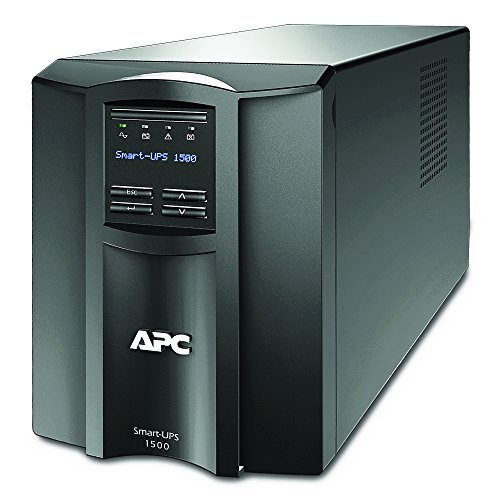
APC Smart-UPS SMT1500C Battery Backup
A UPS is worth planning alongside servers and networking gear, especially where outages or voltage events could interrupt deployment work. Match capacity and runtime to the actual load rather than sizing from server count alone.
As an Amazon Associate I earn from qualifying purchases.
Buyer Verdict
Dell’s quarter strengthens the case for including the company in enterprise infrastructure evaluations, especially for organizations planning AI deployments or data center expansion. The scale of the revenue beat shows that demand is real, not theoretical.
The caution is timing. Dell expects supply constraints in the second half of fiscal 2027, and management pointed to shortages beyond memory, including standard processors, hard drives, and other goods. Buyers who wait may have more clarity on their own AI needs, but they could also face higher prices, longer lead times, or less flexibility on preferred configurations.
The practical move is to separate must-have infrastructure from experimental capacity. Lock down quotes and delivery windows for projects already approved. For exploratory AI work, avoid overbuying hardware before workload requirements are clear. Dell’s momentum makes it a more important vendor conversation, but the same surge also makes disciplined procurement more important.