

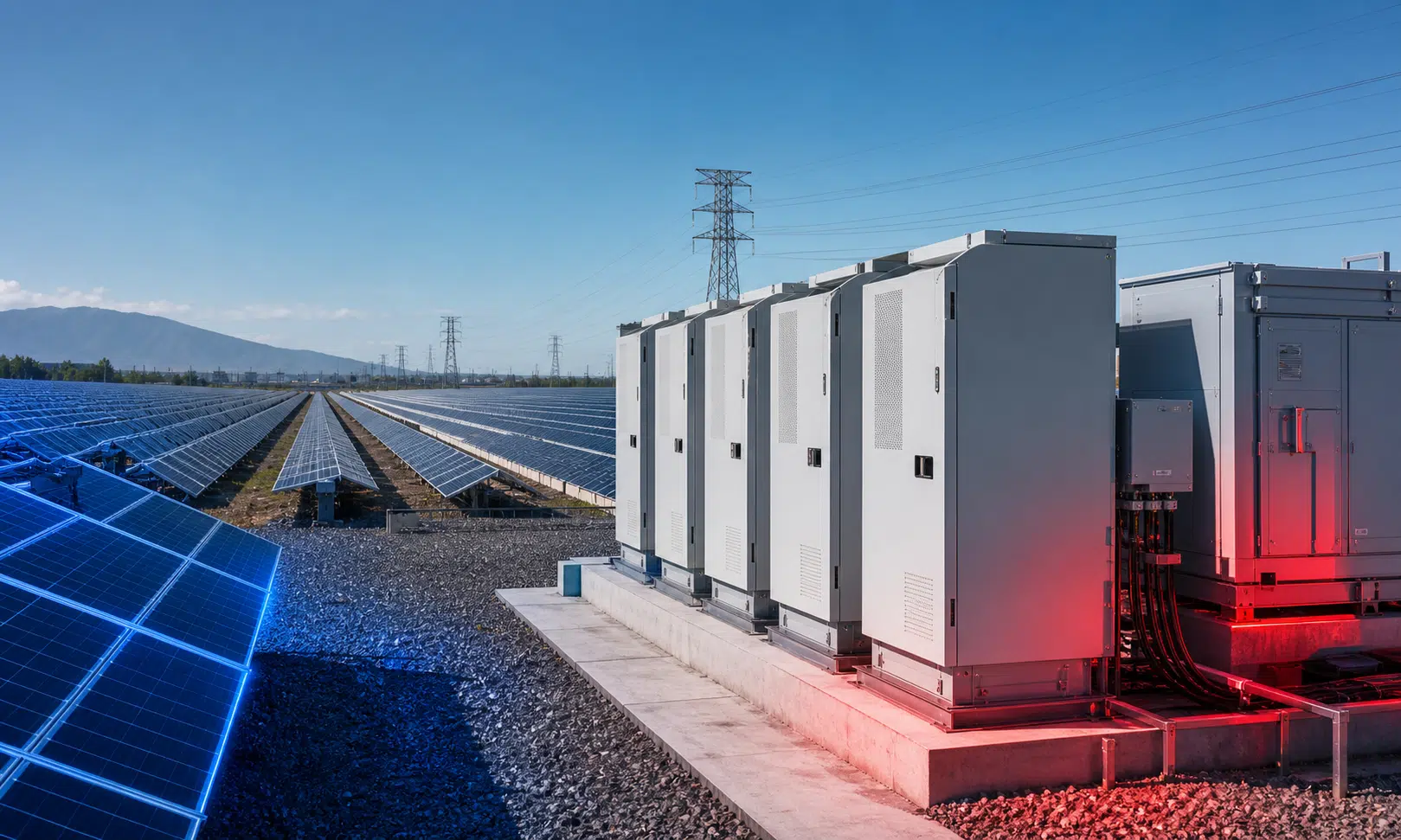

China has sharply criticized the European Union’s move to exclude Chinese inverters from EU-funded solar projects, warning that the decision could put pressure on trade relations, project supply chains, and Europe’s energy transition plans.
The response came from China’s Ministry of Commerce after the EU moved to restrict financial support for photovoltaic projects that use inverters from suppliers considered high risk. China was included on that high-risk list alongside Russia, Iran, and South Korea.
For solar developers, EPCs, and procurement teams, the dispute is more than a diplomatic exchange. It raises practical questions about project eligibility, supplier selection, financing risk, and whether inverter choices could affect access to public funding.
What the EU measure targets
The EU measure focuses on PV projects receiving EU financial support. Under the policy, projects using inverters from suppliers in designated high-risk countries may be excluded from funding support.
The EU revealed the plan on April 23. The measure applies to inverters, a core component in solar power systems because they convert electricity generated by PV modules into grid-usable current. In large solar projects, inverter selection also affects monitoring, grid compliance, cybersecurity reviews, warranty planning, and long-term operations.
The source article identifies China, Russia, Iran, and South Korea as countries included on the EU’s high-risk list. The most commercially significant part of the decision is China’s inclusion, because Chinese manufacturers hold a major position in the global solar equipment supply chain.
Beijing rejected the EU’s reasoning and argued that the designation was not supported by factual evidence. China’s Ministry of Commerce said the EU had, for the first time, treated China as a so-called high-risk country and used that designation as the basis for excluding projects using Chinese inverters from financial support.
Beijing warns of trade and supply chain fallout
China’s response framed the EU decision as discriminatory and harmful to bilateral economic cooperation. The Ministry of Commerce said the designation could undermine mutual trust between China and the EU, disrupt industrial cooperation, and create additional pressure on supply chains.
The ministry also warned that the policy could increase the risk of further decoupling between Chinese and European supply chains. No specific countermeasures were announced, but Beijing said it would monitor the situation and assess the impact on Chinese companies and on China-EU industrial links.
That wording leaves room for a range of possible responses, from diplomatic objections to commercial or regulatory measures. At this stage, however, no concrete retaliatory action has been publicly detailed in the source material.
For buyers, that distinction matters. A policy dispute can create uncertainty before it creates direct operational disruption. Procurement teams may need to separate confirmed rules from potential responses that have not yet been defined.
Why inverter buyers should pay attention
The immediate concern for project owners is not whether Chinese inverters can be used in every European solar project. The issue is whether using them could affect eligibility for EU-backed financial support in covered projects.
That makes the procurement question more specific. Developers and EPCs may need to review whether a project depends on EU funding, whether the inverter supplier falls within the restricted category, and whether substitution would affect cost, delivery timing, system design, or warranty coverage.
A practical review should focus on the project’s funding exposure before treating the policy as a blanket product ban. Key questions include:
- Is the project receiving EU financial support or applying for it?
- Does the inverter supplier fall under a listed high-risk country designation?
- Would changing inverter suppliers require redesign, new grid approvals, or revised warranties?
- Are delivery schedules dependent on a single manufacturer or distributor?
- Does the financing agreement include compliance language tied to supplier origin or security rules?
For projects outside the scope of EU funding, the commercial impact may be indirect. Even then, uncertainty can influence lender questions, tender language, and supplier due diligence. Buyers may see more requests for documentation on country of origin, ownership structure, cybersecurity controls, and long-term service arrangements.
Potential impact on Europe’s solar buildout
China’s Ministry of Commerce argued that excluding Chinese products could harm the EU’s own green transition and energy security goals. The logic is straightforward: if a major supplier group is restricted in funded projects, developers may face fewer equipment options, more complex procurement checks, or higher replacement costs.
The source article does not provide evidence of immediate project delays or price changes, so those outcomes should not be treated as confirmed. The more defensible conclusion is that the policy adds a new compliance layer for projects tied to EU support.
That compliance layer could still be meaningful. Inverter availability, certification status, technical compatibility, and bankability are already central to utility-scale and commercial PV procurement. A funding restriction linked to supplier risk gives buyers another factor to weigh alongside performance, cost, service coverage, and cybersecurity review.
What remains unclear
Several important details remain unresolved. The source does not specify how the EU will evaluate individual suppliers, whether exceptions may apply, or how projects already in development will be handled. It also does not confirm any Chinese countermeasures.
Until more guidance is available, the safest commercial approach is to treat the measure as a funding and compliance issue rather than a universal market ban. Developers pursuing EU-backed support should verify eligibility requirements directly in their financing and tender documents before locking in inverter supply.
For Chinese manufacturers, the dispute could become a test of how Europe balances energy security concerns against its need for affordable, available solar equipment. For European buyers, the practical task is narrower: understand whether the rule touches the project, document supplier risk, and avoid procurement choices that could jeopardize funding late in the development process.