

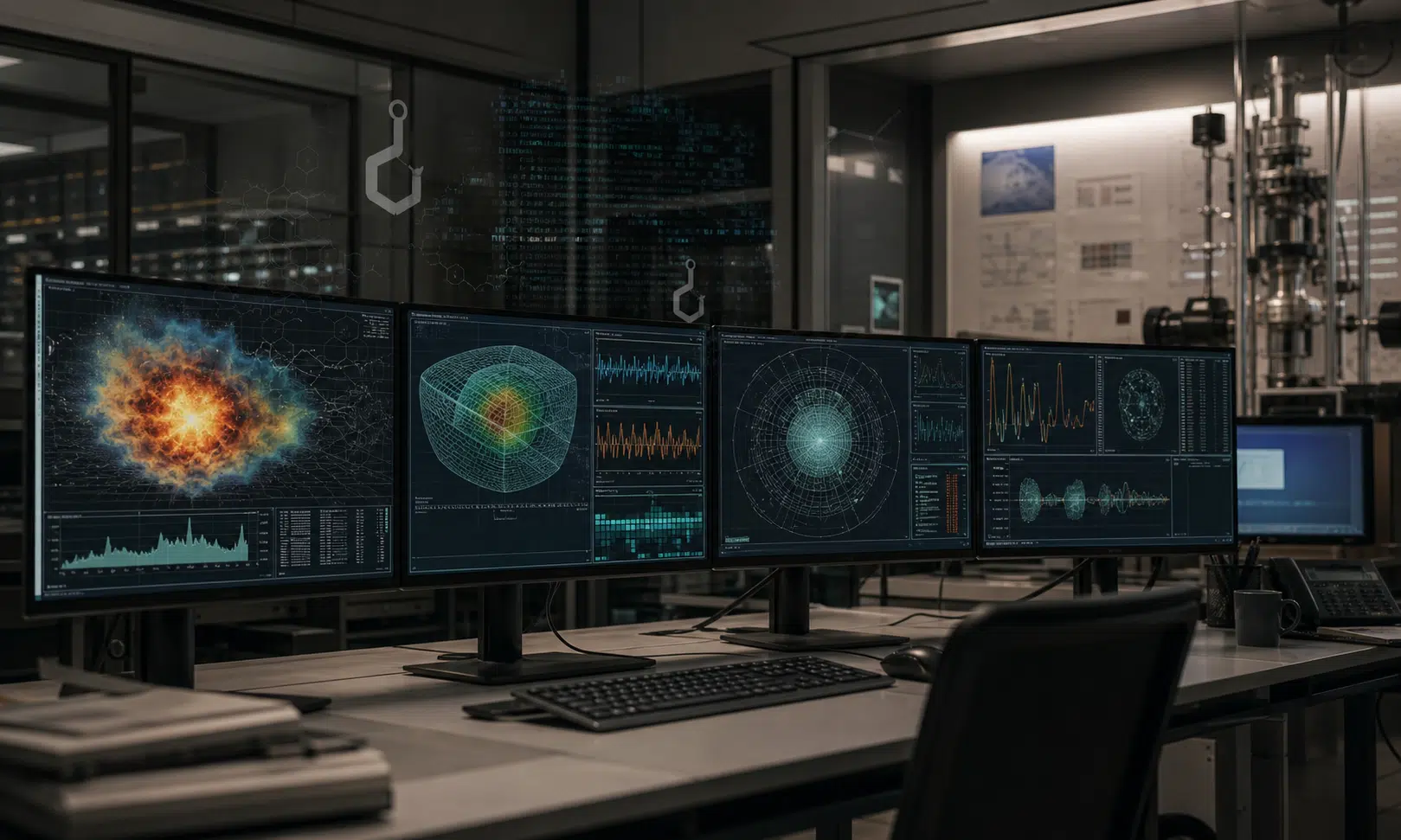

Fast16, a Lua-based malware framework examined by multiple security research teams, is now being described as a purpose-built cyber sabotage tool aimed at engineering simulations rather than ordinary IT systems.
The most important claim from the latest analysis is not that fast16 stole data, installed ransomware, or opened a backdoor for routine espionage. It is that the malware was designed to alter the results of high-explosive simulations associated with nuclear weapons research.
That distinction matters for security leaders responsible for engineering environments, research labs, defense contractors, manufacturers, and other organizations where software output can drive physical-world decisions. Fast16 appears to sit in the same broad category of threat as Stuxnet: malware tailored to a specific technical process, with enough domain knowledge to manipulate that process in ways a normal endpoint alert might never explain.
What Fast16 Was Built to Target
According to the reported analysis, fast16 focused on simulation software used for real-world engineering problems, including explosive modeling and material behavior. Researchers identified LS-DYNA and AUTODYN as targeted applications in the latest work.
Those programs are not consumer software. They are specialized engineering tools used to model complex physical events. In this case, the malware’s interest appears to have been narrow: high-explosive detonation and blast simulations where uranium compression could be relevant.
The reported hook engine looked for a material-density condition above 30 g/cm3, a threshold associated with uranium under shock compression. That suggests fast16 was not simply corrupting random calculations. It was gating its activity to a specific class of simulation work.
For buyers and operators of security tooling, that is the practical lesson. A malware family like this can live outside the patterns most controls are tuned to catch. It may not need to cause obvious system instability. It may succeed if the workstation keeps running and the simulation result is quietly wrong.
How the Tampering Reportedly Worked
The fast16 framework reportedly used a set of 101 hook rules to interfere with mathematical calculations inside targeted simulation programs. Those rules were grouped in ways that appeared to correspond to different builds or versions of LS-DYNA and AUTODYN.
That kind of version-aware targeting is significant. It suggests the operators were not merely exploiting one accidental software condition. They had to understand the simulation applications, their calling patterns, and the circumstances under which tampering would produce useful sabotage rather than obvious failure.
Researchers described three broad attack strategies in the hooks. The tampering was said to activate during full-scale transient blast and detonation runs, not during every ordinary operation.
| Fast16 element | Reported role | Why it matters |
|---|---|---|
| Hook rules | Modified selected calculations inside simulation software | Targets the integrity of results, not just system availability |
| Density gate | Activated only when simulated material density crossed a specific threshold | Reduces noise and points to domain-specific intent |
| Version groups | Covered multiple builds of targeted applications | Suggests sustained adaptation to the victim environment |
| Simulation focus | Centered on high-explosive blast and detonation runs | Connects the malware to weapons-research sabotage rather than broad malware activity |
One reported interpretation is that hook groups may have been added over time as targeted software versions changed, or as users moved between versions while troubleshooting anomalies. That sequence has not been independently confirmed, but the version coverage still points to a deliberate effort to keep the malware useful across more than one application build.
Why Fast16 Changes the Risk Conversation
Most enterprise security programs are still built around protecting confidentiality, preventing ransomware downtime, and reducing credential abuse. Those priorities remain valid, but fast16 highlights a different risk: silent corruption of trusted technical outputs.
For a research or engineering organization, the damaging event may not be a locked file server. It may be a simulation that produces a plausible but false answer. If that result informs design work, procurement, safety margins, or strategic planning, the downstream impact can be larger than the initial compromise.
This is especially relevant where engineering software runs on powerful workstations, shared lab networks, or legacy environments that are treated differently from standard corporate endpoints. Those systems often need specialized drivers, older application versions, local administrator access, or exceptions from standard hardening baselines.

YubiKey 5 NFC Security Key
A hardware security key can help reduce reliance on passwords for administrator and engineering accounts. It is most useful when paired with identity policies that require phishing-resistant MFA for systems that can alter solver binaries, scripts, or validated outputs.
As an Amazon Associate I earn from qualifying purchases.
A practical security review for this kind of environment should ask different questions than a normal office endpoint audit:
- Which simulation, CAD, modeling, or control applications produce high-trust outputs?
- Which workstations and servers run those applications, and who can modify their binaries, plug-ins, scripts, or libraries?
- Are engineering outputs independently validated before being used for design or operational decisions?
- Can endpoint security detect unauthorized hooks, injected code, or modified calculation paths inside specialized applications?
- Are software versions tracked closely enough to notice unexpected rollback, patch drift, or unauthorized replacement?
These questions matter because process-aware malware is designed to blend into the very systems teams already trust.
What Security Teams Should Take From It
Fast16 is not a typical incident-response story with a simple patch-and-move-on conclusion. The larger takeaway is that high-value technical environments need controls around integrity, not only malware presence.
Organizations that depend on engineering simulation should treat model outputs, solver binaries, plug-ins, and workflow scripts as sensitive assets. The same applies to environments used for energy research, aerospace, automotive safety, materials science, defense work, and other fields where simulation accuracy has business or safety consequences.
A useful control set starts with software provenance. Teams should know where engineering applications came from, which versions are approved, how updates are tested, and whether local modifications are expected. File integrity monitoring can help, but it needs to be tuned to the actual application paths and binaries used by engineers.
The next layer is behavioral monitoring. A workstation running specialized simulation tools may require different baselines than a laptop used for email and browsing. Security teams should look for unexpected code injection, suspicious interpreter use, anomalous library loading, and lateral movement into lab or engineering subnets.
Finally, output validation needs a formal place in the workflow. For critical simulations, organizations should consider independent reruns, comparison across trusted environments, checksum-protected input decks, peer review of solver settings, and separation between systems used to prepare models and systems used to validate final results.
Why This Matters for Buyers
Fast16 is a reminder that not every important cyber threat looks like malware on a finance laptop. Buyers evaluating endpoint detection, exposure management, application control, network segmentation, or industrial security platforms should press vendors on how their products handle specialized technical environments.
The buying question is not simply whether a tool detects known malware names. It is whether it can help identify manipulation of trusted engineering workflows.
That includes support for controlled application allowlisting, file-integrity policies that can be scoped to engineering software, visibility into script engines and interpreters, and alerting that security teams can tune without breaking legitimate research work.

TP-Link TL-SG108E Smart Switch
A VLAN-capable smart switch can help separate engineering workstations, test systems, and ordinary office devices on a small network. It is not a substitute for a full security platform, but it can support cleaner lab segmentation and traffic control.
As an Amazon Associate I earn from qualifying purchases.
For organizations with sensitive modeling environments, vendor evaluation should include concrete scenarios:
- Can the platform monitor high-value workstations without unacceptable performance impact?
- Can it detect unauthorized changes to solver binaries, plug-ins, and supporting libraries?
- Can it distinguish approved simulation activity from suspicious code injection or tampering?
- Does it provide enough forensic detail to explain what changed, when, and under which user context?
- Can policies be separated between office IT, lab systems, and engineering networks?
Those requirements are more specific than a generic endpoint checklist, but that is the point. Fast16-style sabotage depends on details. Defensive programs need to meet it at that level.
The Pre-Stuxnet Lesson
SentinelOne previously described fast16 as a sabotage framework whose components may date back to around 2005, which would place its development before the earliest known Stuxnet version. That timeline has not been independently established in every detail, but the broader implication is clear enough: process-aware cyber sabotage is not a new idea.
Stuxnet became the best-known example because it affected physical centrifuges through industrial control systems. Fast16 points to a related but different path: corrupting the engineering or simulation layer before a physical system is ever built or tested.
That should broaden how organizations define critical infrastructure inside their own networks. The crown jewels may include the software that designs, models, verifies, or validates a physical process.
For defenders, the lesson is direct. Sensitive engineering systems need visibility, version discipline, controlled access, and independent validation. A workstation that produces trusted simulation results deserves the same seriousness as a production server, because in the right environment, a corrupted answer can be the attack.