

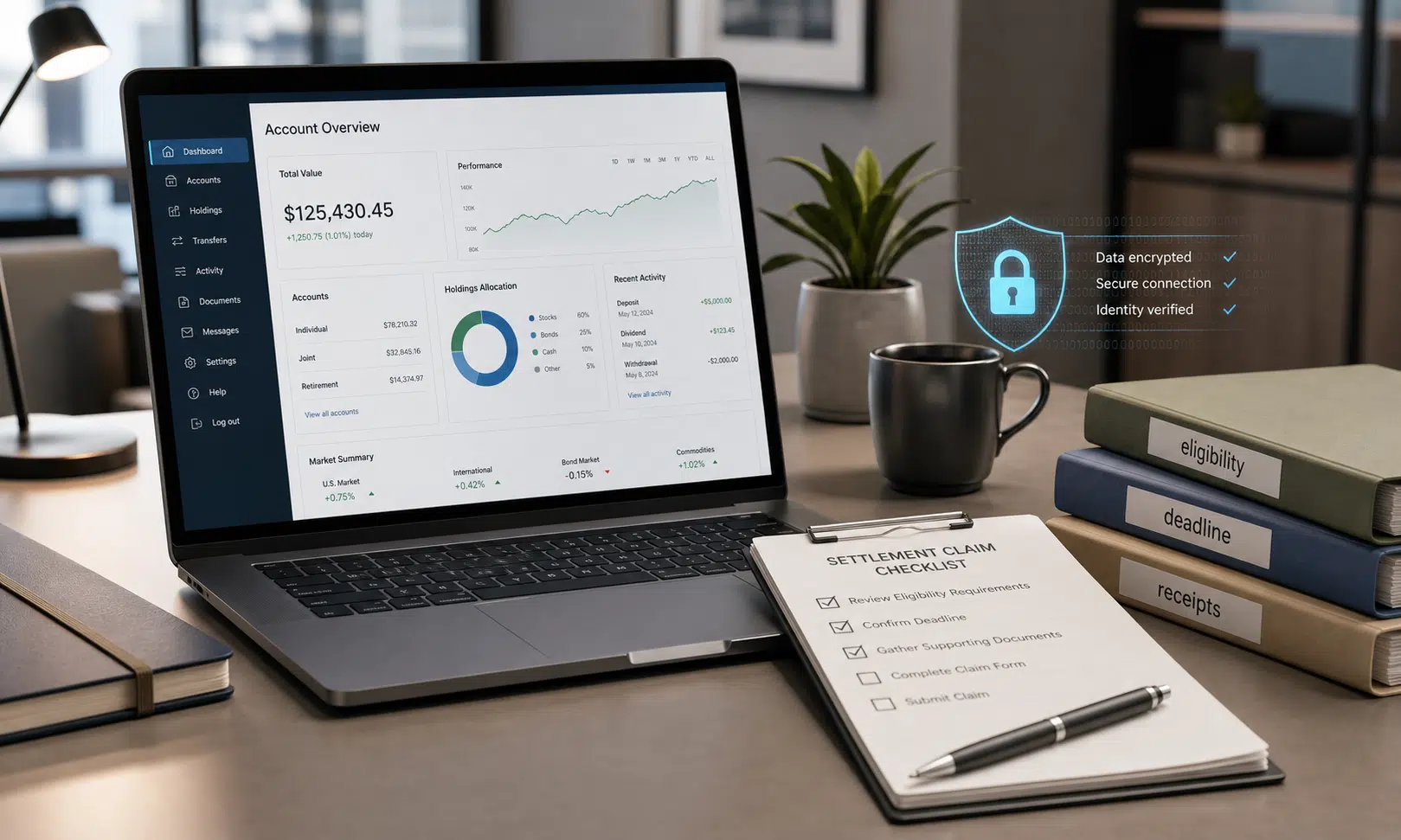

Fidelity Investments has agreed to a $2.5 million class action settlement tied to a 2024 data breach, and some affected customers may be able to claim payments of up to $5,000.
The settlement is not final yet. A court hearing is scheduled for July 9, 2026, and payments cannot go out unless the agreement receives final approval. But eligible customers who want compensation still need to pay attention now: the claim deadline is July 27, 2026.
The case centers on allegations that an unauthorized third party accessed Fidelity’s network between Aug. 17, 2024, and Aug. 19, 2024. The lawsuit claims the incident exposed sensitive customer information, potentially including names, Social Security numbers, driver’s license details, and bank account and routing numbers. Fidelity denies wrongdoing, but agreed to settle the litigation rather than continue fighting the case in court.
For affected customers, the practical question is simple: were you included in the settlement class, and if so, is it worth filing a claim?
Who may qualify for the Fidelity settlement?
You may be eligible if Fidelity notified you about the August 2024 data security incident. U.S. customers whose financial account number and routing number were compromised may also be included.
If you are not sure whether you are part of the settlement class, the settlement administrator can confirm eligibility. You can contact the administrator by email or phone using the details provided in the official settlement notice.
The settlement materials also lay out several important dates:
| Settlement item | Date or amount |
|---|---|
| Data incident window | Aug. 17, 2024 to Aug. 19, 2024 |
| Final approval hearing | July 9, 2026 |
| Claim deadline | July 27, 2026 |
| Documented-loss reimbursement | Up to $5,000 |
| Estimated pro rata cash payment | About $100, depending on approved claims |
Those amounts are not guaranteed for every claimant. The largest payments are reserved for people who can document qualifying out-of-pocket losses connected to the breach. Other eligible class members may be able to claim a smaller cash payment even if they do not have documented losses.
What payments are available?
The settlement gives eligible customers a few possible forms of relief, depending on their circumstances and the documents they can provide.
- Up to $5,000 for documented out-of-pocket losses tied to the data breach.
- An estimated pro rata cash payment for eligible class members who submit a valid claim.
- An additional estimated payment for qualifying California residents under the California Consumer Privacy Act, according to the settlement materials.
- Credit monitoring or identity theft protection benefits, depending on the option selected on the claim form.
The no-documentation cash payment is described as pro rata, which means the final amount can change based on how many valid claims are submitted and how settlement costs are allocated. The settlement materials estimate that payment at about $100, but the final number could be higher or lower.
California residents may also be eligible for a separate proportional payment. Settlement materials estimate that amount at about $50, but it should be treated as an estimate rather than a fixed payout.

Norton 360 with LifeLock
If your Social Security number, bank details, or other personal information may have been exposed, an identity monitoring service can help you watch for alerts while you review accounts and file any claim paperwork. Check the plan details carefully because credit monitoring, device protection, and reimbursement features vary by tier.
As an Amazon Associate I earn from qualifying purchases.
How to decide what kind of claim to file
If you received notice from Fidelity and did not suffer any known financial loss, filing for the standard cash payment may be the simplest route. You will still need to submit a valid claim by the deadline, but you may not need to upload receipts or other proof for that basic payment option.
If you spent money because of the breach, take more time with the claim. The higher reimbursement category is meant for documented losses, so you should gather records before submitting. Useful documents may include bank statements, fraud reports, account recovery fees, credit freeze or monitoring costs, identity theft expenses, or other records showing a financial loss connected to the incident.
Do not guess or inflate a claim. Settlement administrators can reject claims that are incomplete, unsupported, or inconsistent with the settlement rules.
A practical way to sort your claim is to ask:
- Did Fidelity notify me about the 2024 data incident?
- Were my account and routing numbers exposed?
- Did I lose money or pay for protective services because of the breach?
- Do I have documents that show the loss, date, and amount?
- Do I live in California and qualify for the additional state-law payment?
What to do before the July 27 deadline
Eligible customers must submit a claim form by July 27, 2026. If you plan to claim documented losses, do not wait until the last day to look for records. It is easier to file accurately when you have statements, receipts, notices, and dates in front of you.
You should also review your financial accounts for suspicious activity, especially if bank account or routing information may have been exposed. Consider changing passwords on sensitive accounts, turning on multi-factor authentication, and watching for phishing messages that refer to Fidelity, a settlement, or a data breach.

Yubico Security Key C NFC
A hardware security key can strengthen sign-ins for supported email, password manager, and financial accounts by requiring a physical key during login. Confirm that your accounts support FIDO2 or WebAuthn security keys before buying.
As an Amazon Associate I earn from qualifying purchases.
The settlement is still subject to court approval, so filing a claim does not mean payment is immediate. It does, however, preserve your ability to receive benefits if the settlement is approved and your claim is accepted.
For many affected customers, the basic claim may take only a short time. For anyone seeking reimbursement up to $5,000, the real work is documentation. The stronger your paper trail, the easier it is for the administrator to evaluate the claim.