


Google may be considering a deal valued at more than $1.5 billion with Mechanize, a small San Francisco startup focused on training and evaluating AI coding agents. The proposal remains unconfirmed, its terms could change, and neither company has announced an agreement.
The outline attached to the talks describes something narrower than a conventional acquisition. Google would potentially hire some members of Mechanize’s team while licensing its technology on a non-exclusive basis. Those employees would reportedly contribute to model evaluation and development rather than bring an established consumer product into Google’s portfolio.
That distinction matters. If the arrangement proceeds as described, Google would be paying for specialized technical judgment, training infrastructure and the people who know how to identify where advanced coding models fail.
The proposal is not a standard startup acquisition
Mechanize is described as having a team of roughly 35 people, making the proposed value of the arrangement striking on a per-employee basis. But dividing $1.5 billion by the head count would produce a misleading picture.
The headline figure could cover several components, including technology licensing, compensation packages, payments to founders and returns for investors. Mechanize could also continue operating independently after some employees move to Google. Without final terms, the figure should not be treated as either an acquisition price or a new valuation for the startup.
Mechanize is said to have been launched in April 2025 by three former Epoch AI researchers, including chief executive Tamay Besiroglu. Details surrounding the young company remain limited. Its fundraising has been described as $9.1 million at a $500 million valuation, although those figures should be treated cautiously in the absence of a completed transaction or fuller financial disclosures.
Why coding evaluations are becoming so valuable
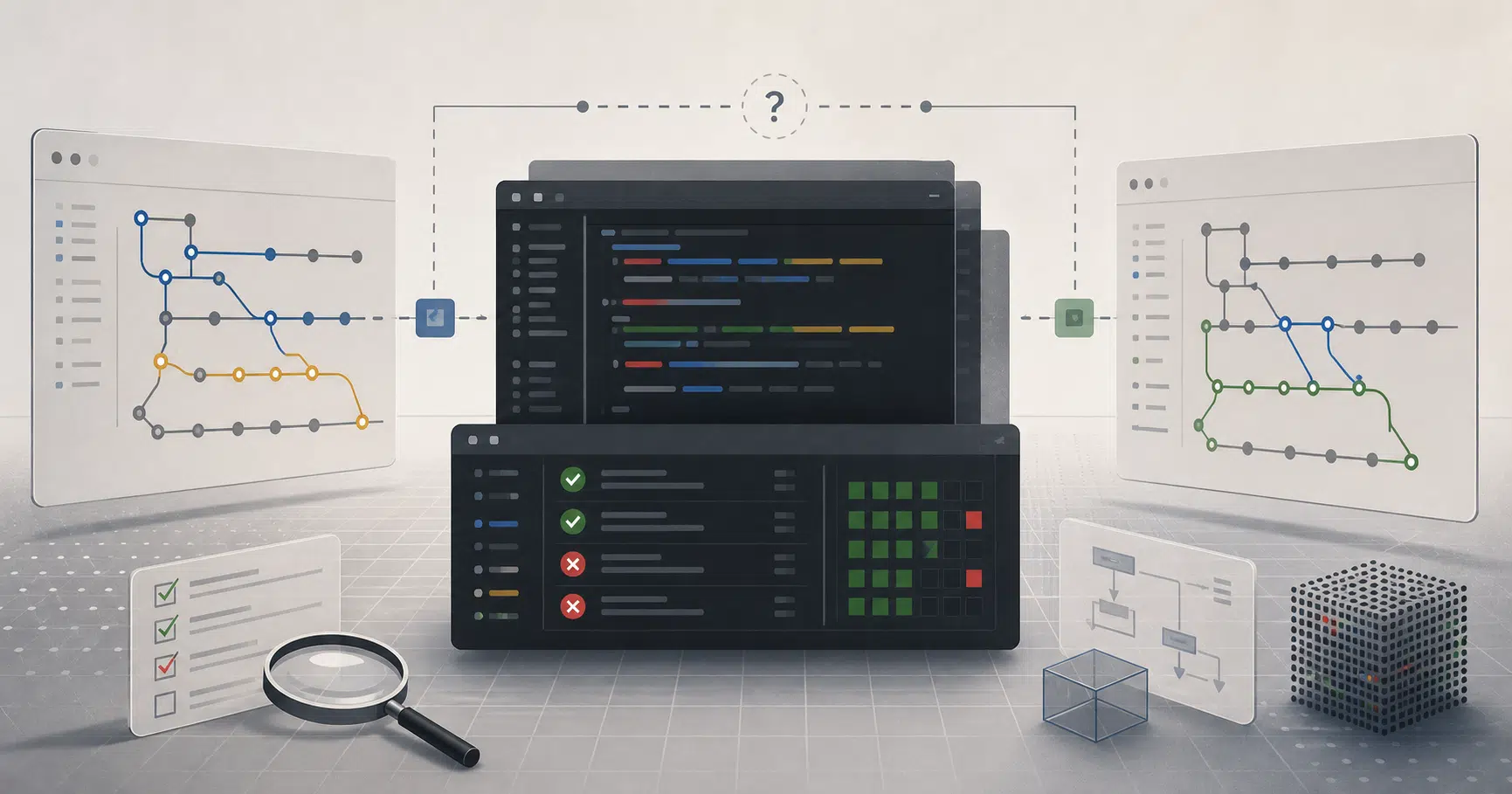
Mechanize’s work centers on training environments for software-writing agents. A typical environment can combine a prompt, a functioning codebase and a grader that determines whether the agent completed its assignment correctly.
Those environments can support reinforcement learning while also giving model developers a more consistent way to measure performance. The difficult part is not simply asking an AI coding agent to fix a bug or add a feature. It is building a test that recognizes a valid solution, rejects incomplete work and cannot be easily exploited by the model.
Creating those tasks is labor-intensive. A single environment can take an engineer about a week to develop from the initial idea through the final grading system. Much of that work goes into making the grader fair, repeatable and resistant to shortcuts.
That expertise becomes more important as headline benchmarks lose some of their ability to distinguish between leading models. A coding model may score well on established tests but still struggle with unfamiliar repositories, ambiguous requirements or changes spanning several parts of a real software project.
For Google, access to stronger evaluation systems could help its teams find weaknesses in Gemini’s coding performance and create more useful training signals. It would not guarantee that Gemini overtakes competing coding products, but it could shorten the feedback loop between discovering a failure and training the model to handle it.
A familiar structure aimed deeper in the stack
The proposed structure would resemble other arrangements associated with Google, where selected employees join the company and technology rights are licensed without the startup being purchased outright. Similar comparisons have been made with Google’s dealings involving Windsurf and Character AI, although the circumstances and terms are not identical.
Such transactions can give a large technology company access to talent and intellectual property while allowing the smaller business to remain independent. They may also attract a different level of regulatory attention from a full takeover, though licensing-and-hiring deals can still face scrutiny when they transfer much of a startup’s practical value.
The strategic target would be different this time. Windsurf brought Google people and technology connected to a developer-facing coding product. Mechanize would potentially contribute infrastructure used to train and test the models beneath those products.
The $1.5 billion number is not the whole story
For developers and companies choosing AI coding tools, the potential agreement would not create an immediate buying decision. There is no announced product, release date or promise that Mechanize’s work would appear directly inside Gemini-powered tools.
Its significance is further upstream. Competition in AI coding increasingly depends on more than model size or a polished editor interface. Providers need realistic tasks, reliable graders and teams capable of exposing failure modes before customers encounter them in production.
The proposal may never close in its present form, and the final value could differ substantially from the figure attached to the discussions. Still, it illustrates what major AI developers appear willing to pay for: not merely another coding assistant, but the systems and expertise required to determine whether one can actually do the job.