

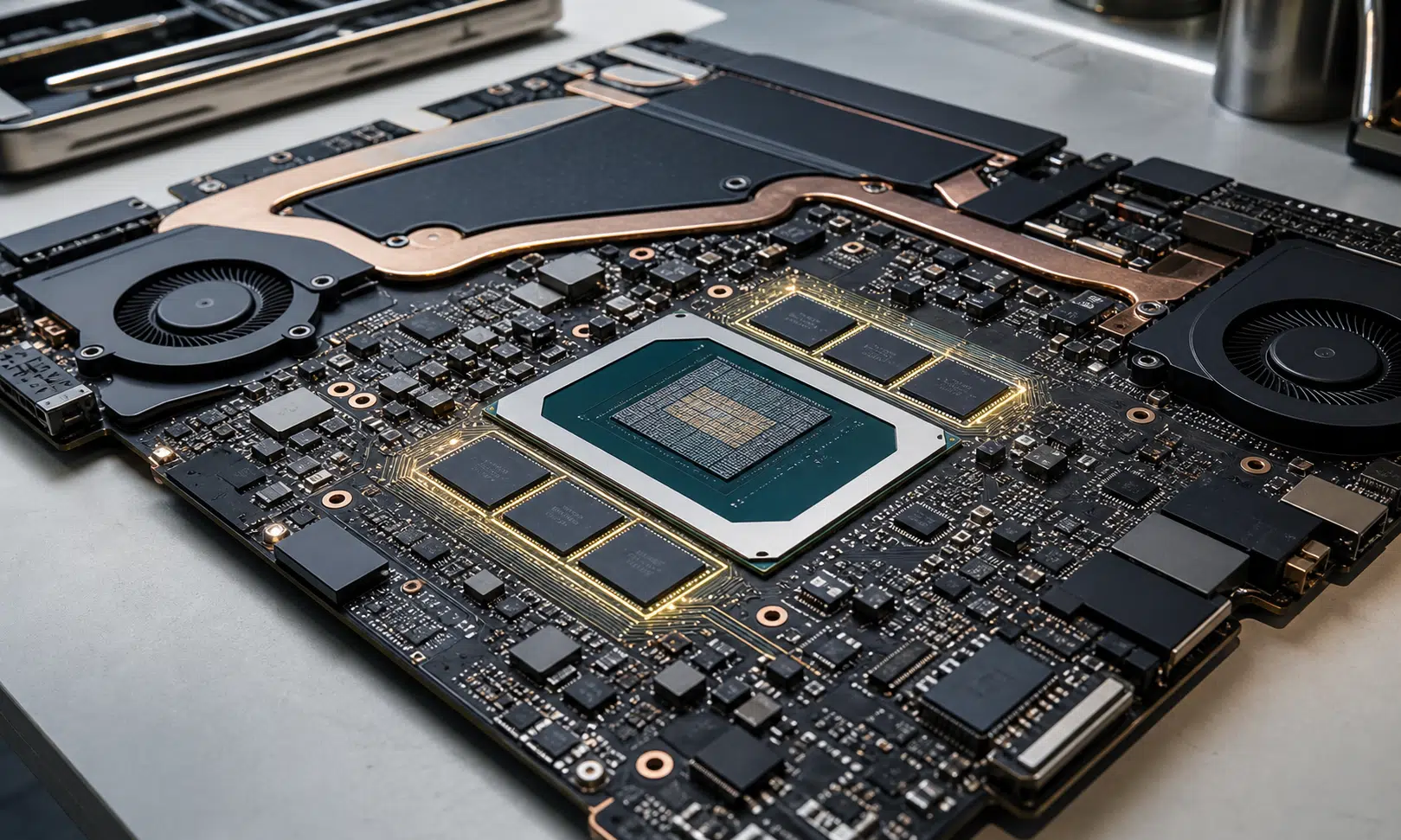

A fresh rumor around Intel’s future Razor Lake-AX platform suggests the company may be looking at on-package memory again for a higher-end mobile chip design. If accurate, that would make Razor Lake-AX a more specialized part than a routine laptop CPU refresh, with Intel potentially aiming at the same class of premium, graphics-heavy mobile systems now associated with AMD’s Halo-style APUs.
That said, this is still rumor territory. Intel has not publicly confirmed Razor Lake-AX as a shipping product family, has not announced its memory configuration, and has not given a firm launch window for this specific variant. The safest way to read the report is not as a confirmed roadmap, but as a signal of where Intel may be exploring future mobile silicon: tighter memory integration, larger integrated graphics, and laptop designs that behave more like compact workstation platforms than conventional thin-and-light notebooks.
What The Razor Lake-AX Rumor Actually Says
The core claim is simple: Intel Razor Lake-AX could use memory mounted on or very close to the processor package. A firm timeline has not been publicly confirmed, and the memory type has not been independently verified. The discussion around LPDDR5X, LPDDR6, or newer packaging ideas should therefore be treated as informed speculation rather than a published Intel specification.
On-package memory is not a new idea for Intel. The company used package-integrated memory with Lunar Lake, where the goal was largely around efficiency, board space, and power behavior in mobile systems. The rumored Razor Lake-AX concept sounds different in ambition. Instead of a low-power-first design, the expectation is that Intel would use the approach for a more powerful mobile platform with a larger CPU and GPU footprint.
That distinction matters. In a thin laptop, moving memory closer to the chip can help reduce motherboard complexity and may improve power efficiency. In a performance-oriented mobile processor, the same broad idea can also help feed an integrated GPU that needs far more bandwidth than a basic display and media engine. But until Intel confirms the product and its memory architecture, those benefits remain the reason such a design would make sense, not proof of what Razor Lake-AX will ship with.
Why On-Package Memory Matters
Memory placement is becoming more important as laptop chips absorb more of the work once handled by separate components. Modern mobile processors are not just CPUs. They include integrated graphics, media engines, AI accelerators, display controllers, and platform logic. The more capable those blocks become, the more pressure they place on memory bandwidth and power delivery.
Putting DRAM closer to the processor can offer several practical advantages:
- Shorter physical paths between the chip and memory, which can help with efficiency.
- More compact motherboard layouts, giving laptop makers additional design flexibility.
- Potentially better sustained behavior for integrated graphics, depending on bandwidth and power limits.
- Less reliance on wide, space-consuming memory layouts across the mainboard.
There are tradeoffs. Package-integrated memory can reduce upgradeability, complicate product segmentation, and place more pressure on Intel and its partners to choose the right capacities at launch. For buyers, that means the configuration chosen by the manufacturer matters more. A laptop with soldered or package-integrated memory is usually a laptop you buy correctly on day one, because there may be no practical path to add more later.

ASUS ProArt P16
A high-memory creator laptop such as the ASUS ProArt P16 makes sense for readers editing video, working with large media libraries, or running demanding creative apps today. Check the RAM configuration carefully before buying, since many thin creator laptops are not practical to upgrade later.
As an Amazon Associate I earn from qualifying purchases.
For gaming laptops, creator systems, and mobile workstations, that could make memory capacity a bigger purchase decision than it already is. If a future Razor Lake-AX system arrives with a large integrated GPU and fixed memory, buyers would need to think carefully about whether the available configurations match the intended workload.
LPDDR6 Is Possible, But Not Confirmed
The report raises LPDDR6 as a possible fit because Razor Lake-AX is expected, by rumor, to sit far enough out on the roadmap for next-generation low-power memory to be relevant. That is plausible as a product-planning idea, but it should not be treated as a confirmed specification.
The type of memory has not been disclosed. LPDDR5X would be the more familiar option today, while LPDDR6 would make more sense for a later design if it is ready at scale and if platform costs make sense. Intel could also choose a packaging approach or memory arrangement that does not map neatly to early rumor shorthand.
The buyer-facing point is simpler than the naming. A large integrated GPU needs bandwidth. If Intel is building a higher-end mobile SoC meant to compete with AMD’s strongest integrated platforms, memory bandwidth will be one of the central constraints. Whether that is solved through LPDDR6, a refined LPDDR5X design, or another approach is the part that remains unconfirmed.
How This Could Fit Against AMD Halo-Class APUs
AMD’s Halo-class strategy has put pressure on the high end of the laptop APU market. The idea is straightforward: combine strong CPU performance, unusually capable integrated graphics, and a memory system that gives the GPU enough bandwidth to matter. That kind of chip can appeal to laptop buyers who want strong graphics performance without the complexity, heat, and battery impact of a traditional discrete GPU design.
Razor Lake-AX is being discussed in that same broad category, but the competitive framing should stay cautious. Intel has not confirmed final branding, core counts, GPU size, cache layout, platform requirements, or launch timing. A firm timeline has not been publicly confirmed.
Still, the strategic logic is clear. Intel cannot ignore premium integrated platforms if more laptop makers start using them for thin gaming systems, creator notebooks, portable AI PCs, and compact workstations. A future Intel AX-class product would likely need to compete on more than CPU performance. It would need convincing graphics performance, strong media support, competitive battery behavior, and enough memory bandwidth to keep the whole design balanced.
Rumor Confidence And What Buyers Should Watch
The available information should be treated as early and unconfirmed. The original report is built around claims from hardware roadmap watchers rather than an Intel announcement. Some of those accounts have tracked pre-release silicon discussions before, but that does not turn every roadmap detail into a shipping product.
| Claim Area | Best Current Reading | Buyer Takeaway |
|---|---|---|
| Razor Lake-AX existence | Unconfirmed by Intel | Do not make buying decisions around it yet. |
| On-package memory | Rumored, not publicly verified | Interesting because it points to a more integrated laptop platform. |
| LPDDR6 use | Possible but speculative | Watch for confirmed memory bandwidth and capacity, not just the memory name. |
| AMD Halo competition | Strategically plausible | The real comparison will depend on graphics performance, power, and pricing. |
| Launch window | No firm public confirmation | Current laptop shoppers should not wait solely for this rumor. |
For practical buyers, the most important questions are not the codename details. They are the things that will show up in real systems: memory capacity, sustained power limits, GPU performance, battery life, display support, thermals, and price. A package-integrated memory design can be elegant, but it only becomes useful if laptop makers pair it with sensible configurations.
What It Means For Laptop Shoppers
Anyone shopping for a laptop now should treat Razor Lake-AX as future context, not a reason to freeze a purchase. A firm timeline has not been publicly confirmed, and the product could change before launch if it exists in the form currently being discussed.
The more useful lesson is that the premium laptop chip market is moving toward tightly integrated designs. Apple has already normalized unified memory in Macs. AMD is pushing stronger integrated graphics in high-end APUs. Intel has experimented with on-package memory in Lunar Lake and may be considering a more performance-focused version of that idea later.
That direction affects how buyers should evaluate upcoming machines. Memory capacity will matter more when it cannot be upgraded. GPU performance will depend heavily on memory bandwidth. Thin laptop designs may improve, but they may also become more locked down. The best configuration will be the one that matches the workload from the start.

Apple 16-inch MacBook Pro
A 16-inch MacBook Pro with a higher unified-memory configuration is a relevant current option for developers, creators, and professional users who already know their workload benefits from more memory. It is best chosen with enough memory at purchase because it cannot be upgraded later.
As an Amazon Associate I earn from qualifying purchases.
For gaming and creator buyers, that means watching early reviews for sustained performance rather than peak benchmark bursts. For professional users, it means checking whether fixed memory capacity is enough for large projects, local AI tools, heavy browser workloads, and long-term use. For general buyers, it means resisting expensive future-proofing unless the workload actually needs it.
The Bottom Line
The Razor Lake-AX rumor is worth watching because it points to a believable pressure point in Intel’s roadmap: high-end mobile chips need better memory integration if their integrated GPUs are going to compete with the strongest all-in-one laptop processors.
But the important details are still unconfirmed. Intel has not publicly locked in Razor Lake-AX specifications, launch timing, memory type, or product positioning. Until that changes, the careful read is that Intel may be preparing a more ambitious mobile SoC class, potentially with on-package memory, but buyers should wait for official disclosures and independent laptop testing before treating it as a real product option.

Lenovo Legion Pro 7i Gen 10
A current Legion Pro 7i is a practical fit for readers who need high sustained gaming or GPU performance today rather than waiting on rumored integrated graphics. It is more conventional than an on-package-memory design, but that can also make configuration and serviceability easier to evaluate.
As an Amazon Associate I earn from qualifying purchases.