

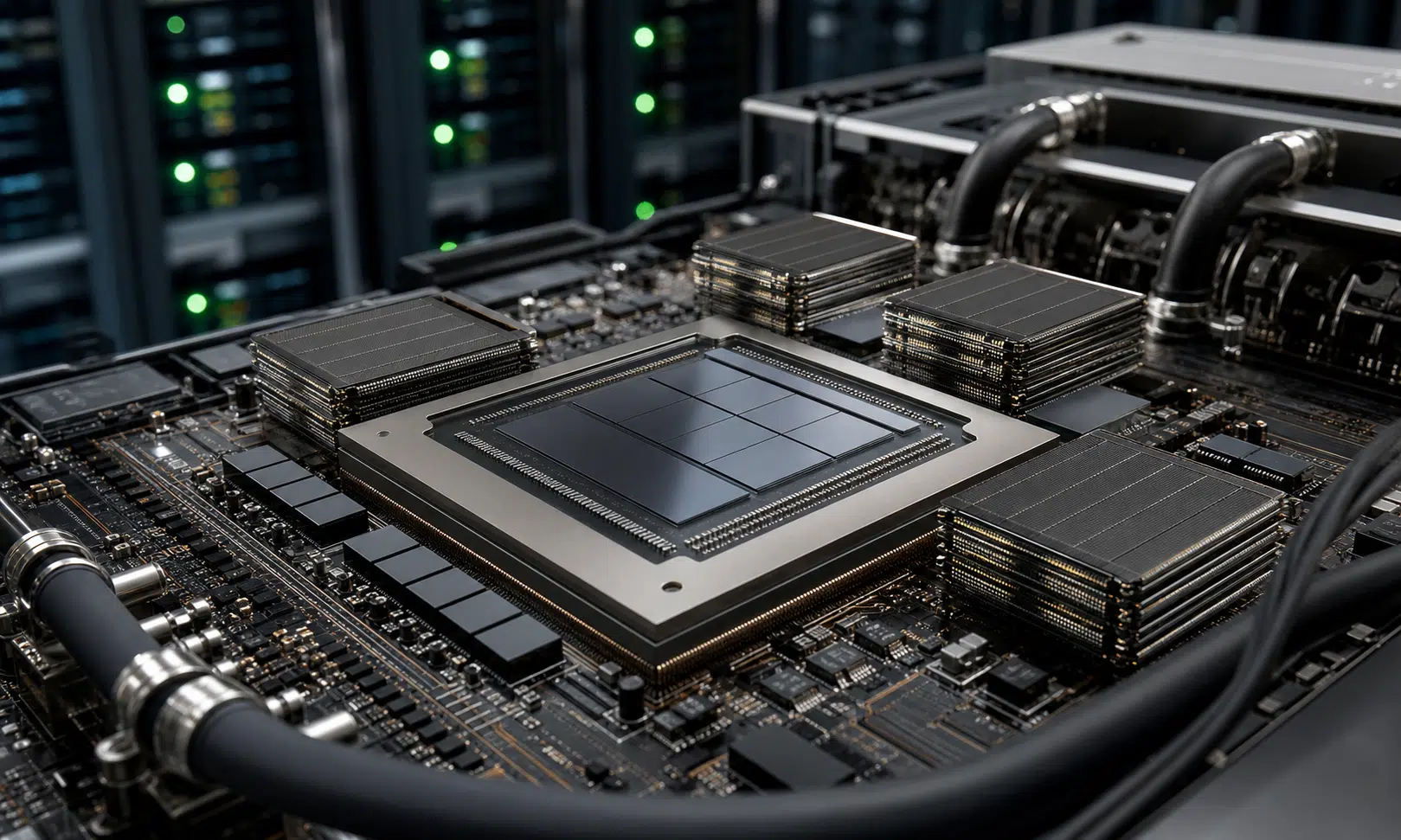

NVIDIA’s Rubin and Rubin Ultra platforms are drawing fresh scrutiny after a new wave of supply-chain rumors claimed that parts of the program may be going through design and specification changes. The claims center on HBM4 and HBM4E memory, packaging yield, chiplet layout, thermal design, and platform-level power delivery.
For buyers planning large AI clusters, the important point is not whether every rumor proves accurate. It is that Rubin, Rubin Ultra, and AMD’s expected MI500-class platform sit in the same procurement window where memory bandwidth, rack power, serviceability, and supply availability will matter as much as peak compute claims.
NVIDIA has already positioned Rubin as the next major platform after Blackwell, with Vera Rubin systems aimed at large-scale AI training, inference, and agentic workloads. Micron has also confirmed high-volume production of 12-high HBM4 designed for Vera Rubin, giving the base Rubin platform a more concrete memory story than many early-roadmap products. Rubin Ultra, however, is still the part of the roadmap where the most aggressive claims and the most uncertainty meet.
What the Rubin Rumors Claim
The latest rumors describe several possible pressure points in NVIDIA’s Rubin and Rubin Ultra plans. These claims have not been independently confirmed, so they should be treated as supply-chain chatter rather than final product specifications.
The reported issues fall into a few broad areas:
- HBM4 speed and qualification targets for standard Rubin systems.
- HBM4E capacity and stack-height choices for Rubin Ultra.
- Potential chiplet-count changes on Rubin Ultra packages.
- Warpage and yield concerns tied to very large multi-chip packages.
- Thermal interface material and heatspreader changes as designs move toward production.
- Rack-level configuration choices that may offset some package-level design changes.
Those are all plausible engineering stress points for this class of accelerator. They are also areas where small-sounding changes can matter commercially. A memory stack change can affect capacity per GPU. A package-layout change can affect yields and cost. A heatspreader or thermal interface change can affect power limits, serviceability, and qualification schedules.
That said, none of the rumor claims should be read as proof that NVIDIA has missed a target. NVIDIA has a recent track record of making late platform-level adjustments while still delivering systems broadly aligned with its public positioning. Blackwell also went through design and rack-level changes before reaching volume deployments, and that history is part of why buyers should separate engineering churn from confirmed product failure.
HBM4 and HBM4E Are the Center of the Story
The most concrete part of the Rubin memory story is standard HBM4. Micron has said its 36GB 12-high HBM4 is in high-volume production for NVIDIA Vera Rubin, with more than 2.8 TB/s of bandwidth per stack. A Rubin GPU with eight such stacks would land at 288GB of HBM4 capacity if that configuration is used, which lines up with the broad platform expectations around Rubin.
The more uncertain part is Rubin Ultra and HBM4E. The rumor set says NVIDIA had considered a much denser Rubin Ultra memory layout using 16-high HBM4E stacks, potentially reaching 1TB of memory per accelerator package. The same rumors now claim that the design may move to 12-high stacks, which would reduce total memory capacity if the number of HBM sites stayed the same.
Because that reported shift has not been independently verified, the safer takeaway is narrower: Rubin Ultra is expected to push memory capacity and bandwidth well beyond standard Rubin, but final HBM4E stack height, capacity, and shipment timing should be treated as open items until NVIDIA and its memory partners publish firm specifications.
| Platform topic | What appears more solid | What remains uncertain |
|---|---|---|
| Standard Rubin memory | 12-high HBM4 for Vera Rubin has been announced by a major memory supplier. | Final shipping system configurations can still vary by product and partner. |
| Rubin Ultra memory | Rubin Ultra is expected to target a larger memory footprint than standard Rubin. | Exact HBM4E capacity, stack height, and package layout are not yet settled publicly. |
| AMD MI500 timing | AMD is expected to compete in the next major AI accelerator cycle. | The reported second-half 2027 timing and exact memory configuration are not publicly confirmed. |

NVIDIA RTX 6000 Ada 48GB Workstation GPU
A professional 48GB GPU can help engineering teams test smaller model variants, inference pipelines, and software stacks before moving workloads to large accelerator clusters.
As an Amazon Associate I earn from qualifying purchases.
For infrastructure teams, the difference between 768GB and 1TB-class memory per accelerator would not be a minor spec-table detail. It could affect model placement, batch sizing, context length economics, and the number of GPUs needed for memory-bound workloads. But until Rubin Ultra specifications are public, procurement teams should avoid building hard capacity assumptions around leaked figures.
Chiplet and Packaging Claims Need Extra Caution
Another major rumor is that Rubin Ultra may move from a four-die-per-GPU design to a two-die-per-GPU design. The claim is tied to alleged yield and warpage issues in a dense multi-chip package. That has not been independently verified, and NVIDIA has not confirmed such a change as a final product decision.
Still, the topic itself is worth watching. Advanced AI accelerators now depend on the interaction between compute dies, HBM stacks, interposers, substrates, heatspreaders, and rack-level cooling. As packages grow larger and denser, warpage and yield become more than manufacturing footnotes. They can influence cost, binning, availability, and the pace at which cloud providers can qualify full racks.
The rumors also suggest that NVIDIA could preserve some platform-level goals through board-level or rack-level configuration choices, even if individual package assumptions change. That idea is plausible in a broad sense, but specific claims about a 2+2 layout or exact Kyber server configuration should not be treated as confirmed.
This is the key buyer lesson: package-level specifications do not always map cleanly to rack-level delivered performance. A vendor can change the number of chiplets per package, the number of packages per tray, or the topology of the system and still market the platform around rack-scale performance. That makes independent benchmarking and workload-specific sizing more important than early package diagrams.
Thermals, Power, and Serviceability May Decide Real Deployments
The rumor set also points to heatspreader and thermal-interface changes. It claims that NVIDIA is updating heatspreader design and moving away from one thermal material approach on some Rubin configurations. Those details have not been independently verified, so they should be handled as unconfirmed.
Even so, thermals deserve attention. Rubin-class systems are not just faster GPUs dropped into old server patterns. They are rack-scale products where power delivery, liquid cooling, service time, and facility readiness can shape the real cost of ownership. A nominally faster accelerator can become less attractive if it requires a rack design that a data center cannot deploy quickly, cool reliably, or service predictably.
NVIDIA has leaned hard into cable-free tray designs, liquid cooling, NVLink fabrics, and rack-scale integration. That is a rational direction for AI factories, but it also means buyers are purchasing a platform, not just a PCIe card or even a conventional HGX node.
The practical questions for 2026 and 2027 buyers are straightforward:
- Will the platform be available in the quarter when capacity is needed?
- Will the final memory capacity match the target workload?
- Will rack power and cooling fit the chosen facility?
- Will service and spare-part plans support the expected utilization rate?
- Will software maturity be ready at deployment, not just after launch?
Those questions matter regardless of whether the latest Rubin Ultra rumors prove fully accurate.
Where AMD MI500 Fits In
AMD’s MI500 is being discussed as the natural counterweight to Rubin Ultra in the next AI accelerator cycle. Reports have positioned it for a possible second-half 2027 launch window with advanced packaging and HBM4E-class memory, but a firm public product specification has not been confirmed.
That uncertainty cuts both ways. If NVIDIA’s Rubin Ultra program faces meaningful memory or packaging constraints, AMD may have a chance to compete more aggressively on capacity, availability, or platform economics. If NVIDIA resolves the rumored issues quickly, Rubin Ultra could still arrive with the scale, ecosystem support, and software pull that have defined NVIDIA’s AI data center lead.
AMD’s opportunity is not simply to announce a bigger accelerator. It needs to make the full platform credible: GPU silicon, memory supply, rack architecture, networking, software, OEM support, and cloud availability. The MI300 generation gave AMD a stronger position in AI accelerators than it had before, but the next round will be fought at rack and cluster scale.

ASUS ESC8000A-E12 4U GPU Server
A multi-GPU rack server is useful as a reference point when comparing airflow, power supplies, expansion, and service access across AI infrastructure options.
As an Amazon Associate I earn from qualifying purchases.
For customers, that means MI500 should be evaluated less as a single-chip rival and more as a potential bargaining and deployment option. If AMD can offer competitive memory capacity, strong perf-per-dollar, and predictable supply in the same window that NVIDIA is pushing Rubin Ultra, it could become a serious procurement alternative for teams that do not want to depend on one vendor.
What AI Infrastructure Buyers Should Watch Next
The safest read is that Rubin Ultra remains a high-interest platform with high execution demands. Rumors about reduced HBM4E capacity, fewer chiplets, or thermal redesigns should not be ignored, but they also should not be treated as final specifications.
The next useful signals will be official platform disclosures, partner server announcements, cloud instance commitments, memory supplier updates, and real rack-level performance data. For buyers, those signals matter more than isolated leak claims.
The areas to track are:
- Final Rubin Ultra HBM4E capacity per accelerator and per rack.
- Confirmed HBM4E supplier readiness and stack-height availability.
- Whether NVIDIA changes public performance targets for Rubin Ultra.
- Rack power envelopes and cooling requirements for production systems.
- Cloud provider timelines for Rubin and Rubin Ultra capacity.
- AMD’s official MI500 roadmap, memory configuration, and ecosystem partners.
NVIDIA’s standard Rubin platform already has more public footing than Rubin Ultra, especially after supplier announcements around HBM4 for Vera Rubin. Rubin Ultra is where the bigger competitive question sits. If it lands cleanly, NVIDIA strengthens its rack-scale AI lead. If it slips, loses capacity, or becomes constrained, AMD’s next Instinct platform may get a more favorable opening.
For now, the commercially useful stance is cautious rather than dramatic. Treat Rubin Ultra as a likely major platform, treat MI500 as a serious future competitor, and treat every unconfirmed memory or chiplet number as provisional until the companies publish final specifications.
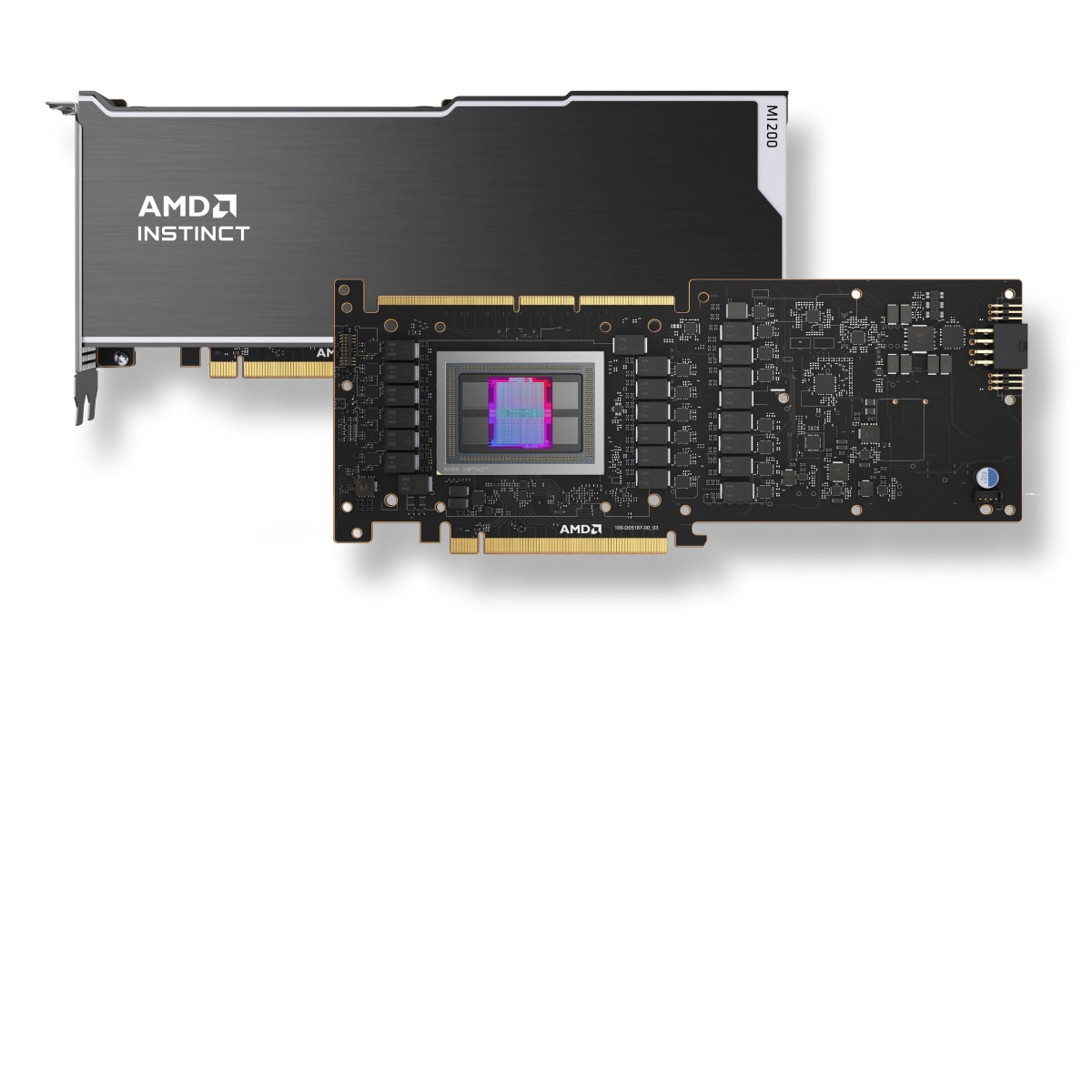
AMD Instinct MI210 64GB Accelerator
For teams watching AMD’s future Instinct roadmap, a current Instinct accelerator can support ROCm familiarization and software-porting work ahead of larger procurement decisions.
As an Amazon Associate I earn from qualifying purchases.