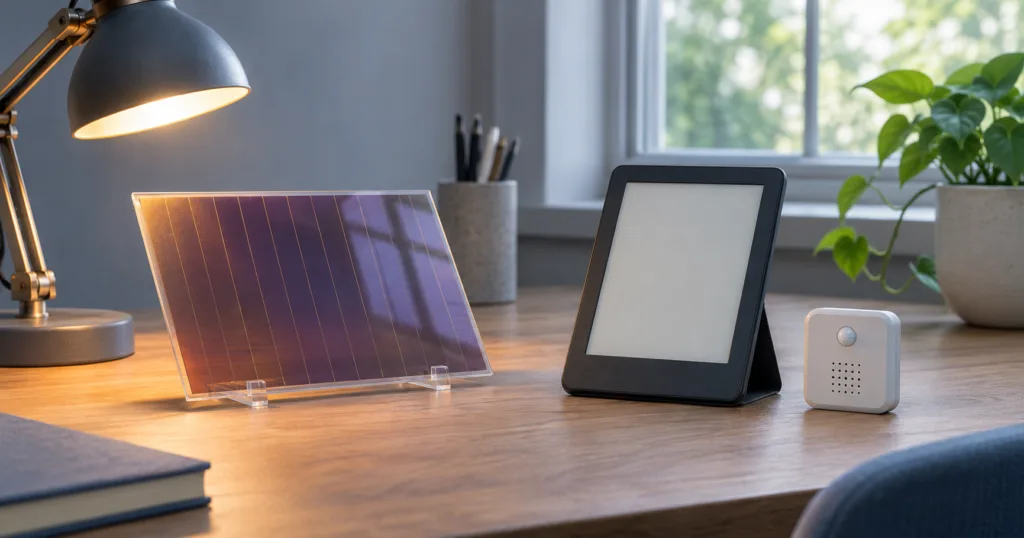
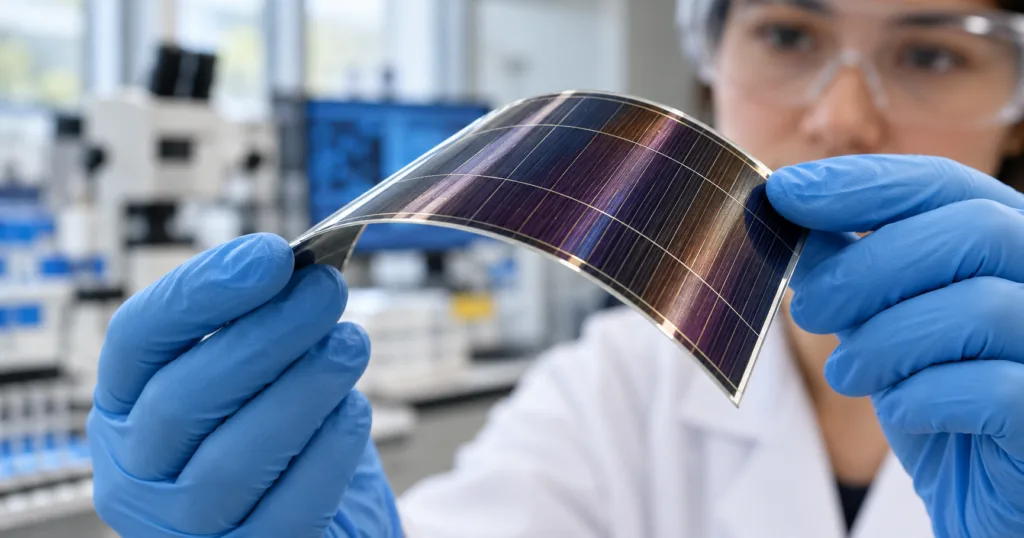
Kansai Electric Power and Kansai University signed an agreement with three companies on Nov. 20, 2026, to test how accurately AI can forecast electricity generation from perovskite solar windows. The utility and the university said they expect the two-year trial to begin around summer 2027 at the Takatsuki Muse Campus in Takatsuki, Osaka Prefecture, Japan.
The partners plan to fit 14 glass-based solar modules into the window frames of a campus building. They intend to collect and analyze electricity generation data under actual building and weather conditions and assess how the modules are installed and operated. The partners cited limited rooftop space as a reason to test windows as a surface for solar generation.
How Kansai Electric plans to test its forecasts
Kansai Electric plans to coordinate the trial and use its SenaSon energy management service to predict output from weather and other conditions. The utility says it will compare those forecasts with measured generation. The joint announcement gave no accuracy target or figures for module size, total capacity, transparency or efficiency. It gave no indication of whether the electricity would be used on site or sent to the grid.
Under the agreement, Panasonic Holdings is set to supply the modules and evaluate their performance. Panasonic Environmental Systems & Engineering is to install, operate and maintain them, while Kanden Energy Solution is responsible for the electrical equipment. Kansai University is set to host the trial. The university and the utility signed a separate carbon-neutrality partnership in 2022.
Kansai Electric launched SenaSon nationwide for business customers in April 2023. The utility says the service uses AI forecasts of demand and generation to manage batteries, electric vehicles and air conditioning in real time. Sumitomo Electric Industries said it integrated its vanadium redox flow battery with SenaSon for a separate 2025 trial at Osaka Metropolitan University.
Other perovskite trials and production plans
Panasonic Holdings says its earlier demonstrations included a balcony installation in Fujisawa with Mitsui Fudosan Residential and a trial in interior office windows made by YKK AP in Osaka. YKK AP also launched a separate 2025 pilot using film-based perovskite cells in interior windows at Tokyo’s Telecom Center Building.
Panasonic Holdings says it began selling pilot-production glass for building-integrated photovoltaics in September 2026 and plans to start full-scale production in Nagahama in April 2029. Ricoh has separately set a target of starting mass production of inkjet-printed perovskite solar cells in Miyagi Prefecture by 2030.
Japan’s Strategic Energy Plan sets a target of about 20 GW of perovskite solar capacity by 2040. The Ministry of the Environment plans to exclude conventional silicon panels from new subsidy programs starting in fiscal 2027 and focus support on perovskite and other next-generation solar cells.