


Mark Cuban has built a reputation for spotting broken markets—and then trying to fix them. Beyond his long business career and his time as a “Shark” on ABC’s Shark Tank (through May 2025), Cuban is also a former majority owner of the NBA’s Dallas Mavericks (he’s now a minority owner). These days, one of his most ambitious bets is in healthcare: the Mark Cuban Cost Plus Drug Company.
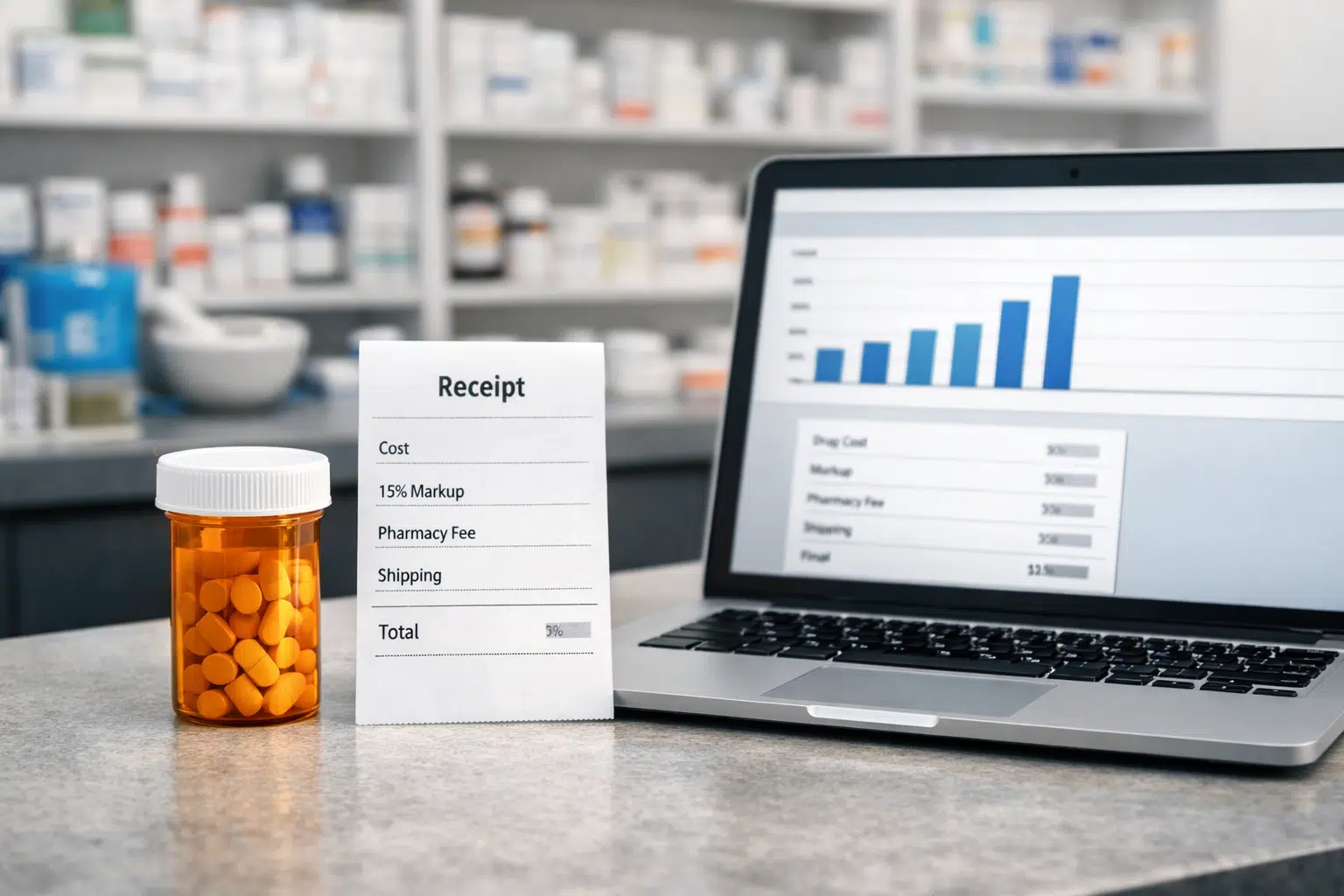
Cost Plus Drugs is a generic pharmaceutical distributor built around a simple promise: transparent pricing. The company sells medications at cost, plus a 15% administrative markup, along with pharmacy service and shipping fees. Founded in early 2022 with CEO Dr. Alex Oshmyansky—a pediatric radiologist—Cost Plus Drugs drew rapid interest, with over 1.7 million patients/accounts signing up in its first year and a catalog of 1,000+ generic medications available through its website.
Recommended: Simple Weekly Pill Organizer
If you’re comparing prices across pharmacies (or switching to mail-order generics), a basic pill organizer can make it easier to track fills and avoid missed doses.
Shop weekly pill organizers on AmazonIn this episode, I spoke with Cuban about why he started Cost Plus Drugs, how the company cuts prices so aggressively compared with incumbents, and how he thinks the next wave of challengers—from pharmacy benefit managers (PBMs) to Amazon’s RxPass (launched in 2023)—will shape the market.
Mark Cuban’s path from tech to cheaper meds
Cuban’s origin story is classic entrepreneurial lore. After graduating from Indiana University, he started MicroSolutions, a computer consulting business he later sold to CompuServe. He then launched Broadcast.com, which Yahoo acquired in 1999 for about $5.7 billion. After that, he pivoted into investing and sports ownership.
His interest in healthcare accelerated during the 2017 congressional push to repeal the Affordable Care Act. Cuban has described conversations with Texas Republicans that left him worried there wasn’t a workable replacement plan on deck, prompting him to fund research into how other countries run their healthcare systems.
By 2019, Oshmyansky—then a radiologist with a fixation on pharmaceutical pricing—reached out via a cold email. He initially explored building a nonprofit version of the idea before pivoting toward a for-profit model and pitching Cuban as a partner and lead investor. The backdrop was hard to ignore: cases like Martin Shkreli’s infamous Daraprim hike, where the price of a generic drug jumped by over 5,000%, underscored just how distorted the system could be.
“You always have to know what business you’re in. The business we were in is the trust business… In health care, you trust your doctor… You don’t trust the hospital… you go to the pharmacy… you don’t know what you’re paying…”
Why drug prices get weird: “price to value” and the PBM layer
Cuban pointed to two big forces that keep medication prices high.
First: manufacturers often price to value, not cost—charging what the market will bear, especially when the patient population is small or alternatives are limited. That dynamic can push prices into the stratosphere even when manufacturing costs don’t justify it.
Second: the PBM system. PBMs negotiate prices and manage formularies for insurers and employers, giving them enormous leverage over what patients pay and what drugs get favored. The market is highly concentrated, with CVS Caremark, Express Scripts, and Optum Rx together controlling the bulk of pharmacy claims. Critics argue PBM practices like spread pricing and rebate structures can inflate list prices and nudge formularies toward higher-cost options.
“[PBMs] do everything they can for people to not understand, to distort the whole supply chain, and to distort all the pricing mechanisms.”
Cost Plus Drugs positions itself as the anti-black-box. It leans on transparency: show the customer the underlying cost and the markup, without rebates or behind-the-scenes gymnastics.
“If you’re going to work with us, there are no rebates… We’re going to buy it, we’re going to show our cost, we’re going to mark it up 15%… [plus] pharmacy fee and shipping… so you get to see all of it.”
Cuban also made a counterintuitive point: in some cases, manufacturers aren’t the only villains in the story. When PBMs demand rebates tied to a drug’s price, the incentives can push list prices higher—even if the manufacturer’s net revenue after rebates doesn’t look nearly as outrageous as the sticker price suggests.
How Cost Plus Drugs keeps costs down
A few operating choices help explain the model:
- Radical price transparency: customers see costs and fees at purchase time.
- A lightweight product: no expensive “everything app,” no bundled telehealth overhead.
- Word of mouth over big ad spend: the company has leaned on earned attention, patient referrals, and Cuban’s public profile.
That approach also turns the company into a negotiating wedge: employers, providers, and patients can compare prices more easily, and the mere existence of transparent pricing pressures incumbents to explain the gap.
From distributor to manufacturer: building capacity in Dallas
Cost Plus Drugs isn’t staying purely in pass-through mode. It has built manufacturing capabilities in Dallas, with a heavy emphasis on automation. Cuban described flexibility as a key advantage—especially in a world where shortages (often for injectables) can ripple through hospitals and pharmacies.
The idea is straightforward: if the system can’t reliably supply essential generics at a fair price, building manufacturing capacity can protect availability while keeping the company’s pricing principles intact.
Competition: Amazon RxPass, direct-to-consumer startups, and local pharmacies
The most entrenched competitors are still PBMs and insurers that sit between manufacturers, pharmacies, and patients. But Cuban also views Big Tech as a credible disruptor. Amazon’s RxPass, launched in 2023, is one example, alongside a broader wave of direct-to-consumer healthcare brands.
One key distinction Cuban highlighted: subscription models depend on steady monthly fills, while Cost Plus Drugs can often deliver the best value with larger-day supplies (60, 90, or 180 days) depending on the medication and prescription.
Cost Plus Drugs has also pursued partnerships with community pharmacies so customers can pick up certain prescriptions in person—an option that can matter for people who don’t want mail order, or who want to build relationships with local pharmacists.
“[Big tech companies] are big enough to get in, but big enough to leave really, really fast as well.”
A public benefit structure—and an expansion mindset
Cost Plus Drugs operates as a for-profit public benefit corporation (PBC), a structure designed to balance profit with a broader mission. Cuban and Oshmyansky have framed that as a way to signal that lowering costs and improving access aren’t marketing slogans—they’re core to how the company wants to operate.
Cuban also noted that he’s been reluctant to bring in traditional outside capital, largely because the typical venture expectation—outsized returns and a clear exit—doesn’t cleanly match the company’s mission-driven approach. The stated goal is scale: expand the catalog, broaden availability, and become a primary source for as many legally sellable medications as possible, including selected brand-name drugs offered at discounted pricing.
The deeper theme: trust, transparency, and the hidden bill
Cuban’s throughline is trust. He argues that healthcare’s pricing system thrives on complexity, contracts, and “don’t ask” opacity—and that transparency is leverage. If patients and employers can see what a drug costs and why, it becomes harder for any intermediary to justify massive spreads.
In the end, the pitch is almost disarmingly simple: when people can understand the bill, they can finally challenge it.