

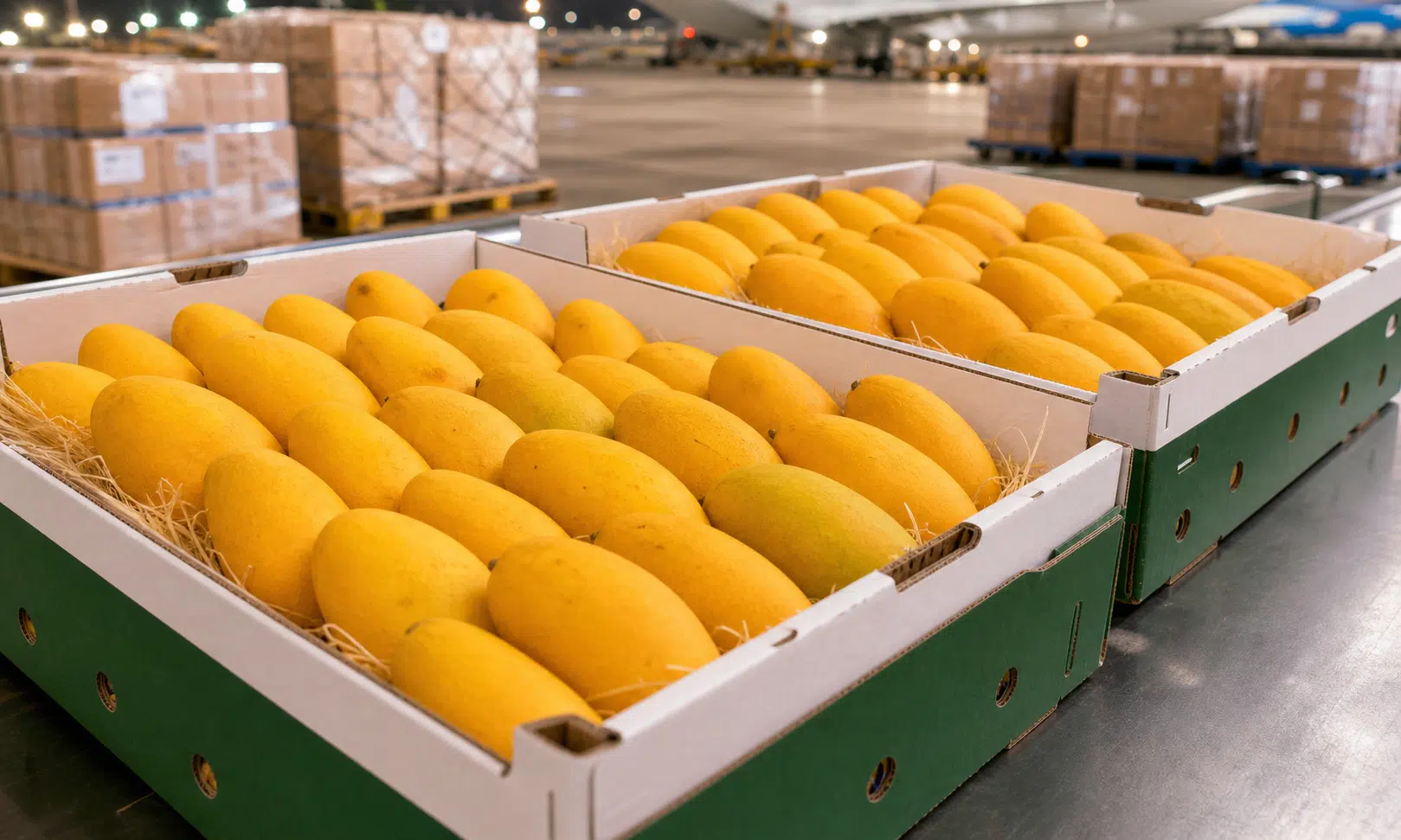

The Department of Agriculture said fresh Philippine Carabao mangoes were sent to Toronto in what the agency described as the country’s first commercial shipment of the fruit to Canada.
The DA said the shipment involved 1 metric ton of fresh mangoes and was marked by a send-off ceremony at the Philippine Airlines cargo terminal in Pasay City. The agency framed the move as part of a wider push to open more overseas markets for Philippine farm products.
DA Secretary Francisco Tiu Laurel said the shipment supports the government’s goal of widening and diversifying export markets for products such as bananas, coconuts and mangoes. He also said the government wants more international buyers to experience Philippine-grown produce.
Exporters, Importer and Shipment Route
According to the DA, Philippine exporters Hi-Las Marketing Corp. and Castillo Import Export Ventures Inc. supplied the mangoes, while Ontario-based TSI Tropicals Inc. served as the importer.
The agency said Philippine Airlines was set to carry the mangoes through commercial air freight. Because the available report is based on agency statements, the precise delivery timeline and full commercial terms were not independently confirmed.
The shipment was coordinated with the Philippine Agriculture Office in Washington, D.C., the Philippine Consulate General in Toronto, the Philippine Trade and Investment Center in Toronto, and mango industry stakeholders, according to the DA.
What Comes Next for Mango Exports
DA spokesperson Assistant Secretary Arnel de Mesa said another shipment was being planned for the following week, with supply expected from Northern Luzon and Zambales. The plan was presented as a follow-up shipment rather than a confirmed long-term export schedule.
The DA also said the Philippines had earlier shipped fresh mangoes to Rome, another market-opening effort for the fruit. internal-link-topic: Philippine mango exports
Beyond mangoes, the agency said it is promoting a broader group of high-value crops for overseas markets. These include Cavendish bananas, cardaba or saba bananas, cacao, pomelo, rambutan, dalandan, pineapple, okra, asparagus, pili, durian, avocado, dragon fruit, calamansi and ube.
For Philippine growers and exporters, the reported Canada shipment is significant because it points to buyer interest beyond the country’s more familiar agricultural exports. The practical test will be whether follow-up shipments can move consistently, meet import requirements and reach consumers in good condition.