

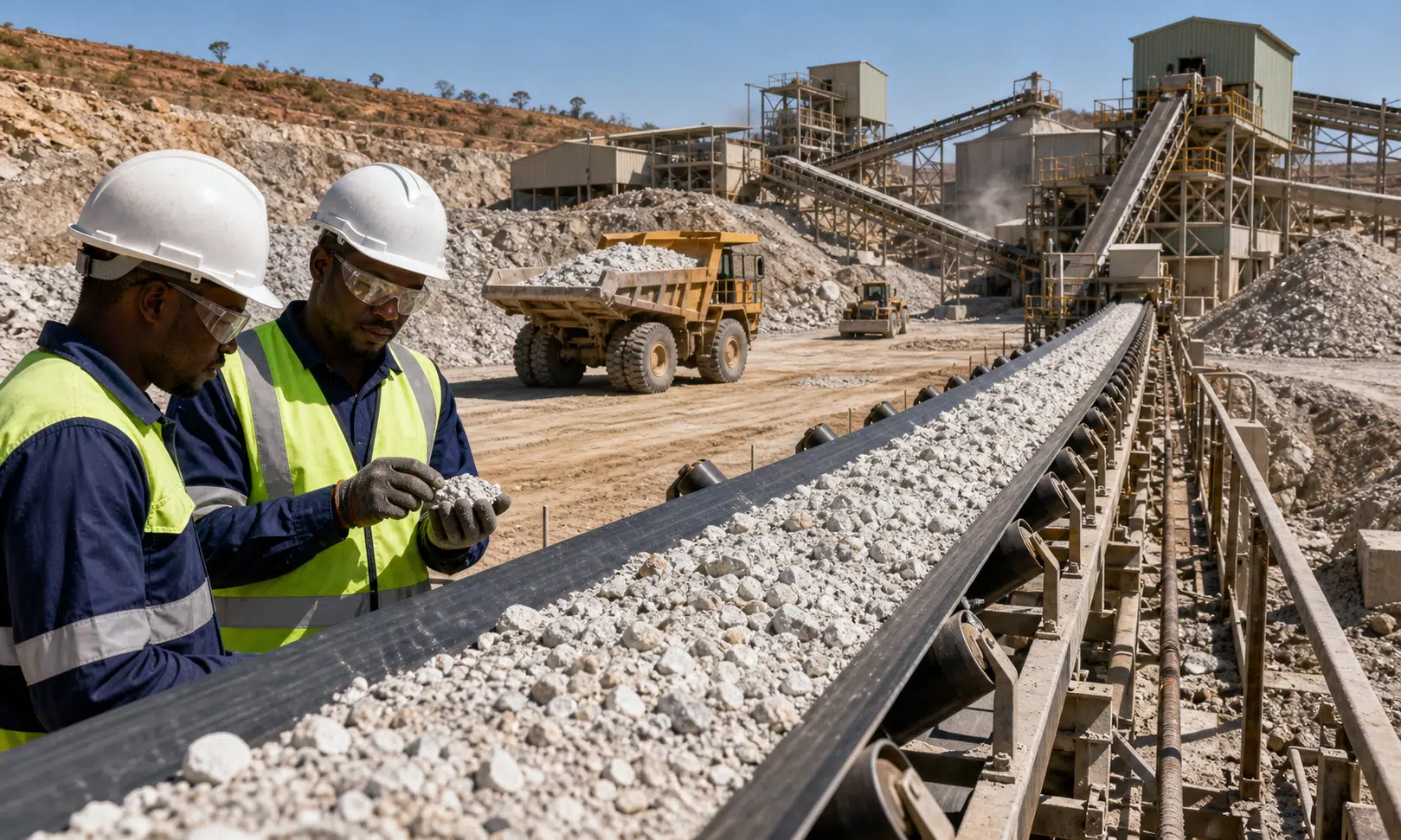

Zimbabwe’s mineral sector started 2026 with a sharp rise in sales, helped by stronger lithium and Platinum Group Metals earnings after the government moved to restrict exports of unbeneficiated minerals.
The first-quarter numbers point to a clear shift in Zimbabwe’s mining strategy. Rather than relying mainly on raw mineral shipments, the country is pushing miners toward local processing, a policy designed to capture more value before exports leave the country.
According to figures from the Minerals Marketing Corporation of Zimbabwe, total mineral sales reached 1,288,761 tonnes in the first quarter of 2026, valued at $983.85 million. That was a 27% increase in volume and a 79% rise in value compared with the same period a year earlier.
What Changed After the Export Ban
The government introduced the ban on February 25, targeting exports of unbeneficiated minerals. In practice, the policy puts pressure on producers to process more material locally before selling into international markets.
For buyers, traders, and investors watching Zimbabwe, the policy matters because it changes both supply timing and product mix. Raw or lightly processed mineral flows can become less predictable in the short term, while processed and semi-processed exports may become more important over time.
Lithium was one of the clearest beneficiaries in the first-quarter data. Sales reached 240,826 tonnes, worth $178.64 million. Volume rose only 2% year-on-year, but value jumped 106%, showing how much the earnings profile improved even without a major increase in tonnage.
MMCZ general manager Dr Nomusa Moyo said the ban on lithium concentrate exports had caused short-term disruption to global spot supplies while strengthening Zimbabwe’s influence in the battery supply chain. She also described Zimbabwe as an important supplier of spodumene to China, a key market for global battery manufacturing.
Lithium vs PGMs: Where the Growth Came From
The first-quarter performance was not driven by lithium alone. PGMs remained the largest earnings contributor in the figures released, generating $543.97 million in export earnings.
PGM concentrate sales nearly doubled in volume, while stronger international prices helped support revenue. Matte volumes declined, but the broader PGM category still played a central role in pushing total mineral sales close to the $1 billion level.
For commercial readers, the distinction matters. Lithium reflects Zimbabwe’s growing role in the battery minerals trade, particularly for electric vehicles and energy storage. PGMs are tied more closely to industrial, automotive, and precious metals demand. Both categories benefited, but they serve different buyer needs and different risk profiles.
| Mineral category | Q1 2026 reported performance | Why it matters commercially |
|---|---|---|
| Lithium | 240,826 tonnes sold, valued at $178.64 million; value up 106% year-on-year | Shows stronger earnings from a battery mineral category affected by local processing policy |
| PGMs | $543.97 million in export earnings | Remained the biggest reported earnings driver in the quarter |
| Steel products, coal, and coke | Reported strong gains | Points to firmer regional demand and more value-added exports |
| Diamonds | Exports remained under pressure | Weaker pricing and production challenges continue to weigh on the category |

The War Below by Ernest Scheyder
For readers tracking lithium and mineral supply risk, this book gives useful background on the conflicts, permitting issues, and geopolitical pressure behind critical mineral sourcing.
As an Amazon Associate I earn from qualifying purchases.
Buyer Takeaways for Commodity and Supply Chain Decisions
Zimbabwe’s policy shift creates a different set of considerations for companies exposed to critical minerals. The headline number, nearly $1 billion in quarterly mineral sales, is important. But the larger commercial issue is how the export ban changes sourcing, pricing, and processing expectations.
Buyers looking at Zimbabwe-linked supply should watch several practical factors:
- Whether processed lithium supply becomes more consistent after the early adjustment period.
- How much local beneficiation capacity can expand without creating bottlenecks.
- Whether higher-value exports continue to offset any short-term disruption in raw material flows.
- How PGM prices and demand affect Zimbabwe’s total mineral earnings in later quarters.
- Whether diamond exports recover or remain constrained by pricing pressure and competition from lab-grown stones.
The first-quarter data suggests the policy is already changing the value captured inside Zimbabwe’s mining sector. It also signals that buyers may need to think less in terms of simple ore availability and more in terms of processed product access, contract timing, and regulatory risk.
What to Watch in the Next Quarter
MMCZ described the second-quarter outlook as mixed. Geopolitical tensions and disruptions in energy markets are expected to influence commodity prices, especially for critical minerals used in industrial and defence supply chains.
That makes the next set of numbers important. If lithium values stay elevated and PGM earnings remain strong, Zimbabwe’s beneficiation policy may look commercially effective despite short-term friction. If processing constraints or weaker global prices emerge, the same policy could create more uneven results for exporters and buyers.

Volt Rush by Henry Sanderson
This is a useful background read for understanding how lithium, cobalt, nickel, and battery manufacturing supply chains shape pricing power and sourcing risk.
As an Amazon Associate I earn from qualifying purchases.
For now, the first quarter shows a mining sector pulling in substantially more value than a year earlier. The central question is whether Zimbabwe can turn the export ban from a one-quarter earnings boost into a durable advantage in processed mineral supply.