



The Business Builder Behind Netflix
Reed Hastings is often described through the company he helped create: Netflix, the DVD-by-mail business that became a global streaming platform and then a major producer of television and film. That shorthand is useful, but it misses the stranger and more instructive part of the story.
Hastings did not only build a media company. He built a management system around unusual ideas about trust, candor, performance, and freedom. Some of those ideas became admired across Silicon Valley. Others became warnings about what can happen when clarity turns cold, speed outruns dissent, or a founder’s confidence gets too far ahead of the room.
The result is a business case that still matters for founders, managers, investors, and anyone trying to understand how modern subscription companies compete. Netflix’s rise was not just about streaming technology. It was about timing, capital, content, brand, customer habits, and a culture designed to move quickly without the usual layers of corporate permission.
Hastings’ public image has long been more analytical than sentimental. He is not usually presented as the warm, showman founder. His reputation is closer to that of a systems thinker: precise, blunt, curious, and comfortable with decisions that other leaders might soften for the sake of harmony.
That personality shaped Netflix. The company became famous for ideas that sounded almost too sharp to belong in an HR document: strong performers get freedom, adequate performers get severance, managers should be honest about who they would fight to keep, and employees should say directly what they would otherwise say behind someone’s back.
Those principles helped Netflix scale. They also made the company’s culture feel severe from the outside. The useful question is not whether Netflix’s model is admirable in every detail. It is what that model reveals about the cost of speed, the value of focus, and the difference between a high-performance culture and a merely unforgiving one.
From Software Founder to Streaming Strategist
Before Netflix, Hastings built a software debugging company. That first venture gave him money, experience, and a close view of how fast a technology market can change. It also put him in the orbit of Marc Randolph, who became Netflix’s first chief executive and one of the key figures in the company’s earliest experiments.
The familiar origin story begins with video rentals, late fees, and the discovery that DVDs could travel cheaply through the mail. Whether or not every detail of that story has been polished by retelling, the business insight was clear: the physical video store had friction everywhere. Customers had to travel, browse whatever happened to be available, return films on time, and pay penalties if they forgot.
Netflix attacked that friction. Customers could choose films online, build a queue, receive DVDs by mail, and avoid late fees. At the time, that was a practical improvement rather than a glamorous technology revolution. It solved a specific customer problem.

No Rules Rules
For readers who want the source-level version of Netflix’s freedom and responsibility philosophy, this book explains the management principles Hastings helped popularize and the tradeoffs behind them.
The larger move came later. Hastings and the Netflix team understood that DVDs were not the final form of home entertainment. The real destination was internet delivery. Streaming began as a technical and licensing challenge, but it eventually became the company’s identity.
That shift required Netflix to think differently from the video rental chains it was challenging. Blockbuster was built around stores. Netflix was built around customer data, logistics, subscriptions, and eventually software. Once broadband improved and consumer behavior changed, Netflix had a structure that could adapt faster than the incumbents.
The lesson is easy to state and hard to practice: the first winning model may be temporary. Netflix’s DVD business mattered because it created customer relationships, brand recognition, recurring revenue, and operational discipline. But Hastings kept looking toward the next delivery system before the old one had stopped working.
The Culture of Freedom and Responsibility
Netflix’s management culture became nearly as famous as its product. The company’s “freedom and responsibility” approach argued that talented adults should be trusted with information, judgment, and flexibility. In exchange, the company expected unusually high performance.
That meant fewer conventional controls. Netflix became known for flexible vacation practices, limited expense bureaucracy, and a willingness to share more internal information than many public companies would be comfortable sharing. The idea was that employees who were treated as responsible insiders would make better decisions.
But freedom at Netflix was never presented as comfort. It came paired with pressure. Managers were expected to think hard about whether each person on their team was someone they would fight to keep. If the answer was no, the company’s philosophy favored generous severance over prolonged mediocrity.
This is where Netflix’s model becomes both influential and controversial. Many companies say they want high standards. Fewer are willing to define those standards so plainly, and fewer still are willing to accept the cultural consequences.
The upside is speed. Teams do not waste as much time maintaining appearances. Feedback is supposed to travel quickly. Problems are meant to surface before they become expensive. Strong employees can make decisions without waiting for permission from multiple layers of management.
The downside is emotional cost. A workplace built around direct critique and constant performance assessment can become stressful, especially if leaders confuse bluntness with accuracy. Candor is only useful when it improves judgment. Without care, it can become a license for people with power to speak harshly and call it honesty.
Netflix tried to manage that tension by making feedback a two-way expectation. Employees were encouraged to challenge ideas, including ideas from senior leaders. In theory, disagreement was not disloyal. Silence was the greater risk.
That principle became especially important after one of Netflix’s most visible mistakes.
Qwikster and the Cost of Moving Too Fast
In 2011, Netflix announced a plan to separate its streaming service from its DVD rental business. The DVD side would be renamed Qwikster. The change also came with pricing consequences that angered customers.
The reaction was brutal. Subscribers left. The stock price fell sharply. The company was mocked publicly, and the plan was abandoned. Hastings apologized for the way the change had been handled.
Qwikster remains one of the most useful episodes in Netflix’s history because it shows the weakness inside a founder-led culture that prizes speed and confidence. Hastings had seen the future correctly in a broad sense: streaming was becoming the center of the business. But seeing the direction of travel was not enough. The execution ignored how customers understood the service they were paying for.
It also exposed an internal problem. If employees privately doubted the plan but did not challenge it strongly enough, the company’s culture had failed one of its own tests. Netflix wanted directness, but hierarchy can quiet dissent even in companies that celebrate candor.
After Qwikster, Netflix put more emphasis on actively seeking disagreement before major decisions. That is the practical part of the story for other companies. It is not enough for a leader to say, “Tell me what you think.” Leaders have to create conditions where disagreement is rewarded early, before the decision has gathered too much momentum.
A company can survive a bad decision if it learns the right lesson. The wrong lesson would have been to slow everything down, add bureaucracy, and make every bold move impossible. The better lesson was narrower: when a decision affects customers deeply, internal confidence needs to be tested against dissent, customer perception, and operational reality.
Netflix recovered because the underlying business was strong and the shift to streaming was real. But Qwikster remains a reminder that being early is not the same as being right in the way customers experience the change.
Why Netflix’s Strategy Worked
Netflix’s rise depended on several linked bets. The company bet that consumers would accept subscriptions for home entertainment. It bet that internet delivery would replace physical rental. It bet that data could improve recommendations and retention. Later, it bet that original programming could reduce dependence on outside studios.
Each bet carried risk. Licensing content from studios worked while Netflix was a valuable distribution partner. But as streaming became the future of television, those same studios had reasons to hold back their best material or build their own services. Netflix needed originals not only to win awards or attract attention, but to control more of its own supply.
That is why content spending became central to the company’s strategy. A streaming service without must-watch programming becomes easy to cancel. A service with a steady flow of shows, films, documentaries, and international hits becomes harder to replace.
The competitive field also changed. Netflix’s early streaming competitors were not as focused or as scaled. Later, it faced companies with deep libraries, large balance sheets, sports rights, hardware ecosystems, or existing television relationships. Apple, Amazon, Disney, Warner Bros. Discovery, and regional players all attacked the market from different angles.
Hastings has often framed Netflix’s competition more broadly than other streaming platforms. The company competes for attention. That means it competes not only with television and film, but with games, social media, YouTube, podcasts, live events, and sleep.
That framing is commercially useful because it prevents a narrow view of the market. A customer does not care how a media executive defines the category. A customer has an evening, a phone, a television, a budget, and limited attention. Netflix’s job is to be the easiest and most satisfying choice often enough that the subscription survives the next billing cycle.
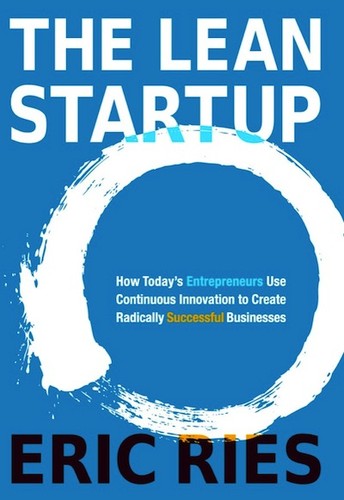
The Lean Startup
This fits readers who want a broader framework for testing business assumptions, learning from customer behavior, and adapting before a strategic bet becomes too expensive.
For buyers, investors, and operators studying Netflix, this is the durable insight: the product is not just the app. The product is the habit. The interface, recommendations, release schedule, price, brand, and content library all exist to protect that habit.
Global Scale and Local Pressure
Netflix’s international expansion added another layer of complexity. A streaming platform can launch globally faster than a traditional broadcaster, but audiences are not interchangeable. Local language, humor, politics, regulation, and cultural expectations all matter.
The company’s international strategy moved beyond exporting American programming. Some of its most important successes came from non-English-language productions that travelled widely. That changed the old assumption that global entertainment had to be filtered mainly through Hollywood.
At the same time, international growth brought political and regulatory pressure. In markets such as Australia and parts of Europe, streaming services faced questions about how much local content they should fund. Traditional broadcasters often operate under local content rules. Global streamers have argued for more flexible arrangements, while local producers and policymakers have pushed for obligations that keep domestic production healthy.
That debate is not just cultural. It is commercial. Local production supports writers, actors, crews, studios, and post-production businesses. It also shapes what viewers see about their own countries on screen. A global platform can bring new money and reach, but it can also concentrate power over which stories get funded.
Netflix’s answer has generally been to point to investment, audience demand, and the international potential of local stories. Critics counter that voluntary investment is not the same as a stable obligation. Both sides are arguing over who gets to set the terms of a market that no longer looks like old television.
For creators, Netflix can be a powerful buyer. It can give a project global distribution that would once have been almost impossible. But the same scale that makes Netflix attractive also changes the negotiation. When one platform can deliver a worldwide audience, it gains enormous influence over budgets, rights, formats, and creative risk.
What Leaders Can Actually Learn From Hastings
The shallow version of the Netflix culture story is easy to copy and usually dangerous. A company can repeat phrases about candor, freedom, and high performance without having the discipline, pay structure, talent density, or management skill to make those ideas work.
The more useful lesson is not to imitate Netflix’s language. It is to examine the tradeoffs clearly.
Freedom works when people have context. If employees are expected to make decisions, they need access to the information behind those decisions. Responsibility works when standards are explicit. Candor works when leaders invite correction and show that disagreement does not damage careers. High performance works when the company is honest about what it rewards and what it will not tolerate.
The model breaks when leaders use it selectively. If junior employees receive blunt feedback but senior leaders are protected from challenge, the culture becomes theater. If managers use the “keeper test” without judgment, they may create fear instead of excellence. If a company celebrates speed but ignores customer reaction, it can repeat the Qwikster mistake in a new form.
Hastings’ strength was his willingness to rethink the business before the market forced him to. His weakness, at least in the episodes that became public, was the risk of moving so quickly that others did not have enough room to challenge the path.
That combination is common in ambitious founders. The same conviction that lets them push through skepticism can also make them slow to hear useful resistance. Netflix’s culture tried to solve that problem by making dissent part of the operating system. The company’s history shows both how valuable that can be and how hard it is to make real.
The Legacy of the Netflix Method
Reed Hastings eventually moved out of the sole chief executive role, with Netflix’s leadership structure changing as the company matured. That transition matters. Founder-led companies often have to prove that their systems can survive beyond the founder’s direct control.
Netflix is no longer the scrappy outsider mailing discs in red envelopes. It is a major media company with global reach, original franchises, advertising ambitions, password-sharing controls, live programming experiments, and competitors on every side. The business is more complex than the one Hastings and Randolph started in 1997.
Still, the central Netflix questions remain the same. What does the customer want to watch tonight? What will make them stay subscribed next month? How much freedom should employees have? How much pressure creates excellence, and how much becomes waste? When should a company trust its data, and when should it slow down to hear the objection in the room?
Those questions are why Hastings’ story still has practical value. It is not a simple founder myth. It is a study in disciplined reinvention, sharp culture, costly mistakes, and the uncomfortable truth that many successful companies are built from ideas that are useful, imperfect, and difficult to copy well.
Netflix changed the way many people watch television. Hastings’ more complicated legacy is that he also changed how many executives talk about work: not as a family, not as a bureaucracy, but as a high-trust, high-pressure team where freedom is earned, disagreement is expected, and performance is treated as the price of admission.