

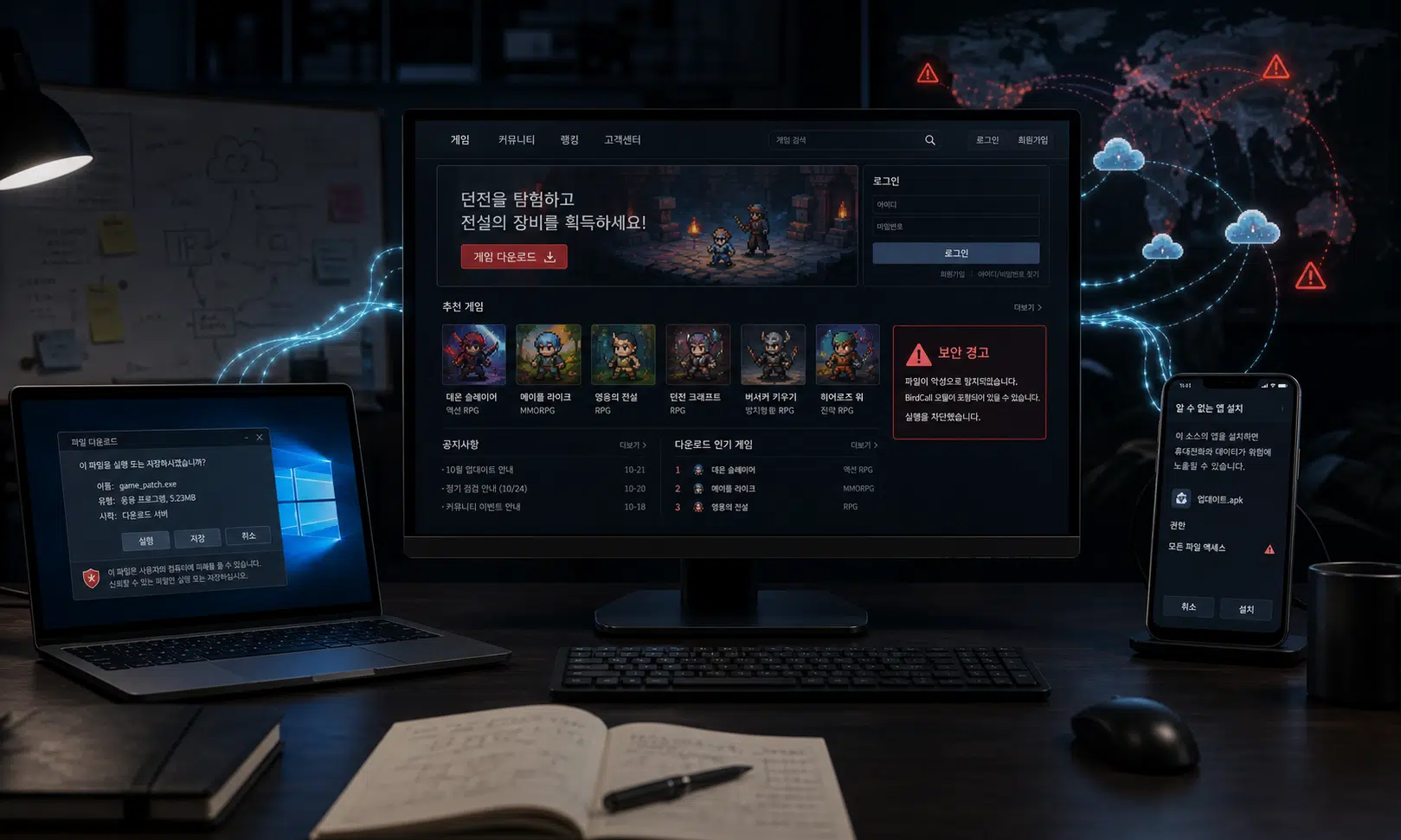

ScarCruft has been linked to a supply chain compromise that turned a niche gaming platform into a delivery channel for BirdCall malware, expanding a backdoor long associated with Windows intrusions into a more clearly multi-platform threat.
The campaign centered on sqgamenet, a gaming platform used by ethnic Koreans in China’s Yanbian region, an area bordering North Korea and Russia. That geography matters. Yanbian has long been sensitive in North Korea-related intelligence activity, including because it is associated with transit routes used by defectors crossing near the Tumen River.
According to ESET researchers, the campaign was discovered in October 2025, but the activity appears to have started earlier. The company assessed that ScarCruft had compromised Windows and Android components tied to the gaming platform, with malicious Android game packages still available for download from the site when the research was shared.
The operation fits ScarCruft’s established targeting pattern. The group has repeatedly focused on North Korean defectors, human rights workers, academics, and other people connected to Korean peninsula issues. In this case, the gaming platform likely gave the operators a way to reach a concentrated audience without relying only on phishing or direct social engineering.
What Changed in the BirdCall Campaign
BirdCall is not a new malware family, but this campaign changes how defenders should think about its reach. Earlier BirdCall activity had primarily affected Windows systems. In the sqgamenet compromise, ScarCruft also used trojanized Android applications, making the operation relevant to mobile security teams as well as traditional endpoint defenders.
ESET described BirdCall as an advanced evolution of RokRAT, a backdoor associated with ScarCruft activity for years. Windows versions of BirdCall have reportedly been seen in the wild since 2021. Related malware development has also reached other platforms over time, including macOS and Android, which suggests the operators have continued investing in tooling rather than relying on a single legacy implant.
The Android version in this campaign does not appear to be a simple copy of the Windows backdoor. It contains a more limited subset of BirdCall’s Windows-side capabilities, but the subset is still serious. The malware is built for surveillance and data theft, especially on devices that may contain sensitive personal communications.
Reported Android collection capabilities include:
- Contact lists
- SMS messages
- Call logs
- Media files
- Documents
- Screenshots
- Ambient audio recordings
That collection profile is consistent with espionage rather than ordinary cybercrime. The value is not only in credentials or files. For at-risk communities, contact graphs, private messages, photos, and call history can expose relationships, travel plans, advocacy work, and family connections.
Bitdefender Total Security
For readers managing both Windows PCs and Android phones, a multi-device security suite can help with malware scanning, unsafe download warnings, and suspicious app behavior. It should complement, not replace, incident response for high-risk users or suspected targeted compromise.
As an Amazon Associate I earn from qualifying purchases.
How the Gaming Platform Was Used
The compromise appears to have affected different parts of the platform in different ways. The Android game download pages were altered to serve malicious APK files. ESET identified two Android games hosted on the platform whose download pages had been changed to deliver trojanized packages.
The iOS games were not described as compromised, and the platform’s Windows desktop client was not poisoned in the same way as the Android APKs. However, the Windows side was still touched by the operation. Researchers found evidence that an update package for the Windows desktop client had delivered a trojanized DLL since at least November 2024 and for an unknown period. That Windows update package was no longer malicious by the time of reporting.
The malicious DLL acted as a downloader. Before continuing, it checked the infected system for signs of analysis tools and virtualized environments. That kind of check is common in malware used by more careful operators because it helps the payload avoid sandboxes, malware labs, and automated detonation systems.
If those checks passed, the downloader retrieved and executed shellcode containing RokRAT. RokRAT then served as a bridge to fetch and install BirdCall on the compromised Windows host.
The timeline remains incomplete. It is not publicly clear exactly when the sqgamenet website was first breached or when the poisoned Android downloads became available. The available evidence points to activity beginning sometime in late 2024, with the campaign discovered in October 2025.
BirdCall’s Capabilities on Windows and Android
On Windows, BirdCall has the functions defenders expect from a mature backdoor. It can capture screenshots, log keystrokes, steal clipboard contents, run shell commands, and gather data from the infected system. That gives an operator both surveillance visibility and hands-on control.
The malware is also typically deployed through a multi-stage loading chain. ESET described earlier BirdCall chains as beginning with Ruby or Python scripts and including components encrypted with a key tied to the specific computer. That design makes analysis harder and can prevent captured components from running cleanly on a researcher’s machine.
The Android variant is narrower, but it is not minor. Its collection of contacts, SMS messages, call records, files, screenshots, and audio gives operators a direct view into a target’s personal life. On a mobile device, that can be more revealing than a desktop compromise because phones carry conversations, identity details, travel traces, and informal communications that may never touch corporate systems.
Researchers identified seven Android BirdCall versions, with the earliest dating back to October 2024. That version history points to active development during the campaign rather than a one-off test build.
There is also an important distinction between BirdCall and RambleOn, another Android backdoor connected to the broader RokRAT lineage. Both can pose as legitimate Android applications and both use cloud storage services for exfiltration, but researchers treated them as separate backdoors rather than the same tool under different names.
Cloud Services as Command-and-Control Infrastructure
BirdCall continues a pattern seen in earlier ScarCruft tooling: the use of legitimate cloud services for command-and-control and data movement. On Windows, BirdCall has used services such as Dropbox and pCloud. In the Android campaign, the malware used pCloud, Yandex Disk, and Zoho WorkDrive.
That choice is practical for attackers. Traffic to common cloud platforms may blend into normal network activity, especially in organizations where users regularly access file-sharing and collaboration services. Blocking all such services is rarely realistic, and simple domain-based allowlists can leave defenders exposed when malware abuses approved platforms.
For security teams, this means the detection question cannot stop at whether a cloud service is known or reputable. The more useful question is whether the behavior around that service makes sense for the user, device, application, and time of day.
Useful telemetry can include:
- Unexpected cloud storage access from devices that do not normally use the service
- New or unsigned Android APK installation followed by outbound cloud traffic
- Endpoint processes making cloud API calls outside normal application behavior
- Repeated uploads of screenshots, documents, or compressed data archives
- Cloud access shortly after a software update or game installation
The same logic applies to mobile device management and endpoint detection. A malicious APK that asks for broad permissions, records audio, captures screenshots, or reads messages should stand out in a managed environment. The challenge is that many victims in this kind of campaign may be private individuals or small community organizations without enterprise-grade monitoring.
Firewalla Purple SE
A network firewall with device-level flow visibility can help spot unusual outbound traffic after a risky app install or software update. It is most useful for small offices, advocacy groups, or home networks that lack enterprise SIEM coverage.
As an Amazon Associate I earn from qualifying purchases.
Why This Campaign Matters for Buyers and Defenders
The sqgamenet compromise is a reminder that supply chain risk is not limited to large software vendors, developer tools, or enterprise update systems. Smaller community platforms can be attractive because they concentrate the exact audience an intelligence service wants to reach.
For buyers evaluating endpoint, mobile threat defense, or managed detection services, this case raises a practical set of questions. A product that only looks for commodity malware may miss a tailored operation using legitimate cloud storage and a niche distribution channel. A service that treats Android devices as out of scope may leave a major visibility gap for organizations serving journalists, activists, researchers, refugees, or politically exposed communities.
Security teams should look for capabilities that cover the actual shape of this campaign:
- Inspection of Android application provenance and permissions
- Detection of suspicious APK sideloading or unofficial app distribution
- Behavioral monitoring for screen capture, audio recording, message access, and bulk file collection
- Correlation between endpoint activity and cloud storage abuse
- Visibility into software update chains, including DLL loading and post-update execution
- Threat hunting that accounts for targeted communities, not only corporate assets
The buyer-aware lesson is simple: platform coverage matters. A Windows-only control may detect part of a ScarCruft operation while missing the phone in the target’s pocket. A mobile-only tool may catch the poisoned APK but miss the compromised desktop update chain. The stronger posture is cross-platform visibility tied together by investigation workflows that can follow the same actor across devices.
Practical Response Steps
Organizations or individuals who may have used sqgamenet Android downloads should treat affected devices as potentially exposed. That does not mean every user was compromised, but the reported presence of trojanized APKs makes a cautious response appropriate.
A practical response starts with the device itself:
- Remove games or APKs downloaded from the affected platform until clean versions can be verified.
- Review Android permissions granted to recently installed games, especially access to contacts, SMS, call logs, files, microphone, and screen capture functions.
- Check for unusual battery drain, background data usage, or unfamiliar apps installed around the same period.
- Back up essential personal data carefully, avoiding full-device backups that may preserve malicious apps or configurations.
- For high-risk users, consider rebuilding the device from a trusted source or replacing it entirely if compromise is suspected.
For organizations supporting vulnerable communities, the response should also include outreach. Users may not recognize a gaming platform compromise as a security incident. Clear guidance in the user’s language, with specific app names and download dates where available, is more useful than a generic malware warning.
Enterprise teams should review logs for signs of the Windows update chain as well. The trojanized DLL reportedly checked for analysis tools before downloading shellcode containing RokRAT, then used that access to deploy BirdCall. That sequence gives defenders several places to look: suspicious DLL loading, unexpected child processes after a game platform update, shellcode-like execution, RokRAT indicators, and unusual cloud storage communication.
The Larger Pattern
ScarCruft’s use of a gaming platform is not just a technical detail. It shows how targeted operators continue to meet victims where they already are. For a community platform, trust is the distribution mechanism. Users do not need to be tricked by a strange email if they are already visiting the site and downloading familiar games.
That is what makes supply chain compromises so difficult for exposed groups. The suspicious action is removed from the victim’s side of the equation. The user may install an app from a known platform, update a familiar client, and see nothing obviously wrong while the attacker gains access.
BirdCall’s Android expansion also underscores the need to treat phones as primary intelligence targets. For many people, the mobile device is the most complete archive of their personal and political life. In communities already under pressure, surveillance of messages, contacts, call history, media, and ambient conversations can create harm beyond the infected device.
The confirmed details remain bounded: ScarCruft compromised Android downloads and, for a period, a Windows update package tied to the gaming platform; BirdCall was used as the backdoor; legitimate cloud storage services helped support command-and-control; and the activity appears to have been underway since late 2024. Those facts are enough to make the incident operationally important.
For defenders, the priority is not to treat this as an isolated malware name. The more durable lesson is that targeted supply chain attacks can move through small, trusted platforms, cross from desktop to mobile, and hide behind cloud services that most environments already allow. Controls that cannot connect those pieces will see fragments. The teams that can connect them will be in a better position to identify the campaign before the backdoor becomes the investigation’s starting point.