

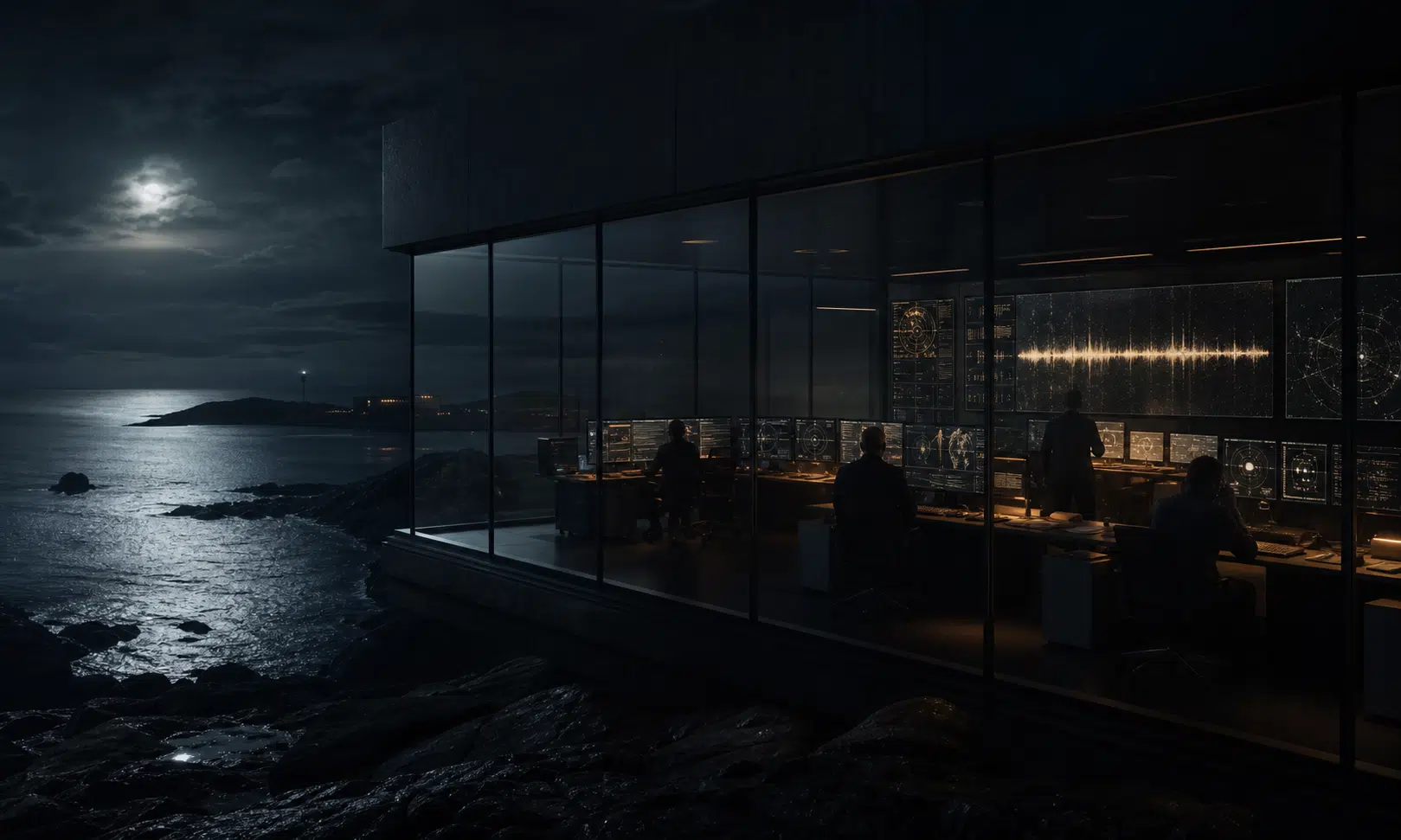

Signal One is positioned as a first-contact science-fiction drama built around a bold idea: a secretive attempt to communicate with intelligent life beyond Earth. As a viewing choice, though, the appeal looks more selective than broad. This is not a spectacle-first alien movie. It is a dialogue-heavy chamber piece where the cast does much of the lifting.
What Works
The strongest reason to consider Signal One is the acting. Dennis Quaid gives the story some ballast as a tech-billionaire figure tied to a private-island research project, while David Thewlis brings volatility to Perry Glassner, the scientist associated with the film’s alien-contact device. Because several story details have not been independently verified beyond the source material, this review treats the setup as the film’s reported premise rather than as outside-confirmed fact.
Isabelle Fuhrman is described as playing Dr Annika Cask, a young computer scientist drawn into the project after a personal loss, with Josh Hutcherson appearing as Charlie, an electronics engineer. The premise gives the film a clean buyer-facing hook: if you like cerebral sci-fi about process, ethics and the pressure of discovery, Signal One may have enough to keep you engaged.
Where It Struggles
The problem is that the film appears to trust explanation more than tension. The review’s central reservation is not that the ideas are thin, but that the script spends too much time with scientists talking through astrophysics while screens flash with data. That may show research, but it can also drain urgency from a story that should be moving toward awe, dread or revelation.
Thewlis is singled out as the liveliest presence, giving the dialogue a harsher edge when Glassner turns his disgust toward humanity. Still, a performance can only do so much when the surrounding scenes lean heavily on technical conversation.
Verdict
Signal One sounds best suited to viewers who prefer contained, idea-led sci-fi over action or creature reveals. Its reported dodge around the alien-reveal problem is smart, but the tradeoff is a film that may feel restrained when it needs escalation.
For buyers deciding whether to spend time or money on it, the practical answer is narrow: watch for Quaid, Thewlis and a serious first-contact premise; skip or wait if you need momentum, visual scale or a more emotionally charged payoff.