


South African exporters looking at China as a growth market may soon have a new tariff advantage, but the practical value of the programme will depend on paperwork, product eligibility and customs discipline.
The reported arrangement would allow qualifying South African goods to enter China duty-free under a temporary zero-tariff trade scheme. However, the key word is qualifying. Exporters should not treat the programme as a blanket discount on every shipment to China.
The source material says South Africa has completed the customs framework required to implement China’s temporary zero-tariff trade scheme for eligible exports, but that claim has not been independently verified. A firm operating timeline has also not been publicly confirmed in the material provided.
For buyers, distributors and exporters, the commercial question is simple: can the product prove South African origin under China’s rules, and can the exporter produce the right certificate at the right time?
What exporters should verify before pricing a China shipment
The programme is best understood as a compliance-driven opportunity, not a guaranteed price cut. A lower tariff can improve margins or make a South African supplier more competitive, but only if customs accepts the claim.
Before quoting Chinese buyers on a duty-free basis, exporters should confirm the following:
- Whether the product category is eligible for the tariff preference.
- Whether the goods meet China’s rules of origin.
- What certificate, declaration or supporting records Chinese customs will require.
- Whether the importer in China is prepared to claim the preference correctly.
- What happens if the certificate is delayed, rejected or queried.
That last point matters. If a buyer expects zero duty and customs later refuses the preference, the landed cost can change quickly. The exporter and importer should agree in advance who carries that risk.
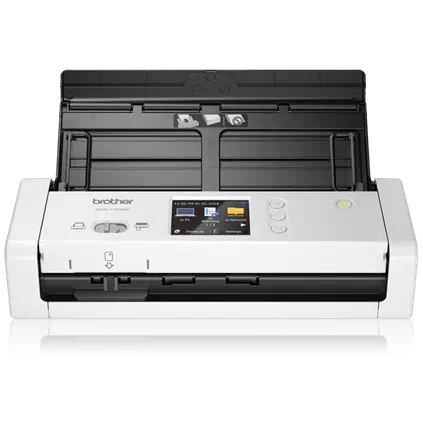
Compact Document Scanner
A compact document scanner can help exporters keep certificates, supplier records, invoices and origin evidence in a searchable file before goods move. This is most useful when the customs file may need to be checked again after shipment.
As an Amazon Associate I earn from qualifying purchases.
The catch: rules of origin decide who benefits
Rules of origin are the main filter. They determine whether a product is genuinely treated as South African for tariff purposes. This can be straightforward for some agricultural or mineral products, but more complex for manufactured goods that use imported inputs.
A product assembled in South Africa may not automatically qualify if too much of its value, processing or core inputs come from elsewhere. Exporters should be ready to show how the product was made, where its materials came from and why it satisfies the applicable origin test.
The source material says exporters may need SARS-issued Rules of Origin certificates, and that retrospective certification may be available for qualifying goods shipped from May 1, 2026. Those details have not been independently verified, so businesses should confirm the current certificate process directly before relying on it.
| Decision point | Why it matters | What to check |
|---|---|---|
| Product eligibility | Not every item may qualify for tariff relief. | Confirm the product category with the Chinese buyer or customs adviser. |
| Origin proof | Duty-free treatment depends on meeting origin rules. | Keep supplier records, production evidence and cost breakdowns where relevant. |
| Certificate timing | Delayed documents can affect clearance and cash flow. | Check when certificates can be issued and how they are submitted. |
| Importer readiness | The Chinese buyer usually plays a key role at clearance. | Agree responsibilities before shipment. |
Who this opportunity is most useful for
The reported tariff preference is likely to matter most for exporters already selling into China, businesses negotiating with Chinese distributors, and producers whose goods clearly meet origin requirements.
It may be less useful for companies that only do light assembly in South Africa, rely heavily on imported inputs, or cannot produce clean records showing where their goods come from. For those firms, the compliance work may be just as important as the sales opportunity.
Exporters should also be careful with marketing language. Promising Chinese buyers “duty-free South African goods” before eligibility is confirmed can create commercial disputes later. A safer approach is to price shipments with clear conditions: the duty benefit applies only if the goods are accepted under the relevant origin and documentation rules.
Practical checklist before shipping
A sensible first step is to treat the programme like a customs audit waiting to happen. The exporter should be able to defend the claim after the goods leave South Africa, not just at the moment the invoice is prepared.
- Identify the exact tariff code for the goods.
- Ask the Chinese importer to confirm whether the tariff preference applies to that code.
- Review the applicable rule of origin for the product.
- Gather production, sourcing and supplier records that support the origin claim.
- Confirm the certificate process and required format before shipment.
- Agree who pays any duty, security or penalty if customs rejects the claim.

Shipping and File Label Printer
A dedicated label printer can make it easier to mark shipment folders, customs packets and internal reference files consistently. Clear labeling helps teams retrieve the right certificate or supplier record when a shipment is queried.
As an Amazon Associate I earn from qualifying purchases.
The reported programme could improve the competitiveness of South African exports into China, but only for businesses that can prove they qualify. The commercial upside is real only when the customs file is strong enough to survive scrutiny.
For exporters, the best move is not to rush a shipment on the assumption of zero tariffs. It is to verify eligibility first, align with the Chinese buyer and document the origin case before the goods move.