

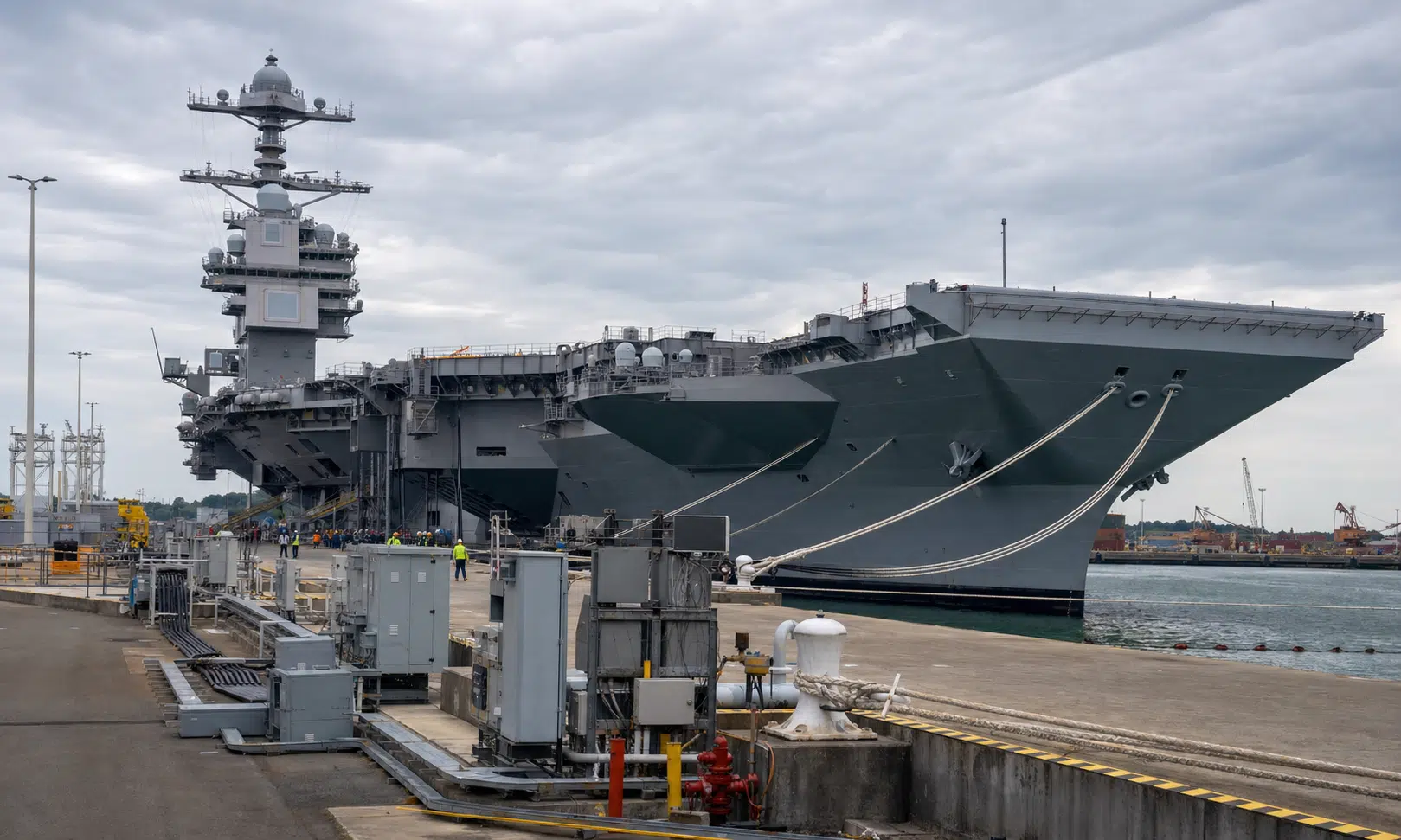

The U.S. Navy is preparing to test whether a Ford class nuclear-powered aircraft carrier can export electricity to a shore installation, turning one of its most valuable warships into a temporary power source for facilities on land.
The planned demonstration at Naval Station Norfolk is not just a technical curiosity. It fits into a larger push to keep key military installations running if normal grid power is disrupted by an attack, cyber incident, storm, or other emergency. For base planners, emergency managers, and energy-resilience teams, the useful question is not simply whether a carrier can generate power. It is whether using one this way makes operational sense compared with other backup options.
Acting Secretary of the Navy Hung Cao described the idea during a May 14 congressional hearing, saying Norfolk Naval Base would be powered from an aircraft carrier during the test. The Navy later framed the effort as part of a broader strategy to provide firm, baseload power to installations when mission-critical needs arise.
Because USS Gerald R. Ford is currently the only commissioned Ford class carrier and is homeported at Norfolk, it is the likely platform for the demonstration. The Navy’s public language has referred to the Ford class more generally, which matters because the test could shape how future carriers in the class are considered for emergency support roles.
What the Navy Is Trying to Prove
At a practical level, the test is about ship-to-shore power transfer. Naval vessels normally receive electricity from shore while in port. This demonstration turns that relationship around: the carrier would export electricity from its onboard power-generation systems to a compatible shore installation.
That sounds simple in concept, but the value is in proving the interfaces, procedures, safety controls, and command relationships that would be needed in a real contingency. A base that has lost grid power does not only need electricity. It needs controlled, reliable electricity that can support priority loads without creating new safety risks or interfering with the ship’s own requirements.
For a buyer-style decision framework, the carrier option should be judged against several criteria:
- How quickly the system can be connected and synchronized with shore infrastructure.
- How much usable electrical power can be exported after shipboard needs are met.
- Which base functions would receive priority during an outage.
- How much force protection is required while the ship is acting as a power source.
- Whether the carrier is available without compromising fleet operations.
- How the setup compares with fixed backup generators, microgrids, batteries, and small modular reactors.
That last point is important. A nuclear carrier is not a normal standby generator. It is a national-level military asset with an air wing, a crew of thousands, and a deployment cycle built around power projection. Using it as a power plant can make sense only in situations where the need is severe enough, the ship is available, and the base infrastructure can safely receive and distribute the power.

LiFePO4 Portable Power Station
A LiFePO4 portable power station can keep small essentials such as phones, routers, radios, medical devices, and task lighting running during shorter outages. Match capacity and output to the devices you actually need to support.
As an Amazon Associate I earn from qualifying purchases.
Why a Ford Class Carrier Is Different
Ford class carriers were designed with enormous electrical demands in mind. Their two A1B nuclear reactors support ship propulsion, aviation operations, sensors, electromagnetic launch systems, hotel loads, and other power-hungry systems across what is essentially a floating city.
The exact output of the A1B reactor plant is not publicly disclosed. Outside estimates often place each reactor at roughly 700 megawatts thermal, but that figure has not been independently confirmed by the Navy and should not be treated as a verified specification. What can be said with confidence is that the Ford class was built with substantially greater electrical-generation capacity than earlier carrier designs.
That extra capacity is one reason the concept is attractive. A carrier already has a trained nuclear operations crew, redundant systems, and the ability to sustain itself for extended periods. It also brings communications, command spaces, medical facilities, water production, and logistics capacity that may be useful during a major emergency.
Cao also pointed to potable water production as a possible support function. Modern carriers can produce large quantities of fresh water for shipboard use, and in some disaster scenarios water can be as urgent as electricity. Exporting water ashore would be a separate operational problem from exporting power, but the broader idea is the same: a carrier could serve as a temporary resilience hub if shore systems are damaged.
Comparison: Carrier Power vs. Other Resilience Options
For military installations, the carrier concept should not be viewed as a replacement for hardened grids, backup generation, fuel planning, or microgrids. It is better understood as an extraordinary contingency option that could sit alongside those tools.
| Option | Best Use Case | Main Advantage | Main Limitation |
|---|---|---|---|
| Ford class carrier exporting power | Major outage at a compatible naval installation or emergency support mission near a port | Large onboard power plant with trained nuclear crew and additional shipboard services | Carrier availability, force protection, and pier-side vulnerability |
| Fixed backup generators | Known critical loads at bases, hospitals, command centers, and maintenance facilities | Local control and established maintenance model | Fuel supply and limited duration if logistics are disrupted |
| Base microgrids | Installations that need controlled islanding from the wider grid | Can prioritize loads and integrate multiple sources | Requires investment before the emergency happens |
| Battery storage | Short-duration bridging power and load smoothing | Fast response and no fuel delivery during discharge | Duration depends on installed capacity and recharge options |
| Small modular reactors | Long-term baseload resilience for selected installations | Potentially continuous firm power with small land footprint | Program maturity, licensing, siting, and security questions |
| Commercial powerships or barges | Civilian grid support, island grids, ports, and disaster recovery | Purpose-built for exporting electricity ashore | Availability, contracting, fuel, and port compatibility |
The carrier’s advantage is not that it is the cheapest or most scalable option. It is that the Navy already owns the platform, already trains the crew, and may already have the ship in the right place during certain emergencies. The disadvantage is equally clear: if the Navy needs that carrier at sea, keeping it tied to a pier for power generation may be unacceptable.
The Historical Precedent
Ships have been used as emergency power sources before. The basic idea goes back nearly a century.
One of the best-known U.S. examples involved USS Lexington, an early aircraft carrier that supplied electricity to Tacoma, Washington, in late 1929 and early 1930 after hydroelectric output dropped sharply. That episode is often cited because it shows the core appeal of naval power generation: a ship can arrive with its own plant, crew, and operating discipline when local infrastructure is under stress.
During World War II, several destroyer escorts were used as floating power plants. Their turbo-electric propulsion made them particularly suitable for that role. At least one damaged ship was repurposed after returning it to combat service was judged uneconomical.
The closest nuclear precedent was the MH-1A Sturgis, a converted Liberty ship operated by the U.S. Army Corps of Engineers. It provided electricity in the Panama Canal Zone from the late 1960s into the 1970s. Unlike a carrier, Sturgis was not a front-line combatant being temporarily diverted from fleet operations. It was a purpose-converted floating nuclear power plant.
That distinction matters. A purpose-built or purpose-converted power barge can be optimized for the job. A carrier can perform the job only if the mission, location, and timing make sense.
Where the Carrier Option Could Be Useful
The most obvious use case is a major naval installation that loses grid power while a compatible carrier is nearby. Naval Station Norfolk is a logical test site because it combines a massive shore installation, carrier homeport infrastructure, and high mission importance.
In a real event, exported carrier power would probably be used selectively rather than simply energizing everything on base. Critical loads could include command-and-control spaces, communications, medical facilities, security systems, fuel and maintenance operations, water systems, and other mission-essential services.
The same concept could matter after hurricanes, earthquakes, cyberattacks, or attacks on energy infrastructure. Some U.S. military facilities sit in regions exposed to natural hazards, and bases often become recovery hubs for surrounding communities. That does not mean every base is a candidate for carrier support, but it does mean the ability could have value beyond wartime.
American defense officials have also warned more broadly that installations once considered secure from direct disruption may face a wider range of threats in future conflicts. That assessment includes long-range weapons, cyber operations, sabotage, and lower-cost systems such as one-way attack drones. The exact risk varies by location, and the carrier-power concept should be treated as one tool in a wider resilience plan rather than a stand-alone answer.
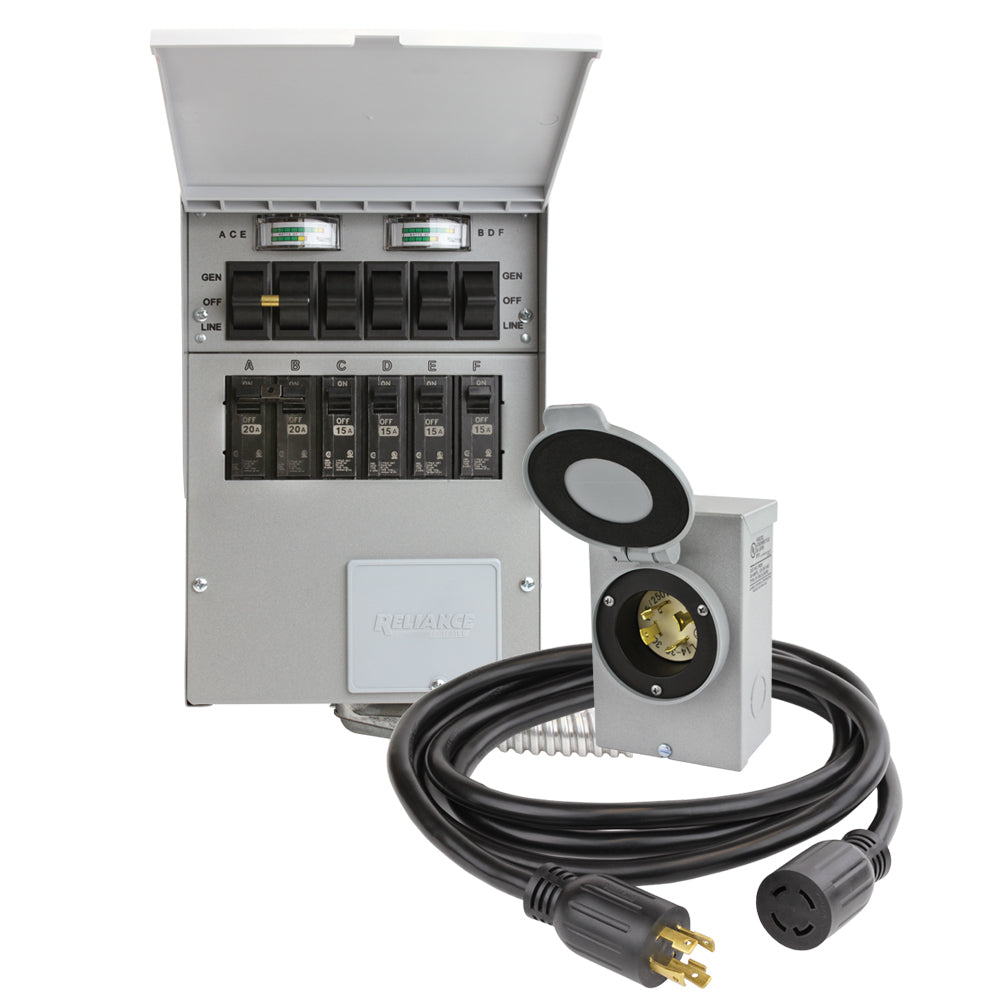
Manual Generator Transfer Switch Kit
A transfer switch kit lets a compatible portable generator feed selected circuits through a proper installed connection. Installation should be handled by a qualified electrician and matched to local code, generator size, and panel configuration.
As an Amazon Associate I earn from qualifying purchases.
The Operational Tradeoff Is the Hard Part
The central problem is not whether a Ford class carrier has substantial power-generation capability. It does. The harder question is whether the Navy can afford to use a carrier that way when demand for carrier presence remains high.
The Navy has 11 aircraft carriers, and those ships are among the most heavily tasked assets in the fleet. Maintenance, training, deployment, and modernization schedules leave only a portion of the force available at any given time. Ford class follow-on ships are still working through the long delivery and integration timeline that comes with nuclear carrier construction.
Pulling a carrier out of operational rotation to sit pier-side as a power source would be a serious decision. It could be reasonable if the ship was already in port between deployments, if the emergency affected a strategically important base, or if the power mission was short and tightly scoped. It would be harder to justify during a crisis that also required carrier strike groups forward.
There is also a force-protection issue. A carrier in port is not defenseless, but it is more predictable and constrained than a carrier at sea. If a base has already lost power because of hostile action, placing a high-value carrier at the center of the recovery effort could create additional security demands. Planners would need to account for drones, sabotage, cyber effects, harbor security, and physical protection of the ship-to-shore connection.
What Buyers and Planners Should Take From the Test
For anyone evaluating emergency power systems, the Ford demonstration is a reminder that capacity alone is not the decision. The right backup option depends on availability, connection time, load priority, security, fuel or energy source, and the consequences of failure.
A carrier-to-shore setup has high potential capacity and unique resilience value, but it is not an everyday procurement substitute for generators, switchgear, batteries, and microgrid controls. Those systems still need to be in place before an emergency. The carrier option becomes more valuable when it can plug into a base that already understands its critical loads and has the infrastructure to receive outside power safely.
For civilian readers comparing emergency-power approaches, the lesson scales down: the best backup plan usually combines several layers. A large power source is useful only if the transfer equipment, distribution plan, maintenance schedule, and operating procedures are already worked out.
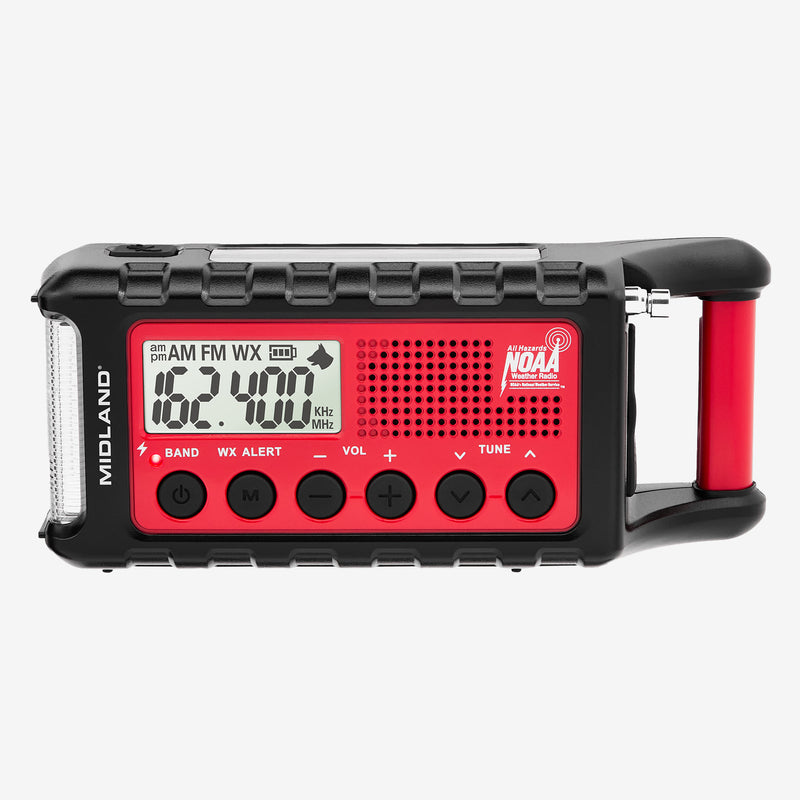
Emergency NOAA Weather Radio
A NOAA-capable emergency radio gives access to weather and public-safety alerts when phones, internet service, or household power are unreliable. Models with battery, USB, solar, and hand-crank options add useful redundancy.
As an Amazon Associate I earn from qualifying purchases.
For defense planners, the test should answer practical questions rather than produce a headline-only capability. How long does the connection take? What loads can be supported? How does the base prioritize power? What crew and security burden does the mission place on the ship? What happens if the carrier must leave port quickly?
The Bottom Line
The planned Navy demonstration could add a useful emergency role to the Ford class carrier portfolio, but it is best understood as a contingency capability, not a routine power strategy.
A Ford class carrier brings a large nuclear power plant, trained operators, water-production capacity, and major command-and-logistics resources. Those strengths could matter during a severe outage at a naval base or in a disaster response scenario. The limits are just as real: a carrier is too valuable, too operationally constrained, and too security-sensitive to treat as a normal replacement for land-based resilience investments.
The test at Norfolk should show whether the Navy can make the ship-to-shore power pathway practical. If it works, the result will not be a floating power plant in the commercial sense. It will be a high-end emergency option for moments when keeping a critical installation alive is worth tying one of the Navy’s most important ships to the pier.