


Yvon Chouinard didn’t set out to build a global brand. He wanted to climb.
Born in Lewiston, Maine, in 1938, Chouinard moved to Southern California as a child and gravitated toward the outdoors. As a teenager, he got into falconry, which pulled him toward cliffs, ropes, and eventually rock climbing. And once he started climbing, one thing became obvious fast: the gear at the time was rough, unreliable, and often damaging to the rock.
So he did what a certain kind of obsessed tinkerer does—he made better equipment himself.
From climber to craftsman
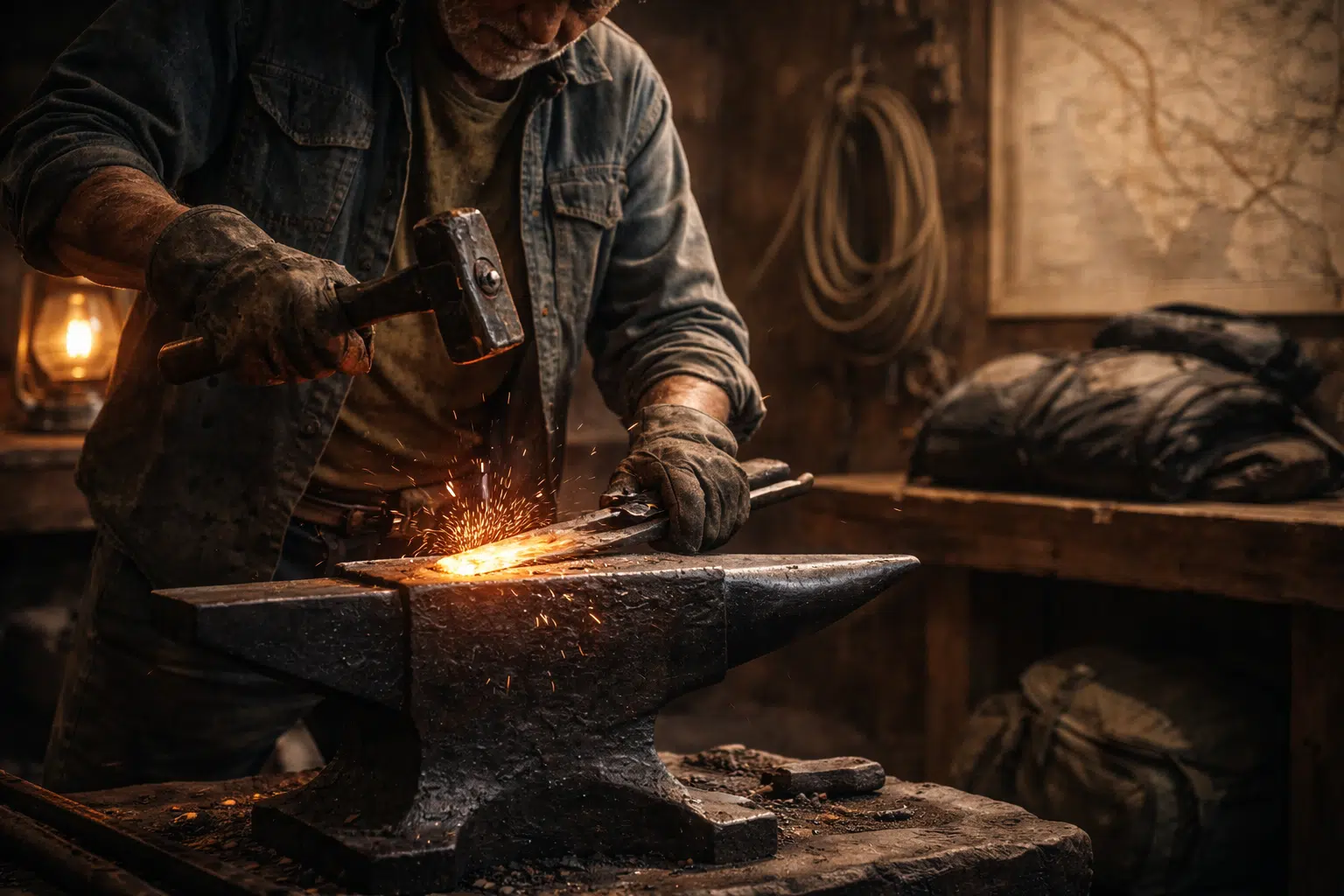
In 1957, Chouinard bought a second-hand coal-fired forge and began teaching himself blacksmithing, turning raw steel into climbing hardware. What started as personal gear quickly became something other climbers wanted too. Orders spread by word of mouth, and a small, practical business formed around a simple promise: make equipment that works.
Even as demand grew, Chouinard kept his priorities pointed in the same direction. His life revolved around seasons: working to fund time outside, and spending that time outside pushing deeper into the craft and culture of climbing.
The business grows—reluctantly
Chouinard’s early years in business were famously lean. He lived cheaply and focused on building products that could survive hard use—because his customers were people like him: climbers who didn’t have patience for hype.
That product-first mindset became a defining theme of his career. In his writing and interviews, Chouinard has often framed himself as someone driven more by practice than status—someone who commits deeply, learns quickly, and then moves on before the obsession turns into a job.
Patagonia is born
By the early 1970s, the company’s appetite for apparel was growing. In 1973, Chouinard launched Patagonia as the clothing arm of the operation, building on the same principles that had made his climbing gear respected: durability, performance, and a preference for function over flash.
Patagonia didn’t try to be everything to everyone. It built an identity around people who’d rather be outside than in meetings—and it marketed like a company that didn’t want to scream.
A wake-up call in 1991
Success came with pressure. In 1991, Patagonia hit a serious slump and laid off about 20% of its staff. The moment forced a hard rethink: what kind of company did Patagonia want to be, and what kind of growth was worth chasing?
That period helped accelerate the brand’s long-term pivot toward environmental responsibility—not as a tagline, but as a core operating constraint.
Sustainability becomes the constraint that drives innovation
Patagonia’s sustainability push wasn’t one neat announcement. It was a series of choices that made the business harder in the short term but clearer in the long term.
A major milestone came in Spring 1996, when Patagonia switched its cotton line to 100% organic cotton, triggering broad changes across sourcing and production. Over time, the company expanded into recycled materials, deeper supply-chain scrutiny, and repair and reuse programs that encouraged customers to keep products longer instead of replacing them.
It’s a counterintuitive strategy for any retailer: teach people to buy less. But it also sharpened Patagonia’s brand into something rare—growth anchored to restraint.
The 2022 handoff: “Earth is now our only shareholder”
By 2022, Patagonia was widely reported to be worth about $3 billion—and Chouinard made his most radical move yet. He transferred ownership into a structure designed to direct the company’s profits toward fighting the climate crisis, declaring: “Earth is now our only shareholder.”
The plan aimed to send roughly $100 million per year (depending on business performance) to environmental causes—turning a private company into a long-term funding engine for activism.
Chouinard’s story isn’t clean or perfectly linear. It’s full of trial, tension, and tradeoffs—especially the challenge of scaling a brand while trying not to betray what made it matter in the first place.
But the through-line is consistent: build what you believe in, live close to your values, and treat constraints not as a cage—but as a compass.