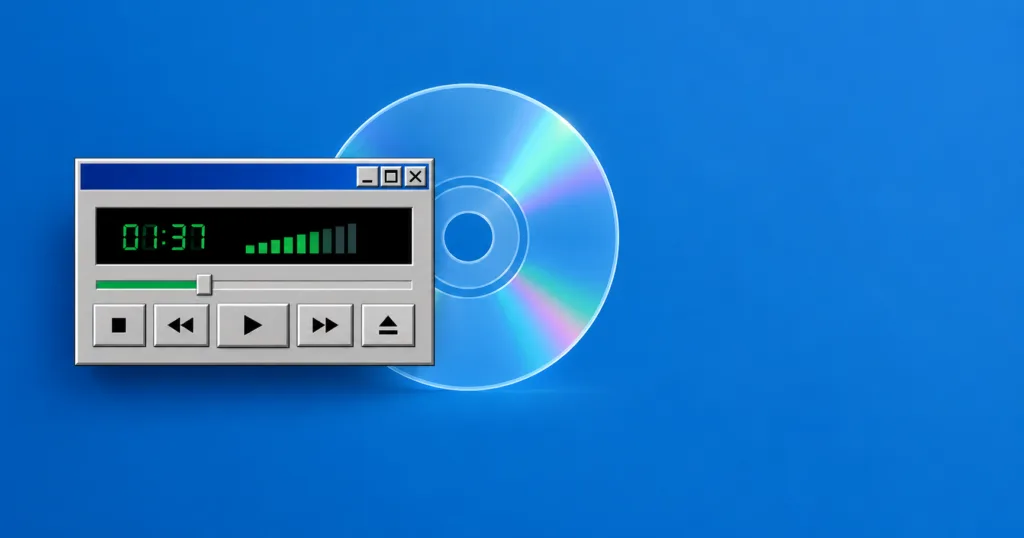
Blogger Enlyth reports running a November 1992 version of CDPLAYER.EXE on Windows 11 during a search for the oldest graphical Windows application that still opens without modification or application emulation. The executable became the earliest candidate Enlyth identified, although its standing as the oldest compatible GUI application has not been independently verified.
Enlyth identified the program as the CD player from Windows NT 3.1 pre-release build 347, with a reported link date of November 16, 1992. A demonstration of its operation involved an additional DLL that emulated a CD drive, requiring a distinction between launching the executable and testing its playback functions.
From FreeCell to an early Windows NT build
Enlyth’s initial candidate was FREECELL.EXE dated February 1993. A tip from a technology forum pointed to the game as a possible contender, and Enlyth reported that this version ran on Windows 11 without problems. That gave the search an initial result before the investigation moved to older software.
The search criteria required an application to run without modification or emulation of the application itself. Enlyth expected a candidate from the early Windows NT period, citing Windows 11’s lack of native support for 16-bit Windows applications as the reason to focus on that era.
Enlyth then examined “some early NT 3.1 pre-release versions that seemed promising.” Build 347 supplied the CDPLAYER.EXE candidate, whose reported November 1992 date preceded the February 1993 FreeCell executable. This established the order of the candidates in Enlyth’s account, rather than a verified record covering every surviving Windows GUI application.
Playback involved an emulated CD drive
Enlyth reported that the test computer lacked an optical drive. To demonstrate the CD player’s functions, the blogger added cdemu.dll, a component used to emulate a CD drive. Enlyth said that this allowed the older application to function despite the absence of the physical hardware.
The additional component qualifies the description of the experiment as requiring no emulation. Enlyth’s original criterion concerned running the application, while the demonstration also involved emulating the device it expected to control. The account therefore describes an executable running on Windows 11 with a separate component supplying its CD drive environment.
It does not independently establish that the same executable plays an audio CD through a physical optical drive on Windows 11. That playback scenario remains separate from Enlyth’s reported demonstration with cdemu.dll.
A separate test reached back to 1985
Enlyth also reported trying older, 16-bit software with help from Winevdm’s otvdm on 64-bit Windows. This changed the conditions of the search by introducing a compatibility tool, rather than retaining the original requirement that the application run without that assistance.
“Using otvdm does feel like cheating,” Enlyth said. With that tool, the blogger described running “a fully playable version of REVERSI.EXE dated 15-Nov-1985.”
The reported Reversi result belongs to the assisted compatibility experiment. CDPLAYER.EXE remained Enlyth’s candidate for the earlier search under the original application-running criteria, with the separate qualification that its playback demonstration used CD drive emulation.