Xbox chief technology officer Scott Van Vliet said on October 21, 2026, that the operating system for Project Helix is being built on Windows. He also rejected an account of tensions between Microsoft’s Xbox and Windows teams, saying the two groups were working closely on the next generation of devices.
“Helix OS is being built on Windows, and the XBOX and Windows teams are working closely together on the next generation of devices. The account cited here misrepresents both the technical work and the relationship between the teams,” Van Vliet said in a post on X.
What the Windows foundation establishes
Van Vliet’s statement did not identify a Windows edition, describe the final interface or explain whether the software would extend the existing Xbox console operating system or use a different design. It did not announce that Microsoft had abandoned Windows 11. The wording alone therefore does not establish a change in the company’s operating-system plans or a decision to reject the Windows desktop.
Windows technology has previously formed part of Microsoft’s console architecture. In its May 2013 explanation of Xbox One, Microsoft described a system combining three operating-system components. An Xbox gaming environment provided access to the hardware, while a Windows kernel supported web-connected applications and experiences.
A third component connected those environments to enable switching and multitasking. That historical description provides a specific example of Windows technology within an Xbox console without equating the console’s software with a conventional desktop PC installation.
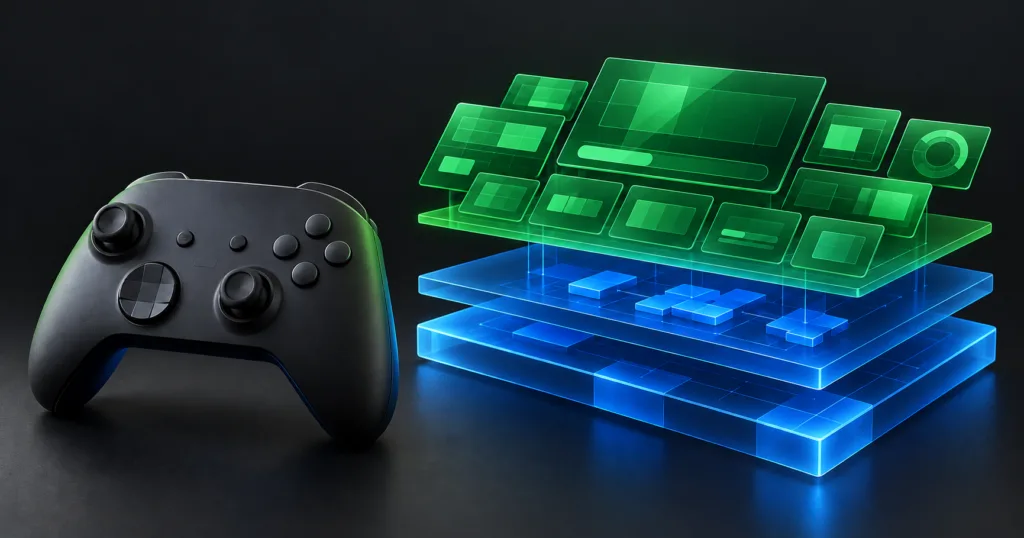
Xbox mode brings a console-style interface to Windows 11
Microsoft’s work on Xbox mode provides a separate, publicly documented example of collaboration between its gaming and Windows platforms. On April 30, 2026, the company announced that the mode was beginning a gradual rollout to Windows 11 PCs in select markets. The announcement covered laptops, desktops and tablets, with access expanding over the following several weeks.
Microsoft described Xbox mode as a full-screen experience designed around controller navigation. It said the interface put the player’s library and recently played games within easy reach while reducing background distractions.
The company highlighted these functions:
- Browsing and launching games through an interface optimized for controllers.
- Switching between Xbox mode and the Windows 11 desktop.
- Accessing a combined library that includes the Xbox Game Pass catalog and installed games from other PC storefronts.
The April rollout followed earlier work on Windows handhelds, where the interface had been known as the full screen experience. Microsoft said feedback from those devices helped shape the version for other Windows 11 PCs. This was an expansion of a gaming interface within Windows, with desktop access retained.
An earlier preview had extended that approach beyond handhelds. On November 21, 2025, Microsoft announced that Windows Insider builds in the Dev and Beta channels would bring the full screen experience to additional PC types. That preview required the Xbox app and was distributed in phases.
Microsoft’s description of the preview also explained how the gaming environment could handle navigation differently from the desktop. Some keyboard shortcuts intentionally behaved differently to keep the interface focused on play, while returning to the desktop did not require a reboot.
Microsoft’s announced plans for Project Helix
Microsoft outlined its next-generation console project at the Game Developers Conference on March 11, 2026. The company said Project Helix was being designed to play Xbox console and PC games, placing both game ecosystems within its stated plans for the hardware.
The announcement described a custom AMD system-on-chip and development work aligned with the next generation of DirectX and AMD’s FSR technology. Microsoft presented those details as part of its multiyear partnership with AMD and its plans for the console’s rendering and simulation capabilities.
In the same announcement, Microsoft said it planned to begin shipping alpha versions of the hardware to developers in 2027. That date referred to early developer hardware, rather than a retail release date. The March statement did not set a consumer launch date.
Microsoft also connected its console work with its effort to bring Xbox gaming software experience into Windows. It cited the early version introduced with ROG Xbox Ally handhelds before announcing the broader Windows 11 rollout.