


A common amino acid is getting attention after a Japanese research team reported that it reduced amyloid beta buildup in laboratory and animal models of Alzheimer’s disease. The finding is interesting, but it is still early-stage science. It does not show that arginine supplements prevent or treat Alzheimer’s in people.
Arginine, sometimes sold as L-arginine, is a naturally occurring amino acid found in protein-rich foods and widely available as a supplement. In the study, published in Neurochemistry International, researchers reported that arginine appeared to interfere with the aggregation of amyloid beta, the protein that can form plaques in the brains of people with Alzheimer’s disease.
That matters because amyloid buildup is one of the major biological features associated with Alzheimer’s. But the careful reading is important: this was not a human clinical trial, and the dosing used in the experiments should not be treated as a supplement recommendation.
What the Study Reported
The research team, based at Kindai University in Japan, tested arginine across several Alzheimer’s disease models. According to the study report, arginine reduced amyloid beta aggregation in lab experiments, lowered amyloid buildup in fruit flies engineered to model Alzheimer’s-related toxicity, and reduced plaque burden in a mouse model carrying human familial Alzheimer’s mutations.
The researchers focused on amyloid beta 42, often written as Aβ42, which is one of the more aggregation-prone forms of the protein. In the laboratory portion of the work, arginine was reported to reduce the formation of Aβ42 fibrils, with stronger effects at higher concentrations. The team also described amyloid fibers exposed to arginine as shorter and less developed under imaging.
Those details are promising enough to justify more research, but they should not be overstated. Laboratory protein experiments, fruit fly models, and mouse models can help scientists understand disease mechanisms. They cannot prove that a supplement will help human patients, especially in a disease as complex as Alzheimer’s.
Why Arginine Is Being Studied
The interest in arginine comes from its possible role as a chemical chaperone. In plain terms, chemical chaperones are compounds that may help proteins keep a more stable shape or reduce harmful misfolding. Protein misfolding and aggregation are central concerns in several neurodegenerative diseases, including Alzheimer’s.
Previous work from the same research group suggested that arginine might reduce harmful protein aggregation in another neurodegenerative disorder model. That line of research appears to have led the team to test whether arginine could also affect amyloid beta aggregation.
Arginine is also attractive to researchers because it is already familiar in medicine and nutrition. It is involved in normal body processes such as nitric oxide production, blood vessel function, immune signaling, and wound repair. Still, “familiar” does not mean “automatically safe for everyone,” and it does not mean a supplement version has been validated for Alzheimer’s.
What Happened in the Animal Models
In the fruit fly model, the study reported lower amyloid accumulation and less visible tissue damage in the flies’ eyes after arginine exposure. Fruit fly eye changes are often used in this kind of research as a readout for neurotoxicity, but they are not the same as measuring memory loss or daily function in a person.
The mouse portion used AppNL-G-F knock-in mice, a model designed to develop amyloid pathology over time. According to the researchers, mice that received arginine in drinking water from an early stage developed fewer amyloid plaques in brain regions linked with memory, including the hippocampus and cortex.
The team also reported that insoluble Aβ42, the form more closely tied to plaque formation, decreased while soluble amyloid levels were largely unchanged. That pattern led the authors to suggest that arginine may be acting on aggregation rather than simply reducing amyloid production.
Possible Effects on Inflammation and Behavior
The study also described signs of reduced inflammation-related activity in the brains of treated mice. Genes linked with inflammatory molecules such as IL-1β, IL-6, and TNF were reported to be less active in the arginine-treated animals.
Behavioral testing also suggested some improvement. In maze-based tests, the treated mice showed more movement and exploratory behavior than untreated Alzheimer’s-model mice. That is worth noting, but it should be interpreted with restraint. Increased exploratory activity in mice is not the same as proving better memory, slower cognitive decline, or improved quality of life in humans.
Should People Buy Arginine for Alzheimer’s?
The practical answer is no one should treat this study as a reason to start arginine for Alzheimer’s without medical guidance. The work is preclinical, and the researchers themselves noted that the experimental dosing does not match ordinary commercial supplements.
That distinction matters for shoppers. A supplement label may say L-arginine, but that does not mean it matches the compound form, dose, timing, or medical context used in a research setting. People with heart disease, blood pressure issues, kidney disease, herpes outbreaks, medication interactions, or upcoming surgery should be especially cautious and should ask a clinician before using arginine.
| Reader question | Careful answer |
|---|---|
| Was arginine tested in people with Alzheimer’s? | No. The reported work was done in laboratory and animal models. |
| Did the study prove supplements prevent dementia? | No. It suggests a possible research direction, not a proven prevention strategy. |
| Is arginine easy to buy? | Yes, but commercial availability is not the same as proven medical benefit. |
| Could it be studied in human trials? | Possibly. The study’s authors present it as a candidate for further testing. |
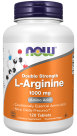
NOW Foods L-Arginine 1000 mg Tablets
This L-arginine tablet gives shoppers a straightforward single-ingredient option with clear 1,000 mg labeling. It should be considered only for general supplement use after checking the label, cautions, and any medication or health-condition concerns with a clinician.
As an Amazon Associate I earn from qualifying purchases.
For people already shopping for amino acid supplements, the more useful buyer standard is not a disease claim. It is basic quality control: clear labeling, third-party testing when available, transparent dosing, and no promise that the product treats Alzheimer’s or reverses cognitive decline.
How This Fits With Current Alzheimer’s Treatment Research
Alzheimer’s drug development has increasingly focused on amyloid beta, but the field remains complicated. Antibody drugs such as lecanemab and donanemab are designed to remove amyloid plaques from the brain. They can slow decline for some people with early Alzheimer’s, but they are expensive, require medical monitoring, and can carry risks such as amyloid-related imaging abnormalities, including brain swelling or bleeding.
Arginine represents a different idea: instead of clearing plaques after they form, researchers are exploring whether amyloid aggregation might be reduced earlier in the process. That is a reasonable scientific question. It is not yet a treatment pathway.
The source study also does not address every major feature of Alzheimer’s disease. Human Alzheimer’s involves more than amyloid plaques, including tau pathology, neuron loss, vascular factors, inflammation, genetics, age-related changes, and many other biological processes. A mouse model can reproduce parts of the disease, but not the whole condition.
The Bottom Line
The new arginine study is best read as a preclinical signal, not a supplement recommendation. It reports that arginine reduced amyloid beta aggregation and amyloid pathology in lab, fruit fly, and mouse models, with some signs of reduced inflammation and behavioral improvement in mice.
That is enough to make arginine a candidate for more research. It is not enough to say that over-the-counter arginine protects the human brain, prevents Alzheimer’s, or slows the disease in patients.
For now, anyone concerned about memory changes, dementia risk, or supplement use should treat arginine as an unproven option for Alzheimer’s and discuss it with a qualified health professional rather than relying on a bottle label or a headline.