

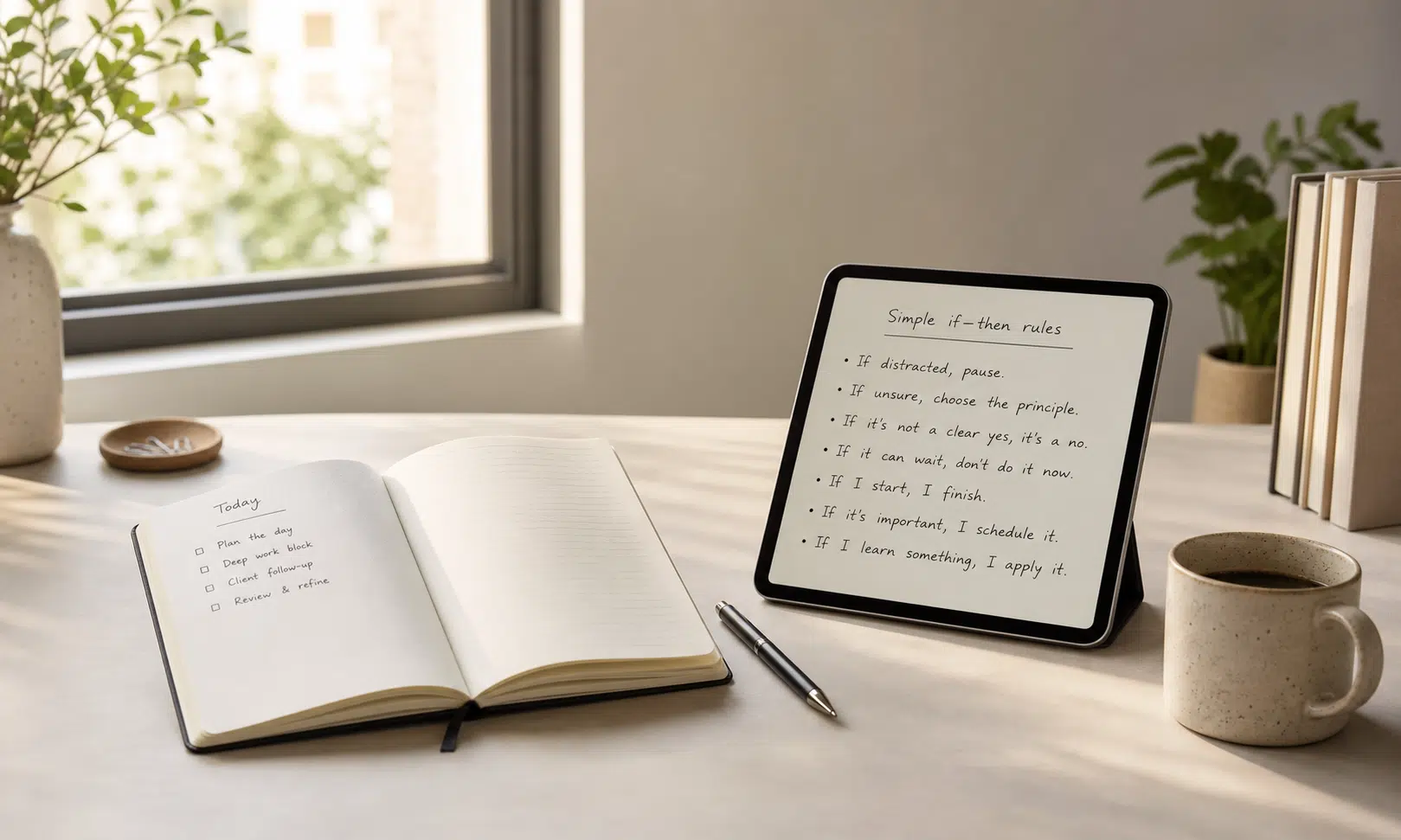

Verdict: Simple Rules Work Best When They Are Personal, Specific, and Few
Simple rules are a practical way to turn principles into behavior. Instead of deciding from scratch every time life gets noisy, you decide once in advance: if this situation happens, then this is what I do.
That sounds almost too simple, but that is the point. A useful personal rule removes friction at the exact moment you are most likely to negotiate with yourself. It can help with money, health, relationships, work, travel, and the small daily choices that quietly shape a life.
This is not a product review in the usual sense. There is nothing to buy, install, or subscribe to. The “system” being reviewed is the practice of building a personal operating code through simple if-then rules.
The best fit is someone who already knows what they value but struggles to act consistently when tired, busy, tempted, or under social pressure. The weaker fit is someone who wants a fully flexible life with no pre-set constraints. Simple rules trade a little spontaneity for a lot of clarity.
How the System Works
A simple rule has two parts: a trigger and a response. The trigger is the situation. The response is the behavior you want to happen automatically.
For example: if a task takes less than two minutes, then do it immediately. If a purchase costs more than $100, then wait 24 hours before buying. If a conversation is important, then do not handle it over text.
These rules are useful because they move a decision out of the emotional moment. You are not asking, “What do I feel like doing right now?” You are following a standard you already chose when you were thinking more clearly.
Research on implementation intentions has generally found that if-then planning can improve follow-through compared with relying on intention alone, though the exact effect depends on the behavior, context, and person. So it is better to treat simple rules as a useful behavioral tool, not a guarantee.

Rocketbook Fusion Smart Reusable Notebook
A reusable smart notebook works well if you want to draft personal rules by hand, scan them, and revise them as your system changes. The Fusion format is especially useful for mixing rule lists with weekly planning, goals, and notes.
As an Amazon Associate I earn from qualifying purchases.
What Good Simple Rules Look Like
The strongest rules are concrete enough to use under pressure. Vague values such as “be healthier” or “spend wisely” are good starting points, but they do not tell you what to do at 9:45 p.m., in a checkout line, or during a tense conversation.
Better rules turn those values into decisions:
- If it is close to bedtime, then I avoid late meals.
- If I want a drink during the day, then I choose water, coffee, tea, or another non-sugary option.
- If I use a credit card, then I pay the balance in full each month.
- If I want to buy something expensive, then I wait before purchasing.
- If I think something kind, then I say it out loud.
- If my alarm rings, then I get up without negotiating with the snooze button.
- If I am waiting somewhere, then I read instead of scrolling.
- If I am trying a new hobby, then I delay buying expensive equipment.
- If it is bedtime, then I do not leave dishes in the sink.
Not every example will fit every person. That is why the system should not be copied wholesale. Borrow what matches your values, ignore what does not, and write rules that solve problems you actually face.
Setup: Start With 3 to 5 Rules
The easiest mistake is writing a personal constitution on day one. Too many rules turn the system into another thing to manage.
Start with three to five rules in areas where repeated decisions already cost you energy. Good starting categories include spending, sleep, food, exercise, communication, and phone use.
A practical setup process looks like this:
- Choose one area of life that feels unnecessarily noisy.
- Write down the recurring situation where you tend to drift.
- Create one if-then rule that tells you exactly what to do.
- Test it for a week.
- Keep it, revise it, or remove it based on what happens.
The goal is not moral perfection. The goal is to make your preferred behavior easier to repeat.
Maintenance: Treat the Code as Editable
Simple rules should be stable enough to guide you, but not so rigid that they stop matching your life. A rule that worked during one season may be too strict, too loose, or simply irrelevant later.
The Start-Stop-Continue framework is a clean way to maintain the system:
- Start: Add a rule when you notice a repeated problem or admire a habit in someone else.
- Stop: Remove a rule that creates friction without producing a meaningful benefit.
- Continue: Keep the rules that quietly make life better and require little debate.
Mistakes can be useful data. If something goes wrong twice, ask what rule might prevent the third version. That keeps the system grounded in real life instead of abstract self-improvement language.

Moleskine Classic Dotted Notebook
A dotted hardcover notebook gives you one stable place to keep your current rules, review notes, and Start-Stop-Continue changes. The dotted layout is flexible enough for short lists, trackers, and simple weekly reviews.
As an Amazon Associate I earn from qualifying purchases.
Who Simple Rules Are For
Simple rules are especially useful for people who want fewer daily negotiations with themselves. They work well when you are trying to protect priorities that are easy to postpone: sleep, health, money, focus, generosity, and honest communication.
They are less useful when written as punishments or status signals. A rule should help you live more consistently, not give you another way to criticize yourself.
The best version of this system creates congruence: your beliefs, words, and actions line up more often. That does not automatically produce clarity or peace, but it can reduce the gap between what you say matters and what your calendar, spending, and habits show.
Final Take
Simple rules are not exciting, and that is part of their value. They turn ordinary moments into repeatable choices. Over time, those choices become a personal code.
The system earns its high impact score because it makes decision-making lighter. It earns its high setup score because anyone can begin with a short list. Its maintenance score is lower because rules need revision, especially as your work, relationships, health, and responsibilities change.
For anyone who feels pulled around by impulse, convenience, or other people’s expectations, simple rules are a practical place to start. A better life often begins by deciding in advance what no longer needs to be decided every day.