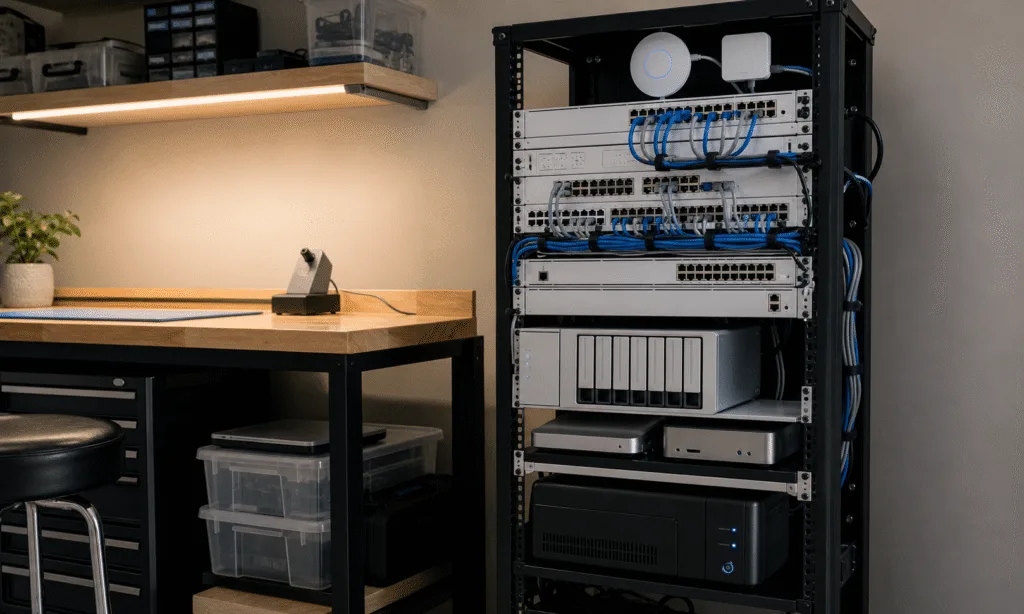
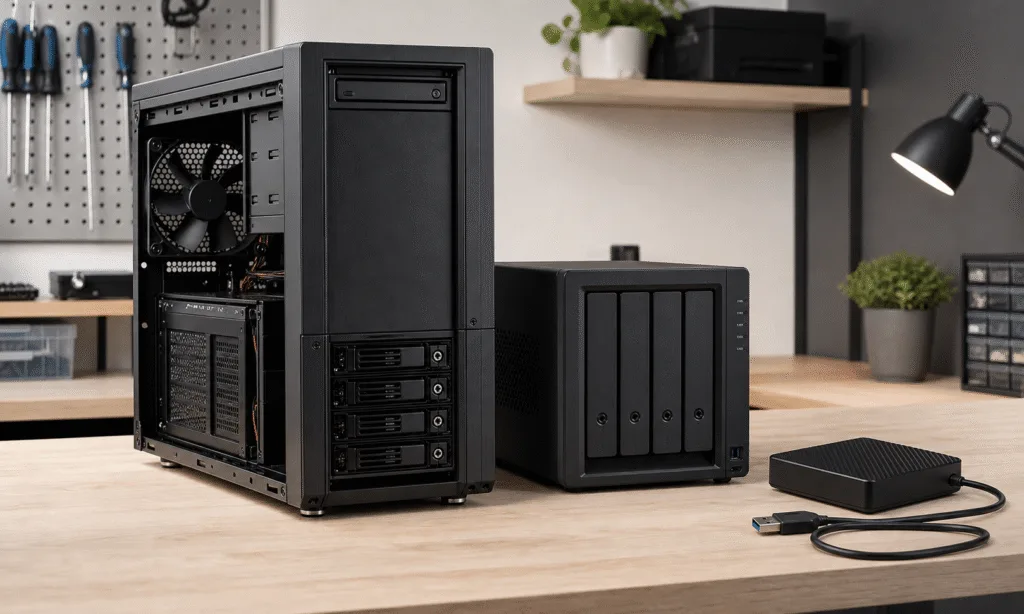
A UGREEN DXP4800 Pro user reported moving Jellyfin and a RustDesk remote access relay onto the NAS, extending its role beyond file storage. In an account published on May 21, 2026, the writer said the arrangement was simpler to manage than services spread across several small computers.
The writer said the NAS was initially bought for drives, backups and shared files, alongside media storage. Jellyfin was described as the first service moved onto it, followed by smaller infrastructure workloads.
Jellyfin alongside the media library
The writer said the media library already resided on the NAS. Previously, a separate computer ran the media server and accessed those files over the network. Bringing Jellyfin onto the storage device made the setup easier to follow when maintenance was needed, in the writer’s assessment.
The account described household media playback rather than a public streaming service or constant heavy transcoding. The writer’s stated aim was to keep the server and its files on the same machine.
Jellyfin’s documentation explains that compatible media can play directly, while unsupported video codecs require transcoding. Subtitles that must be burned into the picture can also trigger video transcoding. These requirements distinguish serving compatible files from converting video during playback.
DNS and remote access
The writer also reported running Pi-hole in a small Proxmox virtual machine, paired with Unbound DNS, within the broader home lab setup.
Pi-hole’s documentation describes low processing requirements and support for hardware beyond the Raspberry Pi. Its Unbound guide describes pairing Pi-hole with a local recursive DNS resolver on the same device.
The writer reported hosting a RustDesk relay on the NAS rather than maintaining another computer for that service. RustDesk’s documentation describes low CPU and memory requirements for its self-hosted server, with relay traffic varying according to the remote session.
Several services sharing one host
UGREEN lists Docker containers and virtual machines among the DXP4800 Pro’s supported features. The writer characterized the workloads chosen for consolidation as steady background services and favored keeping frequently rebuilt experimental projects elsewhere.
The account also raised the risk of concentrating services on one machine: a NAS outage could interrupt hosted media and remote access alongside file access. If the NAS hosted the network’s only DNS resolver, an outage could also disrupt name resolution.