

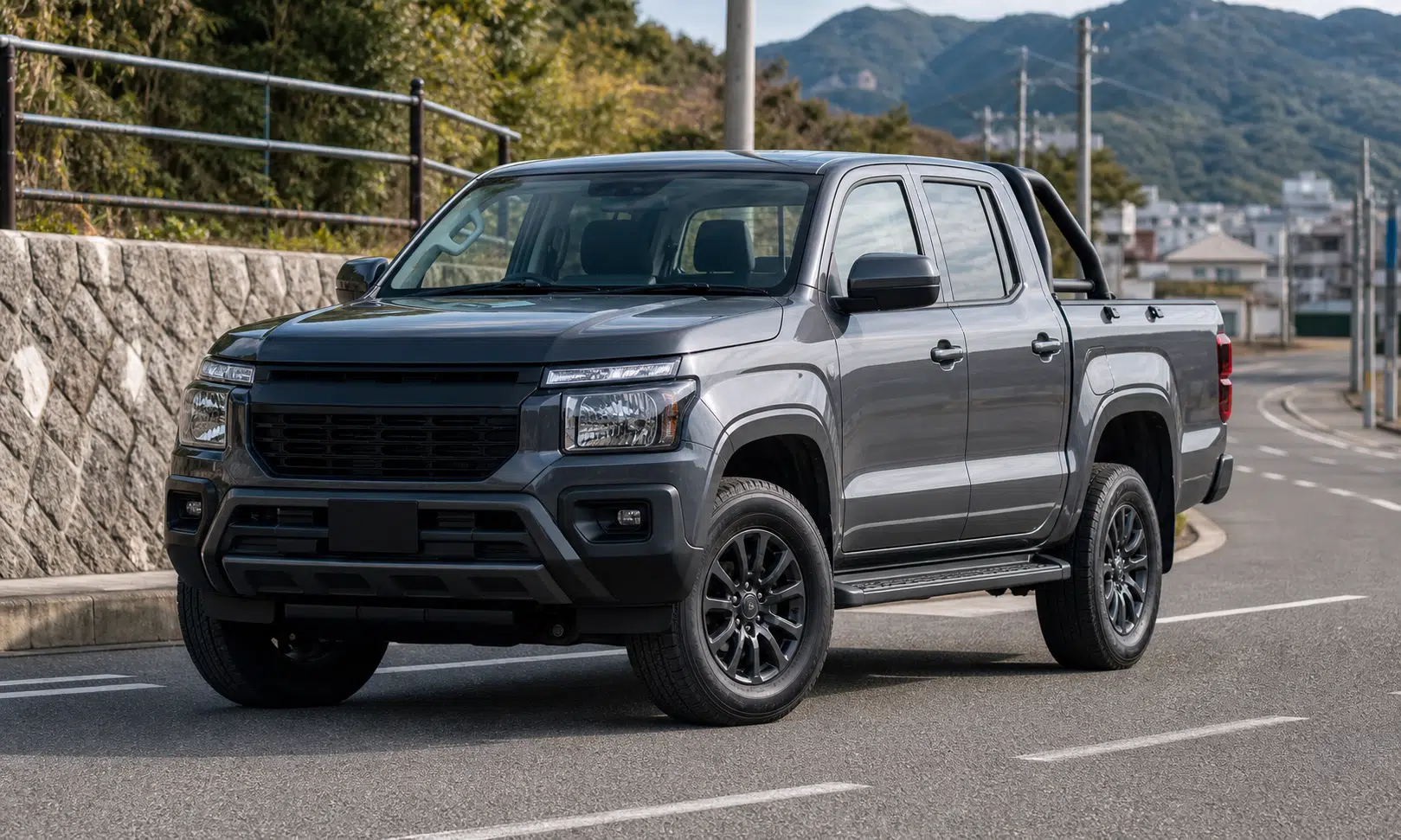

Toyota has launched a completely redesigned Hilux in Japan, giving the long-running pickup a sharper look, updated cabin technology, diesel power, and a stronger emphasis on safety and connected services.
The new model arrives on May 28, 2026, with two grades for the Japanese market: Z and Z Adventure. Both use a 2.8-liter 1GD-FTV diesel engine, a six-speed automatic transmission, and part-time 4WD. Pricing starts at 4,980,800 yen for the Z and rises to 5,500,000 yen for the Z Adventure, including consumption tax but excluding recycling fees. Separate pricing applies in Okinawa.
For buyers looking at the Hilux as more than a work truck, Toyota is positioning this version around a familiar mix: load-carrying ability, off-road hardware, better everyday comfort, and enough driver-assistance technology to make long road trips less tiring.
What Toyota changed for the new Hilux
The Hilux nameplate dates back to 1968 and has been sold in more than 190 countries and regions. In Japan, it has served a smaller but specific customer base: people who want a pickup that can handle outdoor gear, job-site use, and everyday driving without moving into a full-size truck.
Toyota’s design theme for the new model is “Cyber SUMO,” a phrase that sounds theatrical but points to a more squared-off and forceful exterior. The front end uses pronounced fender covers, a radiator grille, and a bumper shape meant to give the truck a planted stance. The Z Adventure adds more visual emphasis with a front lower bumper garnish and a sports bar.
Inside, Toyota has moved the Hilux closer to the layout buyers now expect in modern SUVs and pickups. The instrument panel runs horizontally across the cabin, which Toyota says helps the driver read the vehicle’s position during off-road driving. A 12.3-inch center display sits independently on the dash, while the center console has a wide, linear design.
The switch layout is also more deliberate than before. Driving-related controls are grouped at the lower portion of the console and separated from navigation and climate functions. For a truck that may be used with gloves, dirt, rain gear, or camping equipment in the cabin, that separation matters more than it would in a purely urban crossover.
Size, bed usability, and cargo details
The Japan-market Hilux remains a midsize pickup, not a compact utility vehicle. Toyota lists the new model at 5,325 mm long, 1,885 mm wide, and 1,865 mm tall. The cargo deck is separate from the cabin, which keeps the Hilux aligned with traditional pickup use rather than the softer lifestyle-SUV approach.
Toyota says the truck retains cargo capacity of up to 500 kg based on its in-house measurements. The deck floor is flat, and the tailgate-open deck height is listed at 845 mm, also based on Toyota’s measurements. Deck steps on the left and right rear quarter panels are intended to make it easier to reach cargo without climbing fully into the bed.
For buyers comparing this Hilux against SUVs, the bed is the main reason to choose it. Wet gear, bulky tools, camping equipment, and outdoor cargo can be kept outside the cabin. The tradeoff is familiar: the overall vehicle is long, and the open bed will usually need accessories if the owner wants weather protection or secure storage.
Toyota is also offering dealer options aimed at the bed area. Listed items include an over-rail bed liner, a damper-type tailgate lift assist, and a silver tailgate emblem as part of the Adventure Starter set. Those options are worth watching because they address the daily annoyances pickup owners notice quickly: protecting the deck, managing tailgate weight, and tailoring the truck’s look.

Retractable Ratchet Tie-Down Straps
Retractable tie-down straps can make repeated cargo loading easier by keeping straps mounted and ready instead of loose in the cabin or bed. Check mounting points, working load limits, and local cargo-securement rules before using them with heavy gear.
As an Amazon Associate I earn from qualifying purchases.
Prices and core specifications
The initial Japan lineup is simple. Both grades seat five passengers and use the same basic driveline, engine, and transmission combination. The main decision is whether the buyer wants the standard Z or the more appearance-focused Z Adventure.
| Grade | Seats | Driveline | Engine | Transmission | Japan price |
|---|---|---|---|---|---|
| Z | 5 | Part-time 4WD | 1GD-FTV 2.8-liter diesel | 6 Super ECT automatic | 4,980,800 yen |
| Z Adventure | 5 | Part-time 4WD | 1GD-FTV 2.8-liter diesel | 6 Super ECT automatic | 5,500,000 yen |
The Z Adventure is the better fit for buyers who want the Hilux to look more distinctive from the start. The standard Z is the cleaner pick for someone focused on capability, cost, and adding only the options they will actually use.
Diesel engine, frame, and off-road hardware
Toyota is sticking with a traditional ladder-frame structure for the redesigned Hilux. The platform is tied to the IMV series, Toyota’s Innovative International Multi-purpose Vehicle family, which includes Hilux pickup variants as well as the Innova and Fortuner.
For this generation, Toyota says it increased plate thickness in the frame side rails to balance bending and twisting rigidity. The company also added 36 spot welds to the floor panel, a change intended to increase floor rigidity and reduce vibration and booming noise.
The powertrain is a 2.8-liter direct-injection clean diesel engine, identified as the 1GD-FTV. It is paired with a six-speed automatic transmission, known as 6 Super ECT. Toyota describes the combination as tuned for fuel efficiency, takeoff acceleration, and quieter operation.
The Hilux uses a part-time 4WD system, with drive modes selected through a transfer case switch. Toyota says Multi-Terrain Select and Multi-Terrain Monitor are included. Toyota also says Multi-Terrain Select is standard and is designed to coordinate drive power and brake hydraulic pressure; that specific performance claim has not been independently verified.
Suspension tuning has also changed. Toyota says the spring rate was optimized for the revised body rigidity and that shock absorber damping force was adjusted for stability and ride comfort on and off pavement. Electric power steering is now part of the package, with the goal of improving low-speed maneuverability and reducing steering kickback during off-road driving.
For buyers, the important point is that Toyota did not turn the Hilux into a soft-road crossover. The diesel engine, ladder frame, part-time 4WD, and bed layout keep it firmly in pickup territory. The updates are mainly about reducing the compromises that come with that format.
Safety and connected features
Toyota has expanded the Hilux’s driver-assistance and connected technology, which is important because pickups are increasingly used as family and recreational vehicles as well as work tools.
Toyota Safety Sense has been enhanced with Proactive Driving Assist, which supports steering and braking on public roads. The Pre-collision Safety system is described as being able to detect oncoming vehicles when turning right at intersections, as well as pedestrians crossing from the opposite direction when turning right or left.
The Hilux also receives Display Audio Plus with a 12.3-inch HD display and Connected Navigation compatibility. Toyota says the system uses current maps and traffic information through a constant connection via the vehicle’s Data Communication Module. Help Net is also included and can connect to an operator automatically when an airbag deploys.
Toyota says it will continue improving safety, security, and vehicle functions through software updates using the DCM. For buyers planning to keep the truck for several years, that makes the connected-services package more than a screen-size talking point, though subscription terms and long-term availability should still be checked before purchase.

Compact 12-Volt Jump Starter
A compact jump starter is a practical item to keep in a truck used for camping, job sites, or long drives. Confirm compatibility with the vehicle battery and keep it charged so it is ready when needed.
As an Amazon Associate I earn from qualifying purchases.
Who the new Hilux makes the most sense for
The redesigned Hilux is aimed at buyers who need real pickup utility but also want a truck that is easier to live with every day. Its strongest case is for people who regularly carry dirty, heavy, or awkward gear and still want modern safety features, navigation, and a more refined cabin.
The Z grade should suit buyers who see the Hilux as a practical tool first. It gets the same core engine, transmission, seating capacity, and part-time 4WD layout as the Adventure model, while leaving more room in the budget for functional accessories.
The Z Adventure is more likely to appeal to buyers who want the truck’s appearance to match its outdoor role from day one. Its visual upgrades do not change the basic pickup equation, but they do give the Hilux a stronger showroom identity.
The main reasons to pause are also clear. At more than 5.3 meters long, the Hilux will not be as easy to park or maneuver in tight urban areas as a smaller SUV. The open deck adds flexibility but may require extra accessories for security and weather protection. And while Toyota has added comfort and safety equipment, this is still a body-on-frame pickup with a diesel engine and part-time 4WD, not a quiet commuter crossover.
For the right buyer, that is the point. The new Hilux keeps the working-truck foundation and adds enough usability, cabin tech, and safety equipment to make it more convincing as a weekend and daily-use vehicle in Japan.