


NATO Confirms Russian Origin Of Drone That Hit Romania
NATO has said the drone that crashed into an apartment building in Romania was of Russian origin, despite Moscow’s attempts to cast doubt on responsibility for the incident.
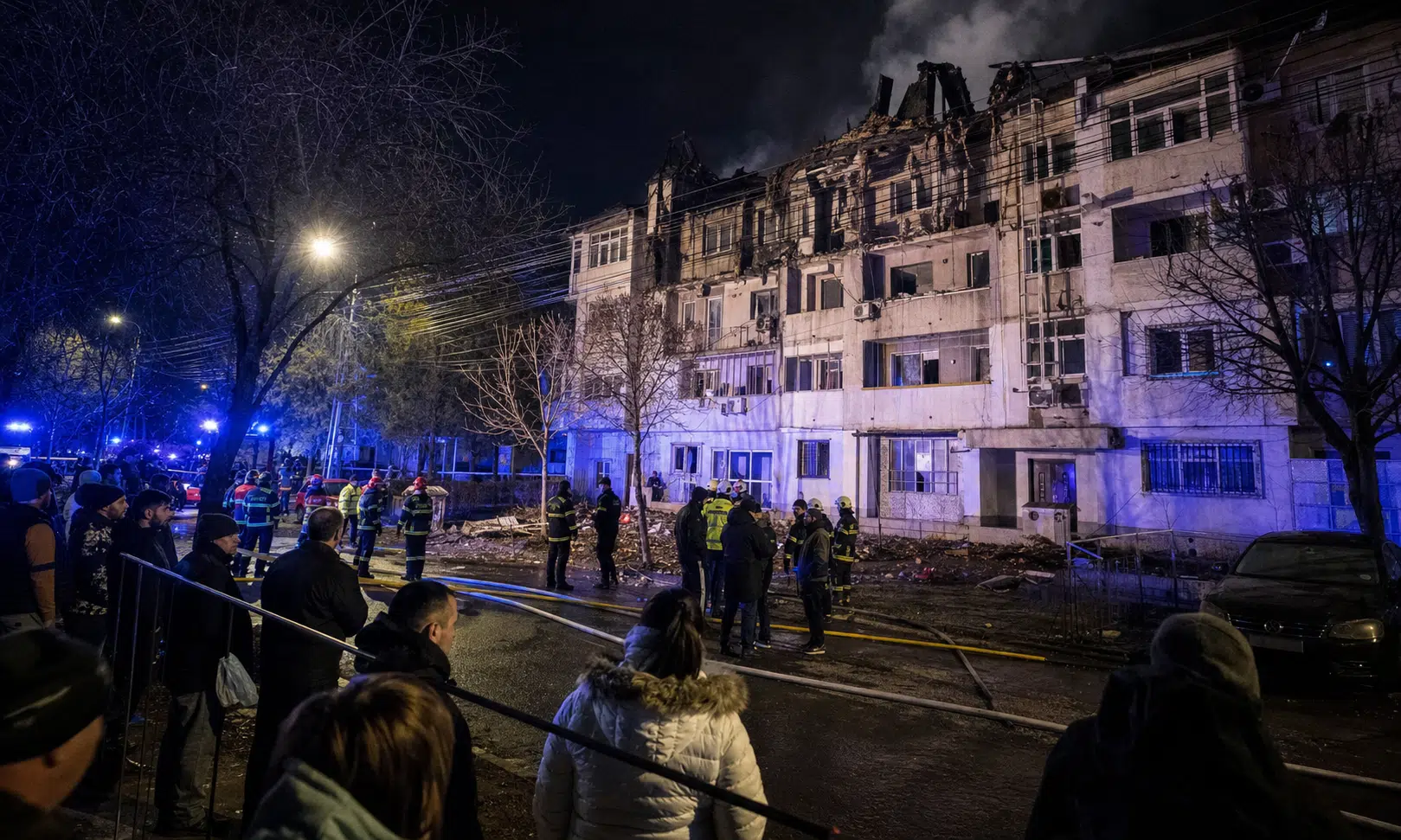
The crash took place in Galati, a Danube port city close to Romania’s border with Ukraine and Moldova, during an overnight Russian attack on Ukraine. Romanian officials said two people were injured after the drone struck the roof of a residential block and caused a fire.
The incident matters because Romania is a member of both NATO and the European Union. It was not treated by Romanian officials as a deliberate attack on Romania, but it still pushed the war’s risks across a NATO border in a visible and politically difficult way.
NATO secretary general Mark Rutte said the alliance was ready to defend every inch of allied territory. The statement was meant to reassure Romania and other eastern-flank states, while also avoiding language that would suggest NATO had concluded Russia had intentionally targeted Romanian territory.
For governments watching the eastern flank, the practical question is less whether this single crash triggers an immediate military response and more whether Europe’s current air-defence posture can handle repeated drone spillovers from the war in Ukraine.
What Happened In Galati
Romanian authorities said the drone entered Romanian airspace during a Russian strike on Ukraine. It was tracked by radar before crashing into the apartment building in Galati.
Early accounts from Romanian officials described the aircraft as a Geran-2, Russia’s version of the Iranian-designed Shahed drone used widely in attacks on Ukrainian cities and infrastructure. NATO’s later confirmation that the drone was of Russian origin reinforced Romania’s assessment and undercut Russia’s denial.
The two injured people were reported to have suffered minor injuries. The building itself became the clearest symbol of the incident: a residential block inside NATO territory damaged by a weapon from a war that Russia continues to wage next door.
| Key point | What is known |
|---|---|
| Location | Galati, eastern Romania, near the Ukrainian border |
| Target area of wider attack | Ukraine, during an overnight Russian drone strike |
| Damage | Drone hit the roof of an apartment building and caused a fire |
| Casualties | Two people were reported injured |
| NATO position | The drone was of Russian origin |
| Russian position | Moscow questioned the claim and denied that evidence had been provided |
Romanian military officials were careful in how they described the crash. The message from Bucharest was that Russia’s war created the danger, even if Romania was not saying the strike was a direct attack on the country.
That distinction is important. It allows Romania and NATO to condemn Russia’s conduct and increase defensive measures without immediately treating the crash as a deliberate strike on alliance territory.
Moscow Denies Responsibility
Russia rejected the accusations and questioned whether the drone was Russian. President Vladimir Putin suggested the wreckage should be handed over to Russia for its own investigation, while Russian officials said they had not been shown evidence proving Russian responsibility.
Those denials were met with little sympathy from Romania, NATO allies and several European governments. For them, the crash fits a pattern in which Russia’s attacks on Ukraine have repeatedly created security risks for nearby NATO and EU states.
The Romanian government’s position was direct: the drone was Russian, it entered Romanian airspace, and its crash was a serious security incident. NATO’s confirmation gave that assessment added weight.
Romania also moved against Russia’s consular presence in Constanta after the incident, according to reports. Because diplomatic expulsions and closures can involve formal steps that unfold over time, the safest reading is that Bucharest was signalling a political response as well as a security one.
Why NATO Is Moving Carefully
The crash puts NATO in a familiar but uncomfortable position. The alliance must reassure members that its collective defence commitments remain credible, while avoiding unnecessary escalation over an incident that may have resulted from a drone going astray during an attack on Ukraine.
That is why the language from NATO and Romania has been firm but measured. The alliance condemned Russia’s reckless behaviour and stressed its readiness to defend member territory. Romanian officials emphasised the security threat created by Russia’s war, while stopping short of framing the crash as a planned Russian attack on Romania.
For buyers and planners in the defence sector, the incident highlights a specific operational problem: cheap, long-range drones can create expensive and politically sensitive air-defence dilemmas when they cross borders or approach civilian areas.
Shooting down a drone over populated areas carries its own risks. Allowing it to continue flying also carries risks. That tradeoff is now part of the daily security calculation for states near Ukraine.
The Air-Defence Question For Eastern Europe
Romania has already been under pressure to strengthen its ability to detect and intercept drones near the Ukrainian border. The Galati crash will likely intensify that pressure.
The challenge is not simply whether Romania has high-end air-defence systems. It is whether the country and its allies have the right mix of radar coverage, command systems, short-range interceptors, electronic warfare tools and rules of engagement for low-cost drones flying near civilian areas.
A useful air-defence response to incidents like this usually has several layers:
- Early radar detection near border areas and likely flight paths
- Clear identification of whether an object is a military drone, civilian aircraft or debris
- Decision rules for when interception is allowed over or near populated areas
- Short-range systems suited to drones rather than only missiles or aircraft
- Coordination between national forces and NATO air-policing assets
The Galati crash also shows why eastern-flank states have been pressing allies for more flexible air-defence support. Large systems can be powerful but scarce. Smaller counter-drone tools may be easier to distribute, but they need training, integration and legal authority before they are useful in a real incident.
Europe’s Political Reaction
Several European leaders used the incident to warn that Russia’s war against Ukraine is not contained neatly within Ukraine’s borders. Romania’s president, Nicusor Dan, described the drone incident as among the most serious security events on Romanian soil since Russia’s full-scale invasion of Ukraine in 2022.
That framing reflects the anxiety among countries along NATO’s eastern edge. Poland, Romania, the Baltic states and others have all had to think about drones, missiles or debris entering their airspace during the war.
Germany, Denmark, the Czech Republic and the United Kingdom were among the countries that condemned the incident or called for a strong allied response. Their comments varied in tone, but the underlying message was similar: Russia’s attacks on Ukraine are creating wider European security risks.
France summoned the Russian ambassador after the latest strikes on Ukraine and the Romanian crash. That diplomatic move fit a broader European pattern of combining condemnation, military assistance to Ukraine and warnings to Moscow.
Hungary And EU Funds Add A Second European Storyline
While the Romania drone crash dominated security discussions, Brussels was also dealing with a major political development involving Hungary.
The European Union moved to release billions of euros in funding for Hungary after talks with Prime Minister Peter Magyar’s government. The money had been frozen during the long rule of Viktor Orban because of concerns over rule of law, corruption and democratic backsliding.
The agreement was presented as a major reset between Budapest and Brussels. Magyar had campaigned on repairing Hungary’s relationship with the EU and bringing home blocked funds. The Commission’s decision gives him an early political win, though parts of the money remain tied to reforms and implementation steps.
| Issue | Why it matters |
|---|---|
| EU funds for Hungary | Billions of euros are being released after reform commitments from the new government |
| Rule-of-law reforms | Brussels wants evidence that changes are real and durable |
| Ukraine accession talks | Hungary’s position remains important because EU enlargement steps require unanimity |
| Defence policy | Hungary’s role in EU and NATO security decisions remains closely watched |
The Hungary story connects indirectly to the Romania incident because both show how the war in Ukraine is shaping European politics beyond the battlefield. Security, EU funding, rule-of-law disputes and Ukraine’s future relationship with Europe are now intertwined in daily decision-making.
What Readers Should Watch Next
The most immediate question is whether Romania and NATO change their defensive posture near the Ukrainian border. That could include additional surveillance, temporary allied deployments, more counter-drone equipment or tighter coordination around intercept decisions.
A second question is whether Russia’s denial campaign gains any traction. NATO’s statement that the drone was of Russian origin makes that harder, but Moscow is likely to continue disputing responsibility whenever incidents occur outside Ukraine.
A third issue is how often similar incidents happen. A single drone crash can be treated as a dangerous spillover. Repeated crashes or airspace violations would put more pressure on NATO to show that deterrence is not only a political promise but also a practical border-security system.
For European defence buyers and policymakers, the lesson is narrow but important: drone defence is no longer only a battlefield requirement for Ukraine. It is becoming a civilian protection and border-security requirement for NATO states living next to the war.
The Bottom Line
NATO’s confirmation that the Galati drone was of Russian origin does not mean the alliance is treating the crash as a deliberate attack on Romania. It does mean that Russia’s war has again crossed into NATO’s security space in a way that is difficult for European governments to ignore.
Romania has been careful with its language, but the political message is clear. A Russian-origin drone hit a residential building inside a NATO country, injured civilians and forced the alliance to restate its defence commitments.
The incident is likely to accelerate debate over counter-drone systems, air-defence coverage and eastern-flank readiness. It also adds pressure on European leaders to keep supporting Ukraine while managing the risk that Russia’s attacks will continue to spill beyond Ukraine’s borders.