

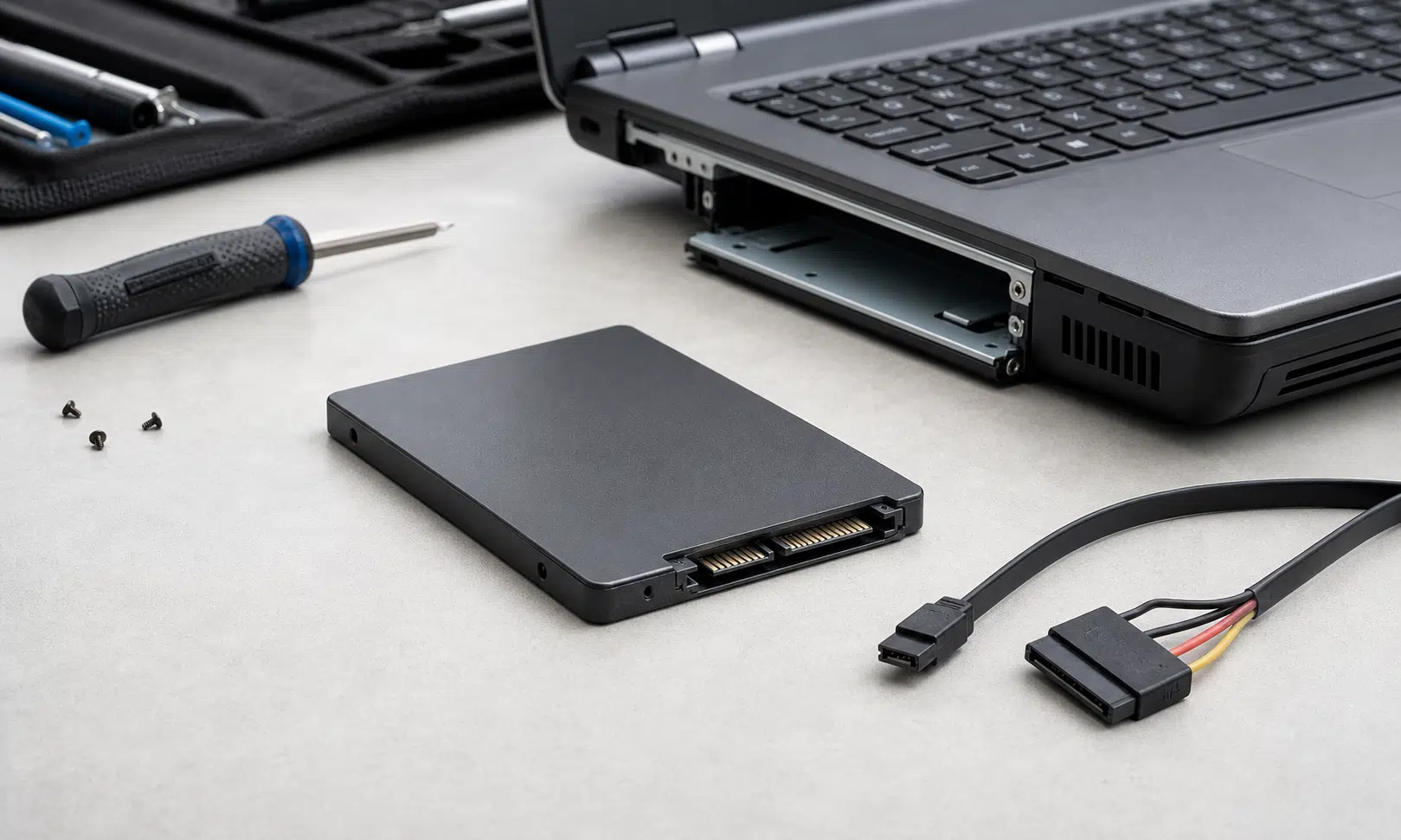

Sandisk 320 and 520 SATA SSDs could become interesting options for buyers who need practical storage rather than headline-grabbing speed. The catch is that the most important details still need confirmation.
The reported drives are being discussed as 2.5-inch SATA SSDs, which means they would target a very different buyer from the one shopping for a fast PCIe 4.0 or PCIe 5.0 NVMe drive. SATA is older, slower, and less exciting on paper. It is also still useful in the exact situations where price, compatibility, and easy installation matter more than benchmark charts.
That makes the timing notable. SSD buyers have been dealing with higher prices and tighter supply, so any new mainstream SATA option naturally attracts attention. But a firm launch timeline has not been publicly confirmed, and early retail information should not be treated the same as a full product announcement.
Why SATA SSDs still matter
For a modern gaming desktop or creator workstation, a SATA SSD is rarely the first choice for a main drive. NVMe drives are faster, cleaner to install when an M.2 slot is available, and better suited to heavy file transfers. But that is not the whole market.
A 2.5-inch SATA SSD still makes sense for older laptops, small business PCs, home servers, budget desktops, and systems that already have empty SATA bays. It can also be a simple way to replace a hard drive without changing the rest of the machine.
The practical benefit is straightforward: even a modest SATA SSD usually feels dramatically faster than a mechanical hard drive for booting, opening apps, and general desktop use. The limitation is just as clear. SATA tops out far below NVMe performance, so buyers moving large video projects, game libraries, or virtual machine images should not expect the same responsiveness as a good M.2 drive.
That tradeoff is why these rumored Sandisk models are worth watching but not worth overhyping. If they arrive at the right prices, they could serve budget upgraders well. If they land too close to NVMe pricing, the argument becomes much weaker.

Crucial MX500 1TB SATA SSD
The Crucial MX500 is a sensible 2.5-inch SATA SSD to compare against any new mainstream SATA model. It is especially relevant for older laptops and desktops where compatibility matters more than NVMe speed.
As an Amazon Associate I earn from qualifying purchases.
Reported Sandisk 320 and 520 specs
Early retailer-style information points to two product lines: the Sandisk 320 and Sandisk 520. Those details have not been independently confirmed here, so buyers should treat them as preliminary until Sandisk publishes official specifications.
The 320 appears to be the more mainstream line, with reported capacities from 250GB to 2TB. The listed performance figures are up to 545 MB/s sequential read and up to 525 MB/s sequential write.
The 520 appears to sit slightly higher in the range, with reported capacities from 500GB to 4TB. Its listed sequential read speed is up to 560 MB/s, while the sequential write figure remains up to 525 MB/s.
| Model | Reported capacities | Reported sequential read | Reported sequential write | Reported endurance |
|---|---|---|---|---|
| Sandisk 320 | 250GB to 2TB | Up to 545 MB/s | Up to 525 MB/s | Not confirmed |
| Sandisk 520 | 500GB to 4TB | Up to 560 MB/s | Up to 525 MB/s | 1,000 TBW listed for 4TB, unconfirmed |
Those numbers are ordinary for SATA, not a surprise. SATA drives have been boxed in by the interface for years, so the difference between 545 MB/s and 560 MB/s is unlikely to be meaningful in normal use. The more important questions are price, endurance, warranty length, controller choice, NAND type, sustained write behavior, and real-world reliability.
What buyers should wait to confirm
The controller and NAND behind the Sandisk 320 and 520 have not been clearly established from the available information. That matters because two SATA SSDs with similar headline speeds can behave very differently once their cache fills, especially during long writes.
Buyers should look for these details before deciding whether either drive is worth buying:
- Official capacity list for each model
- Confirmed endurance rating for every capacity, not just the largest version
- Warranty length and regional support terms
- Controller and NAND information, if Sandisk discloses it
- Sustained write performance beyond the short sequential benchmark
- Street pricing compared with established SATA and NVMe alternatives
The 4TB model is the most interesting potential entry if the reported capacity range holds. High-capacity SATA SSDs are useful for secondary storage, media libraries, game storage, older workstations, and systems with limited M.2 slots. But a 4TB SATA drive only looks attractive if it is priced clearly below faster NVMe options or if the buyer specifically needs the 2.5-inch form factor.
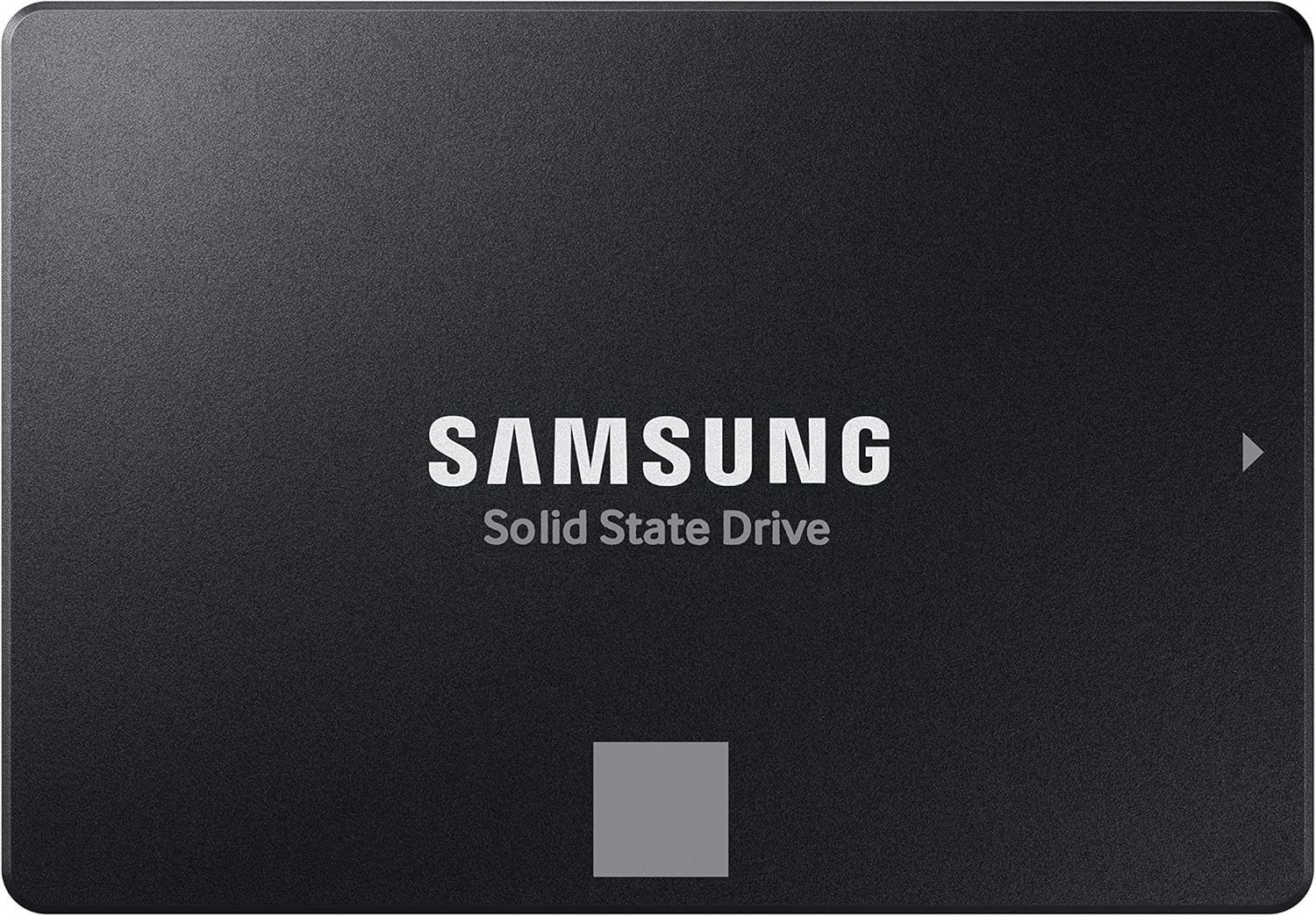
Samsung 870 EVO 4TB SATA SSD
The Samsung 870 EVO is worth checking when the goal is a larger 2.5-inch SATA drive for secondary storage, media libraries, or systems with no spare M.2 slot. Compare capacity, warranty, and street pricing before waiting on an unreleased alternative.
As an Amazon Associate I earn from qualifying purchases.
How the 320 and 520 would fit into a buying decision
If the reported positioning is accurate, the Sandisk 320 would be the simpler choice for everyday upgrades. A 500GB or 1TB version could make sense for an older laptop, a family desktop, or a low-cost boot drive replacement. The smaller 250GB capacity may be useful for very basic systems, but it is tight for Windows, applications, and updates in 2026.
The Sandisk 520 would be the one to watch for higher capacities. A 2TB or 4TB SATA SSD can still be valuable when the goal is quiet, low-maintenance storage rather than maximum speed. It could appeal to users who want to retire a hard drive but do not have another M.2 slot available.
For buyers building a new PC, though, the recommendation is more conditional. If your motherboard has an open M.2 slot and a comparable NVMe SSD costs about the same, the NVMe drive is usually the better buy. It offers more performance headroom and avoids using a SATA data cable and power connector.
Who should consider waiting?
These drives are worth watching if you have a system that specifically benefits from 2.5-inch SATA storage. That includes older laptops, compact desktops, office PCs, NAS-adjacent home setups, and machines where M.2 expansion is already full or unavailable.
They are less compelling for buyers who simply want the fastest SSD they can afford. SATA is not the performance lane anymore, and even affordable NVMe drives can easily exceed SATA speeds when the platform supports them.
The sensible approach is to wait for official pricing and reviews. If Sandisk prices the 320 and 520 aggressively, they could be useful, no-nonsense upgrades during a difficult storage market. If the pricing lands too close to NVMe drives, buyers should compare carefully before assuming SATA means better value.

Crucial P3 Plus 2TB NVMe SSD
If your PC supports M.2 NVMe storage, the Crucial P3 Plus gives readers a faster class of drive to compare against SATA options. It is most relevant for newer desktops and laptops where the 2.5-inch form factor is not required.
As an Amazon Associate I earn from qualifying purchases.
Bottom line
The Sandisk 320 and 520 are not confirmed enough to treat as finished buying recommendations yet. The reported specs suggest conventional SATA SSDs with mainstream performance, familiar capacity tiers, and potentially useful high-capacity options.
That is enough to make them worth monitoring, especially for buyers upgrading older hardware. It is not enough to skip comparison shopping. Until official specifications, pricing, endurance ratings, and independent testing are available, the safest takeaway is simple: these could be practical SATA options, but their value will depend almost entirely on launch price and confirmed durability.