



Van life can look simple from the outside: a compact home, a changing view, and fewer rooms to clean. The day-to-day version is more specific. According to the writer, who says she has lived in a camper van with her partner and dog for more than three years, the questions people ask most often are not about scenery. They are about space, showers, laundry, and whether the van is a temporary stop before a house.
Those questions make sense. A short road trip is one thing. Treating a vehicle as a full-time home asks more of every cabinet, sink, towel, and routine. The writer’s experience is only one version of van life, and it has not been independently verified, but it offers a useful look at the practical trade-offs behind a lifestyle that is often shown in polished snapshots.
Is the van the long-term home?
One question the writer says she hears is whether she and her partner plan to move into a house or apartment eventually. The assumption, as she describes it, is that the van is a temporary compromise rather than the chosen home.
She says the couple previously owned a house and sold it to pay for their van conversion in 2023. Because that personal history is not independently verified, it is best read as her account of how they arrived at their current setup, not as a documented financial case study.
Her explanation for staying on the road is practical rather than romantic. She says the van gives them more control over where they spend time and helps keep monthly expenses lower than their stationary life did. For readers comparing van life with traditional housing, that distinction matters: the appeal is not only travel, but flexibility and a smaller ongoing footprint.
That does not mean the decision works for everyone. A van can reduce some expenses while creating others, including fuel, maintenance, campground fees, insurance, repairs, water access, and build costs. The source does not provide a budget, so the safer takeaway is narrower: in this household’s telling, the trade-off has felt worthwhile enough to continue.
Space is limited, but the limits shape the routine
The writer does not present the storage problem as easy. She says buying new clothes usually means removing something else first. Pantry space can feel overloaded after stocking up on dog food. When someone is cooking, the narrow kitchen walkway can become a traffic jam.
That kind of friction is part of the living arrangement, not a small inconvenience at the edges. In a van, storage is not a room or a closet you can ignore. It is the structure of daily life. Food, clothing, cleaning supplies, dog gear, bedding, tools, and laundry all have to earn a place.
At the same time, the writer says the limited space has changed how she thinks about ownership. Because there is not much room to accumulate things, she has become more selective about what stays. She also says the small footprint makes it harder to lose items because most belongings are close at hand.
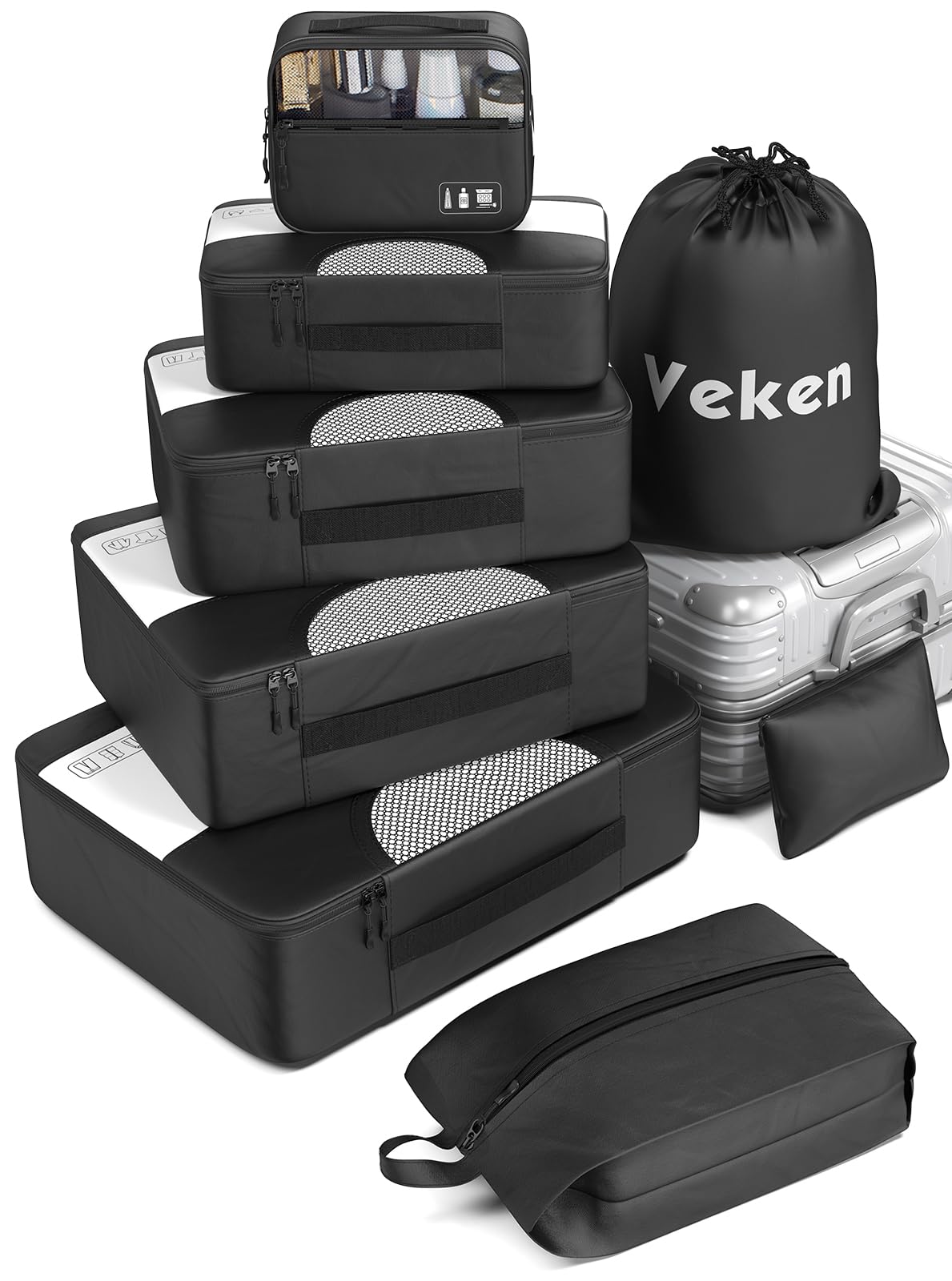
Veken Packing Cubes Set
Packing cubes can help separate everyday clothes, spare layers, and laundry-ready items inside a van cabinet or soft bag. A set with multiple sizes is useful when storage space has to be rearranged often.
As an Amazon Associate I earn from qualifying purchases.
The emotional side of the space question is more personal. The writer says she, her spouse, and their dog were usually near one another even when they lived in a larger house, so the close quarters do not bother them as much as outsiders may expect. That will not be true for every couple, family, or pet. In a van, compatibility is not abstract; it shows up while cooking, packing, sleeping, cleaning, and moving around each other.
Hygiene depends on water, ventilation, and small habits
The hygiene questions are the ones people seem to return to most. The writer says their van has a shower, but limited access to water fill-ups means they do not shower as often as they did before moving into the van. That is a common-sense constraint in any small mobile home: water storage changes what “normal” cleaning looks like.
Her account describes a mix of full showers, washcloths, wipes, and surface-level habits that reduce mess before it spreads. She says they use one main entrance, place a mat inside the side door, and often set up an outdoor rug outside. With two adults and a dog going in and out, those small barriers matter because dirt has fewer places to disappear.
Ventilation is another part of the routine. The writer says opening the back doors helps air out stale smells, and a ceiling fan also helps. In a tiny home on wheels, airflow is not just a comfort feature. It affects odor, condensation, damp towels, cooking smells, and how quickly the space recovers after a muddy day.
Laundry is possible, but it takes planning
The writer says the van does not have a washer or dryer, so laundromats are part of the routine every couple of weeks. She also notes a smaller but familiar problem: finding enough surfaces to hang or drape items that cannot go in the dryer.
That detail captures a lot about small-space living. The chore itself may be straightforward, but the staging area is scarce. Wet clothes, towels, bedding, and dog-related messes all compete with the same few surfaces used for cooking, sitting, sleeping, and working.
The same overlap shows up at the sink. The writer says their kitchen sink is also where she brushes her teeth. It can feel odd, she says, but it also pushes them to keep dishes under control. In a van, one delayed chore can block the next one quickly.
Not every van lifer makes the same choices
The writer is careful to frame her setup as one version of the lifestyle. Some vans have full bathrooms, some have simple toilets, and some have no built-in bathroom at all. She says a full bathroom was a dealbreaker for her, but that preference is personal rather than universal.
That is the most useful way to read the piece. Van life is not one standard product or one fixed routine. It is a chain of decisions: shower or no shower, more storage or more open floor space, indoor bathroom or public facilities, bigger water tank or lighter build, more possessions or easier movement.
For this household, the trade-offs appear acceptable. The writer says she likes their version of life on the road, including the fewer showers, laundry spread across available surfaces, and careful decisions about what fits. For anyone considering a camper van, the practical lesson is not that those compromises are easy. It is that they need to be chosen deliberately.