


Intel’s Core Ultra 7 251HX has appeared in early PassMark results, and the initial numbers suggest the 18-core Arrow Lake-HX chip may sit closer to Intel’s higher-core HX parts than its positioning would imply. The important caveat is sample size: the reported data is based on only a very small number of entries, so it should be treated as an early signal rather than a settled performance ranking.
That distinction matters for laptop buyers. PassMark can be useful for a quick directional comparison, but mobile CPU results are shaped heavily by the laptop chassis, cooling system, firmware limits, and sustained power behavior. A chip that looks unusually strong in a database entry may not perform the same way across every notebook using it.
What the early PassMark result suggests
The reported PassMark entry puts the Intel Core Ultra 7 251HX at 4,666 points in single-thread performance and 48,713 points in multi-thread performance. Those figures have not been independently verified here, and the low sample count means they should not be read as final averages.
Still, if the listing is representative, the result is notable because the Core Ultra 7 251HX is described as an 18-core processor, while the nearby Core Ultra 7 255HX and Core Ultra 7 265HX are positioned as 20-core siblings. On paper, fewer cores would usually suggest a lower ceiling in heavily threaded work. The reported PassMark score does not show that simple gap, at least in this early snapshot.
| Processor | Reported core count | Reported PassMark single-thread | Reported PassMark multi-thread | Confidence note |
|---|---|---|---|---|
| Intel Core Ultra 7 251HX | 18 cores | 4,666 | 48,713 | Early listing; limited sample count |
| Intel Core Ultra 7 255HX | 20 cores | Lower than 251HX in the source comparison | Slightly lower than 251HX in the source comparison | Comparison not independently verified here |
| Intel Core Ultra 7 265HX | 20 cores | Lower than 251HX in the source comparison | Slightly lower than 251HX in the source comparison | Comparison not independently verified here |
The cleanest reading is not that the 251HX is automatically faster than the 255HX or 265HX. A safer conclusion is that the first reported PassMark data does not show the 251HX trailing those chips in the way core count alone might lead buyers to expect.
Why the small sample count changes the takeaway
Benchmark databases are useful because they collect results from real systems, but they also blend together many variables. Laptop CPUs are especially sensitive to those variables. A thin notebook with conservative power limits can perform very differently from a larger gaming or workstation-style chassis using the same processor family.
The source material notes that only two Core Ultra 7 251HX samples had been registered at the time of the report. That is too small a base for a firm ranking. One or two unusually well-cooled laptops, aggressive firmware profiles, or clean test runs can make an early average look stronger than it will after more retail systems appear.
For that reason, buyers should treat the 4,666 single-thread and 48,713 multi-thread figures as an early data point. They are interesting, but they are not a substitute for laptop-specific reviews that test sustained performance, fan noise, thermals, battery behavior, and performance on AC power versus battery power.
What this means for laptop shoppers
If you are comparing laptops with the Core Ultra 7 251HX, Core Ultra 7 255HX, and Core Ultra 7 265HX, the reported PassMark result argues against judging the machines by core count alone. The CPU model matters, but the complete laptop design can matter just as much.
For gaming, the GPU, cooling system, display resolution, and power profile will often have a larger effect than a narrow CPU benchmark spread. For rendering, compiling, simulation, and other sustained multi-threaded work, a 20-core sibling may still make sense if independent testing shows stronger long-run performance in the specific laptop you are considering.
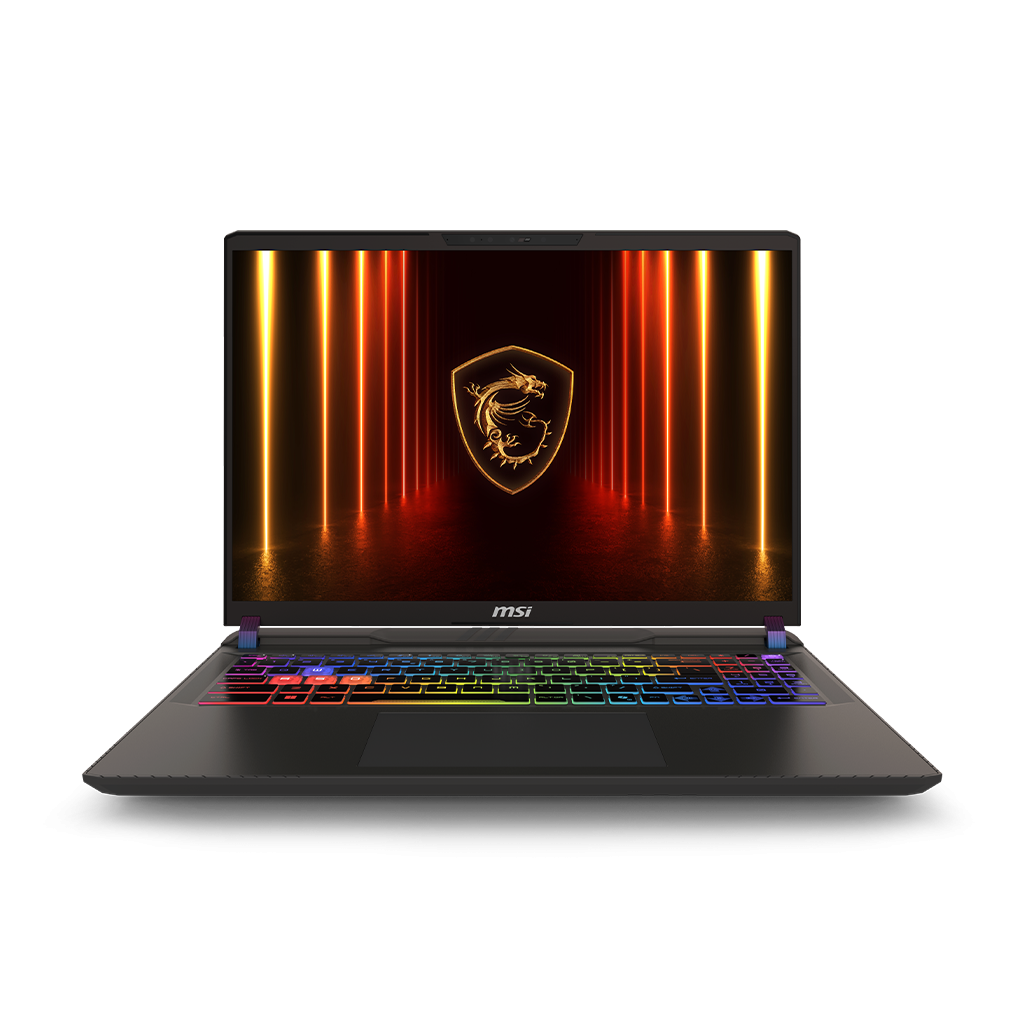
MSI Vector 16 HX AI 16-inch Gaming Laptop
A Core Ultra HX gaming laptop like the MSI Vector 16 HX AI is a useful reference point when comparing CPU model names, cooling capacity, GPU pairing, and overall chassis design. Check the exact configuration carefully, since display, RAM, storage, and GPU options can vary by listing.
As an Amazon Associate I earn from qualifying purchases.
The 251HX could be most interesting in systems where pricing is meaningfully lower than otherwise similar 255HX or 265HX laptops. If the early benchmark behavior holds up in broader testing, buyers may not need to pay extra for the higher-tier chip in every workload. But that depends on the actual notebook, not just the processor name.
Single-core performance may be the more relevant signal
The reported single-thread score is arguably the more useful part of the listing for everyday buyers. Many common tasks still respond strongly to fast single-core performance: app launches, browser responsiveness, light photo work, office tasks, and parts of gaming workloads.
The source comparison says the 251HX was roughly 2 to 3 percent ahead of the Core Ultra 7 255HX and 265HX in PassMark single-thread performance. That margin has not been independently verified here, and it is small enough that buyers are unlikely to feel it directly in normal use. Still, it supports the broader point that the 251HX should not be dismissed automatically just because it has fewer cores than nearby HX models.
A small lead in a short benchmark can disappear once more samples are added. It can also be outweighed by a laptop’s cooling limits, RAM configuration, storage performance, or GPU pairing. In practical terms, the reported single-core result is a reason to keep the 251HX on the shortlist, not a reason to assume it is the best CPU in the stack.
Power and efficiency claims need careful handling
The source article connects the 251HX to a 55W TDP class and describes encouraging behavior at sub-100W power levels in earlier benchmark context. Those claims have not been independently verified here, so they should be treated cautiously.
Power behavior is one of the hardest parts of laptop CPU comparison because vendors can tune the same class of chip differently. Short boost windows, long-duration power limits, fan curves, and chassis size all influence what a buyer actually gets. A processor that looks efficient in one test system may run louder, hotter, or slower in another.
That does not make the early result meaningless. It simply means the buying question should be framed around complete laptops. A well-priced Core Ultra 7 251HX notebook with strong cooling could be a better buy than a more expensive 20-core HX machine with constrained thermals. The reverse can also be true if the higher-tier model has a better chassis and a stronger sustained power profile.
Early verdict: promising, but not proven
The early PassMark listing makes the Intel Core Ultra 7 251HX look more competitive than its 18-core configuration might suggest. Reported scores of 4,666 in single-thread and 48,713 in multi-thread testing place it close to, and in the source comparison slightly ahead of, the Core Ultra 7 255HX and 265HX.
The buyer-aware verdict is simple: the 251HX looks worth watching, especially in high-performance laptops where pricing undercuts 255HX or 265HX models. But the current evidence is too thin to call it a clear better buy. Wait for more samples and laptop-specific reviews before treating the early PassMark result as a reliable hierarchy.
For now, the Core Ultra 7 251HX should be viewed as a potentially strong middle option in Intel’s Arrow Lake-HX laptop lineup. It may offer enough performance for many buyers who do not need to chase the highest model number, but the final decision should come down to the full laptop configuration, cooling design, price, and workload fit.