


The LG OLED evo AI G6 is being positioned less as a general living-room upgrade and more as a display for people who care about how movies and TV shows survive the trip from the grading room to the couch.
That is the useful way to read LG’s latest pitch around the 2026 G6. The company is leaning hard on familiar OLED strengths like black levels and contrast, while adding a bigger emphasis on brightness, reflection handling and image processing. For buyers, that matters because the best-looking TV in a dark showroom is not always the best-looking TV in a bright apartment, a room with ceiling lights, or a family space where people do not watch everything at midnight.
The G6’s headline technologies include LG’s Hyper Radiant Color Technology, Brightness Booster Ultra and the Alpha 11 AI Processor Gen3. LG says Brightness Booster Ultra can reach up to 3.9 times the brightness of a conventional OLED in specific test conditions, though that figure varies by model, screen size and region. The highest brightness claim applies to the OLED W6 and OLED G6 models, except the 97-inch version.
That is a big caveat, but it is also the right one. TV brightness claims often depend on window size, picture mode and test pattern, so buyers should treat the 3.9x number as a peak-performance claim rather than a promise that every scene will look nearly four times brighter than an older OLED.
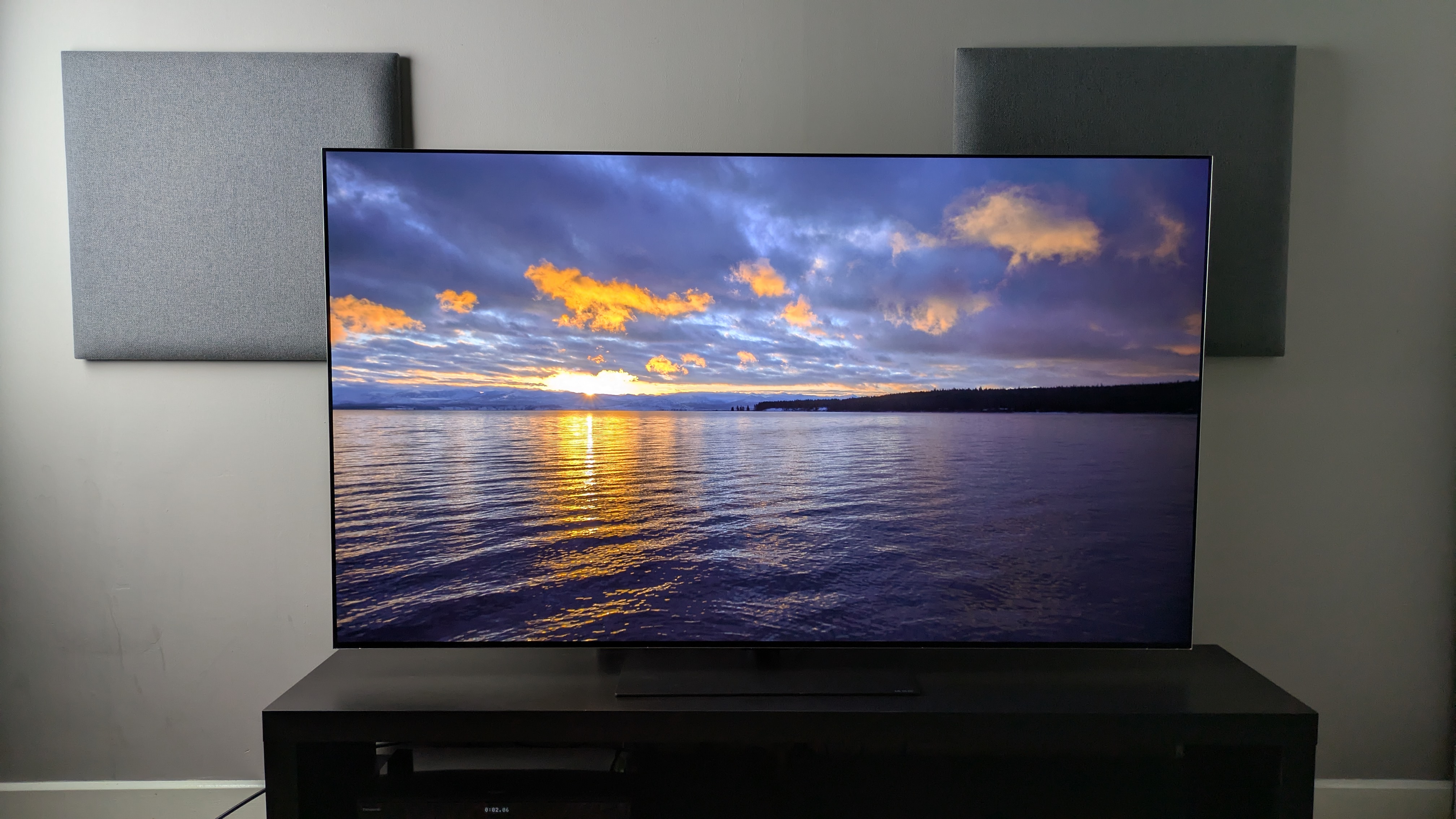
LG OLED evo AI G6 4K Smart TV
The G6 is the most relevant pick for readers who want LG’s latest high-end OLED picture processing, black-level control and improved bright-room handling in one TV.
As an Amazon Associate I earn from qualifying purchases.
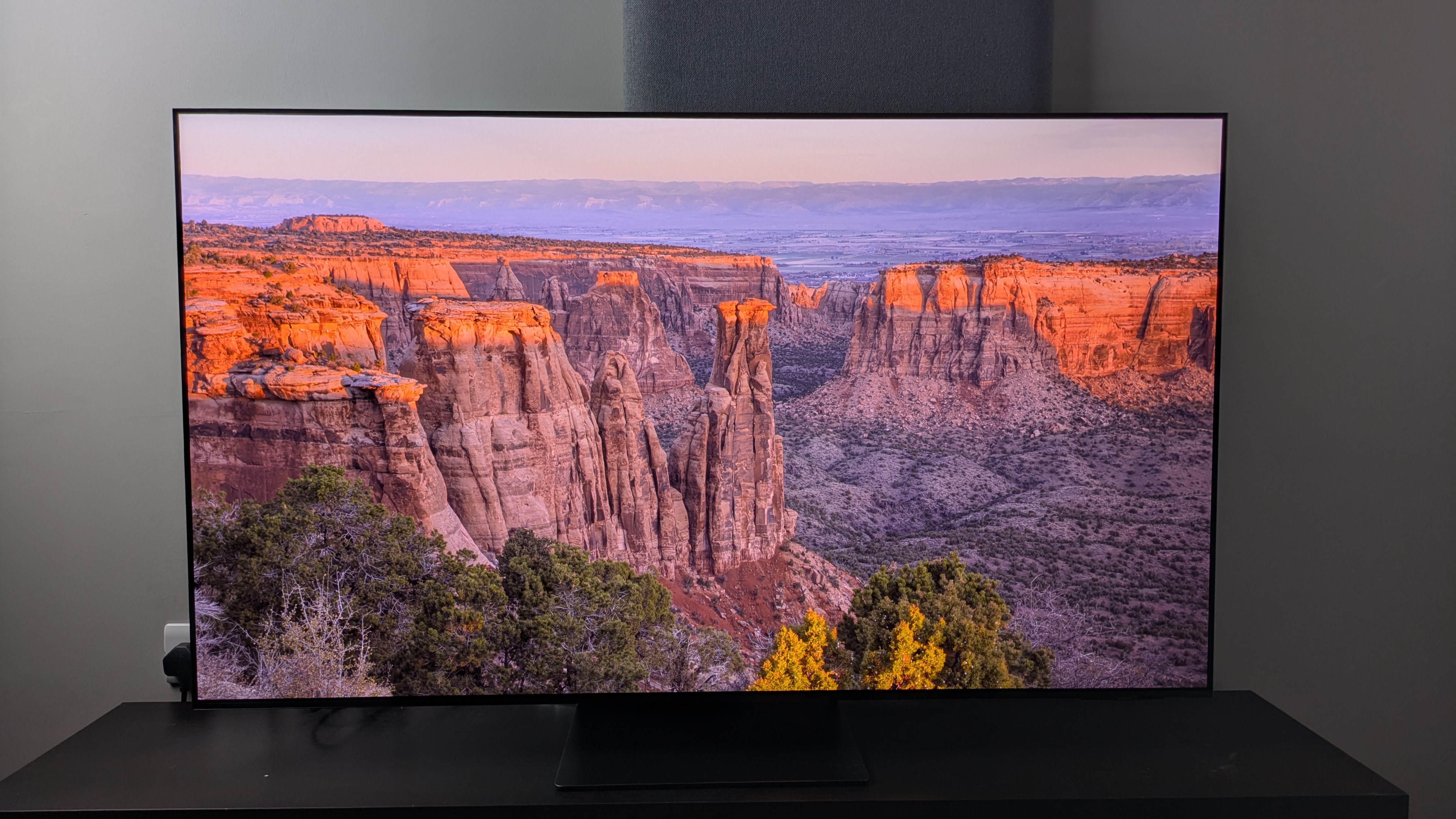
Samsung S95F OLED 4K Smart TV
The Samsung S95F is a useful comparison point for buyers who prioritize glare reduction and bright-room viewing while still wanting an OLED-class picture.
As an Amazon Associate I earn from qualifying purchases.
What LG Is Really Selling With the G6
The G6 is not just being pitched as brighter. The more interesting argument is that LG wants the set to preserve more of the image decisions made by filmmakers, colorists and cinematographers once the content is viewed in a normal home.
That puts the G6 in a category of premium TVs aimed at viewers who notice shadow detail, color banding, glare and blown-out highlights. Those are not abstract problems. They show up when a dark scene turns into a gray smear, when skies or gradients break into visible steps, or when a glossy screen reflects a lamp so strongly that the contrast in the scene collapses.
LG is also emphasizing a 12-bit internal video processing pipeline, described as an upgrade from 10-bit internal processing. That does not mean the G6 turns all content into native 12-bit video, and it should not be confused with the bit depth of the source file or panel in isolation. The buyer-relevant point is simpler: better internal processing can help a premium TV handle fine tonal transitions with fewer visible artifacts, especially in demanding scenes with subtle gradients.
For movies and prestige TV, that is the kind of improvement that can matter more than another smart TV feature. A brighter panel is easier to market. Cleaner gradation and more stable shadow detail are easier to appreciate after living with the TV for a while.
Brightness, Black Levels and the OLED Tradeoff
OLED’s core advantage has always been pixel-level control. When a pixel needs to be black, it can effectively turn off, which is why OLED TVs have become a default recommendation for viewers who prioritize contrast and cinematic image quality.
The historical tradeoff is brightness. Premium LCD and Mini LED TVs can get extremely bright, especially in large bright scenes. OLED has had to compete by improving peak brightness while holding onto the black levels and contrast that made the category popular in the first place.
The G6 is designed around that balance. LG says the TV can deliver “Perfect Black” and “Perfect Color” in a range of lighting environments, with certifications tied to black levels, color performance and reflection measurements. Those are technical claims with testing conditions behind them, not a guarantee that every room, mode and source will look identical.
For a buyer, the question is not whether the G6 is simply brighter. It is whether the extra brightness helps without flattening the picture. Brightness is useful when it gives HDR highlights more impact, keeps colors from looking dull in daylight and helps the image hold up in a room that is not fully light-controlled. It is less useful if it comes at the expense of shadow detail or introduces processing that makes movies look artificial.
The G6’s pitch is that it can push brightness while preserving the low-end detail that filmmakers and colorists care about. That is exactly the right target for a high-end OLED, though it is also the kind of claim buyers should judge with real content, not a retail demo loop.
Why Reflections Matter More Than Spec Sheets Suggest
Reflection handling is one of the most practical parts of the G6 story. Many premium TVs look excellent in a dark room and merely decent when placed opposite windows, under ceiling lights or near lamps. In those conditions, contrast is not just a panel issue; it is also a glass and coating issue.
LG says the G6 is designed to reduce light reflection while maintaining a glossy display character. That distinction matters. Some anti-glare approaches can make reflections less sharp but also change the perceived texture of the image. A glossy OLED, when managed well, can preserve perceived contrast and color depth, but it has to keep distracting reflections under control.
The G6 has been tied to a Reflection-Free Premium certification from Intertek, based on a reflectance measurement method. LG also says its OLED display has been verified for black-level performance under 500 lux and for color performance under reflection-related test standards.
Those details are useful, but they should not replace the room test. If the TV will sit across from a wall of windows, reflection handling should be near the top of the buying checklist. If it will live in a dedicated dark room, black levels, motion handling, HDR tone mapping and calibration controls may matter more.
How the G6 Fits a Serious Viewing Setup
The clearest audience for the LG OLED evo AI G6 is the buyer who wants a premium OLED for films, high-end TV series and HDR streaming, but does not want to build a full theater room around it.
That buyer may care about Filmmaker Mode, accurate colors, reduced processing and a picture that does not fight the creator’s intent. LG’s argument is that the G6 can bring the living-room image closer to what was approved in a professional environment, particularly when it comes to color reproduction, black levels and tone handling.
Filmmaker Mode is important in that context because it is designed to reduce the kind of extra processing that can make movies look over-sharpened, overly smooth or artificially vivid. The G6’s processing story is more complicated: LG is using an AI-branded processor, but the value for this audience depends on whether that processor improves gradation, color handling and HDR stability without making the image look processed.
A premium OLED should not require the viewer to choose between accuracy and impact. The G6 is being pitched as a TV that can show deeper blacks, brighter highlights and richer colors at the same time. That is the right ambition for this price class, but it also raises the standard. A buyer spending at the top end should expect strong performance in difficult scenes, not just impressive color in animated content or bright HDR clips.
Buyer-Relevant Specs and Claims
| Area | What LG is emphasizing | Why it matters for buyers |
|---|---|---|
| Brightness | Brightness Booster Ultra with up to 3.9x peak brightness in specific conditions | Can improve HDR highlights and daytime viewing, but model and test conditions matter |
| Black levels | OLED black-level performance and contrast preservation | Key for dark movies, shadow detail and cinematic depth |
| Processing | Alpha 11 AI Processor Gen3 and 12-bit internal video processing | May help with gradation, color handling and image stability in demanding scenes |
| Reflections | Reduced reflection performance and Reflection-Free Premium certification | Important for bright rooms, ceiling lights and mixed-use living spaces |
| Color | Perfect Color and 100% color fidelity claims tied to testing | Relevant for viewers who want a more accurate movie and TV presentation |
Who the LG OLED evo AI G6 Is For
The G6 makes the most sense for buyers who already know why they want OLED and are trying to decide whether a top-tier model is worth the premium. Its strengths are aimed at picture quality rather than casual convenience: black depth, highlight control, color fidelity, reduced glare and the ability to preserve subtle image detail.
It is probably overkill if most of your viewing is cable news, casual YouTube, daytime sports in a very bright room or background TV. A brighter Mini LED set may still be the more practical choice for some households, especially where maximum full-screen brightness matters more than OLED contrast.
But for viewers who watch a lot of films, scripted series and HDR content, the G6 is targeting the right pain points. The most compelling part of the pitch is not a single brightness number. It is the combination of brightness, black levels and reflection control, because that is what determines whether a premium TV still looks premium outside a controlled demo environment.
Verdict: A Premium OLED Pitch Built Around Image Integrity
The LG OLED evo AI G6 is best understood as a high-end OLED built for people who want the living-room version of a carefully graded image to hold together. LG’s claims around brightness, processing, color and reflection handling all point in that direction.
The buyer caveat is that several of the biggest numbers and labels depend on test conditions, model differences and viewing environments. That does not make them meaningless, but it does mean they should be treated as decision inputs rather than a verdict by themselves.
If the G6 delivers on its core promise, its appeal will be straightforward: a brighter OLED that keeps the black-level precision and tonal control that made OLED desirable in the first place. For home cinema buyers, that is exactly the upgrade path worth paying attention to.