


The most surprising maintenance product connected to the VC-137C Air Force One was not a military-grade compound, a specialty aerospace polish, or some classified hangar-only material. It was Gold Medal Enriched Flour.
That detail sounds like the setup for a joke, but former 89th Airlift Wing pilot Ron Wagner has described it as part of the practical upkeep routine for the polished bare aluminum on the presidential Boeing 707s. The logic was simple: the aluminum finish was so reflective that anything too aggressive could damage the shine. Flour, by contrast, was gentle enough to work as a very mild abrasive.
For readers trying to make sense of that choice, the useful comparison is not between flour brands in a kitchen. It is between abrasive strength, finish risk, and the kind of surface being cleaned. On an aircraft where appearance mattered almost as much as the maintenance procedure itself, the least aggressive working material could be the right tool.
The polished Boeing 707 that made flour useful
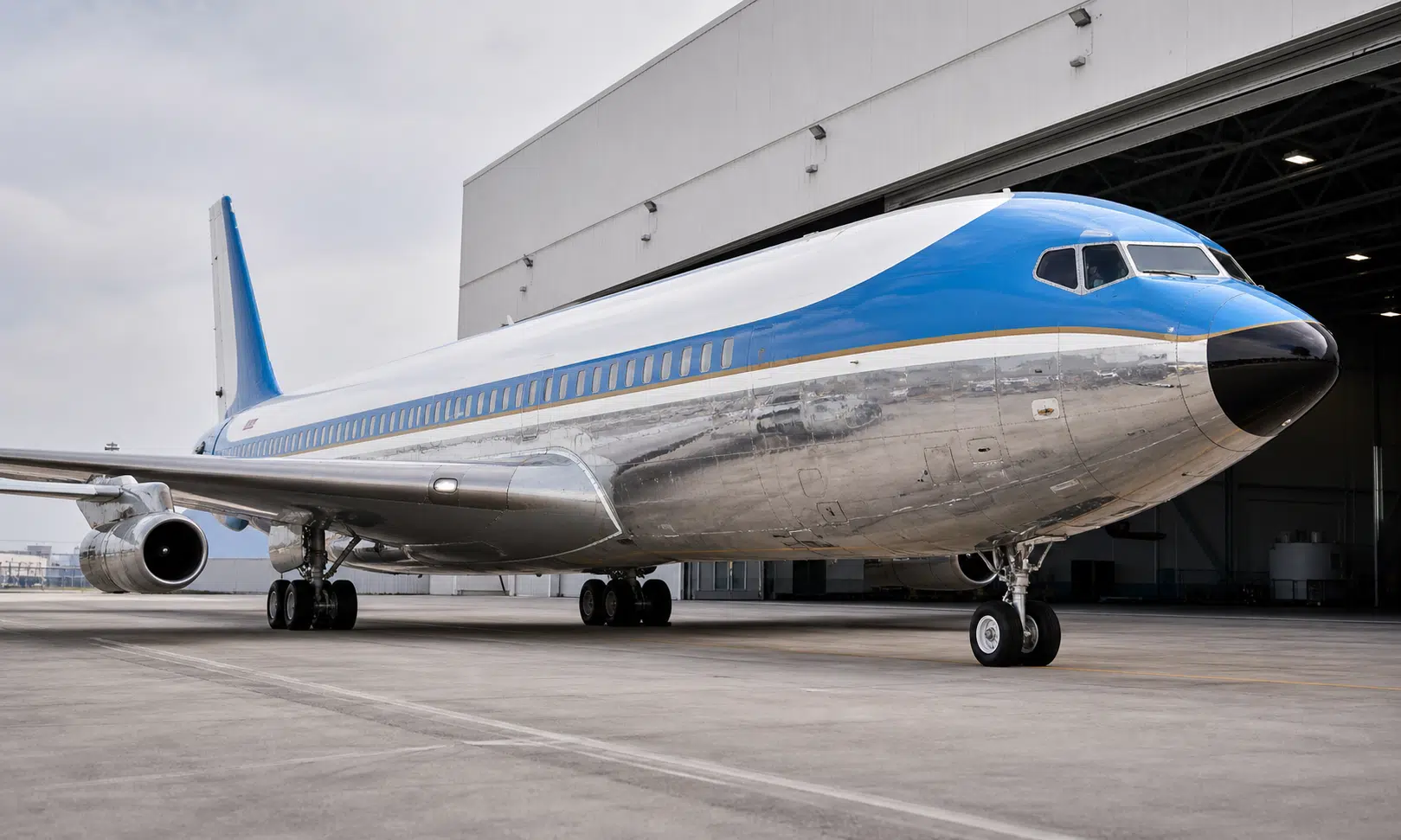
The aircraft at the center of the story was the VC-137C, a highly modified Boeing 707 used for presidential airlift missions. The best-known example, serial number 62-6000, is commonly associated with the call sign SAM 26000 when the president was not aboard. When the president was on board, the aircraft used the Air Force One call sign.
The historical details around the Boeing 707’s role in commercial aviation are often presented in sweeping terms: it is widely treated as one of the defining early jet airliners, and the 367-80 demonstrator is commonly linked to both the 707 and the KC-135 tanker family. Those broader claims can get overstated, so the cleaner takeaway is narrower: the 707 became a major platform for long-range jet travel and also formed the basis for important U.S. military and government aircraft.
The VC-137C’s finish was part of its public identity. The blue-and-white presidential livery, the large “United States of America” lettering, and the flag on the tail turned the aircraft into a highly visible symbol of the presidency. Much of that look depended on a clean, glossy exterior. Scuffs on the polished metal were not just cosmetic blemishes; they interrupted the aircraft’s carefully maintained presentation.
Why flour beat harsher polish
Wagner’s explanation turns on one small but important maintenance tradeoff: removing a mark without replacing it with a scratch. A conventional abrasive could take off scuffs quickly, but it could also cut into the bare aluminum finish. A softer material could take more care and patience, but it reduced the chance of marring the aircraft’s mirror-like surface.
That is where the flour came in. Wagner recalled seeing shipping pallets of Gold Medal Enriched Flour in the food-prep supply area connected with Special Air Mission operations. At first glance, that quantity sounded excessive for cooking. The explanation he said he received was that the flour was used to polish the bare aluminum on Air Force One because it was mild enough for the finish.
The anecdote is specific about the product: Gold Medal Enriched Flour. It should not be read as a modern maintenance recommendation for aircraft, cars, appliances, or polished metal at home. It is better understood as a period-specific detail from an environment where crews were maintaining a very particular aircraft finish under very particular expectations.
| Material choice | Why it mattered | Tradeoff |
|---|---|---|
| Gold Medal Enriched Flour | Described as gentle enough to polish scuffs from highly polished bare aluminum | Slow, unusual, and surface-specific |
| Stronger abrasive polish | Could remove marks more aggressively | Higher risk of scratching the finish |
| Leaving scuffs alone | Avoids abrasion entirely | Compromises the aircraft’s glossy presentation |
A buyer-aware way to read the flour story
There is a consumer-product angle here, but it is easy to overdo it. The interesting part is not that Gold Medal flour was a secret best buy for polishing metal. The interesting part is that a familiar grocery item happened to sit at the right end of an abrasive spectrum for a demanding finish.
In practical terms, the story is a reminder that surface care is less about force and more about compatibility. A product that is perfect for one material can be wrong for another. A compound that works on dull metal can be too harsh for a polished aircraft skin. A household material that seems too ordinary can make sense when the requirement is an extremely light touch.
For anyone comparing polishing options, the useful decision criteria are straightforward:
- How delicate is the surface?
- Is the goal to remove dirt, oxidation, scuffs, or scratches?
- Will the cleaner leave residue that creates a separate problem?
- Has the surface manufacturer approved the method?
- Is the job cosmetic, structural, or part of a regulated maintenance process?
That last point matters. Aircraft maintenance is not a casual DIY category. A presidential aircraft is an even more controlled environment. The flour detail works as a historical maintenance anecdote, not as a universal product recommendation.
What the story says about Air Force One upkeep
The 89th Airlift Wing has long been associated with Special Air Mission work, including presidential and senior-government transportation. Wagner described part of his training as including a tour of a dedicated supply area at Andrews Air Force Base. His recollection included not only food-prep supplies but also leftover items tied to past presidential administrations, including serviceware and carpet.
Some of those surrounding details are personal recollections and should be treated as such. The core maintenance point, however, is internally consistent: a mirror-bright bare aluminum finish required a polishing method that would not visibly damage the aircraft. Flour was reportedly chosen because it was less aggressive than ordinary abrasives.
That kind of maintenance detail also explains why older presidential aircraft can feel different from today’s Air Force One image. Modern viewers often think of presidential jets in terms of communications systems, security, range, and onboard capability. The VC-137C story adds another layer: the aircraft also had to look the part every time it taxied into view.
The flour did not make the aircraft important. The aircraft’s role made even a mundane supply item important. In a normal pantry, Gold Medal Enriched Flour was baking stock. In the presidential airlift world, at least in Wagner’s telling, it was also a polishing material gentle enough for one of the most recognizable aircraft finishes in American aviation.