

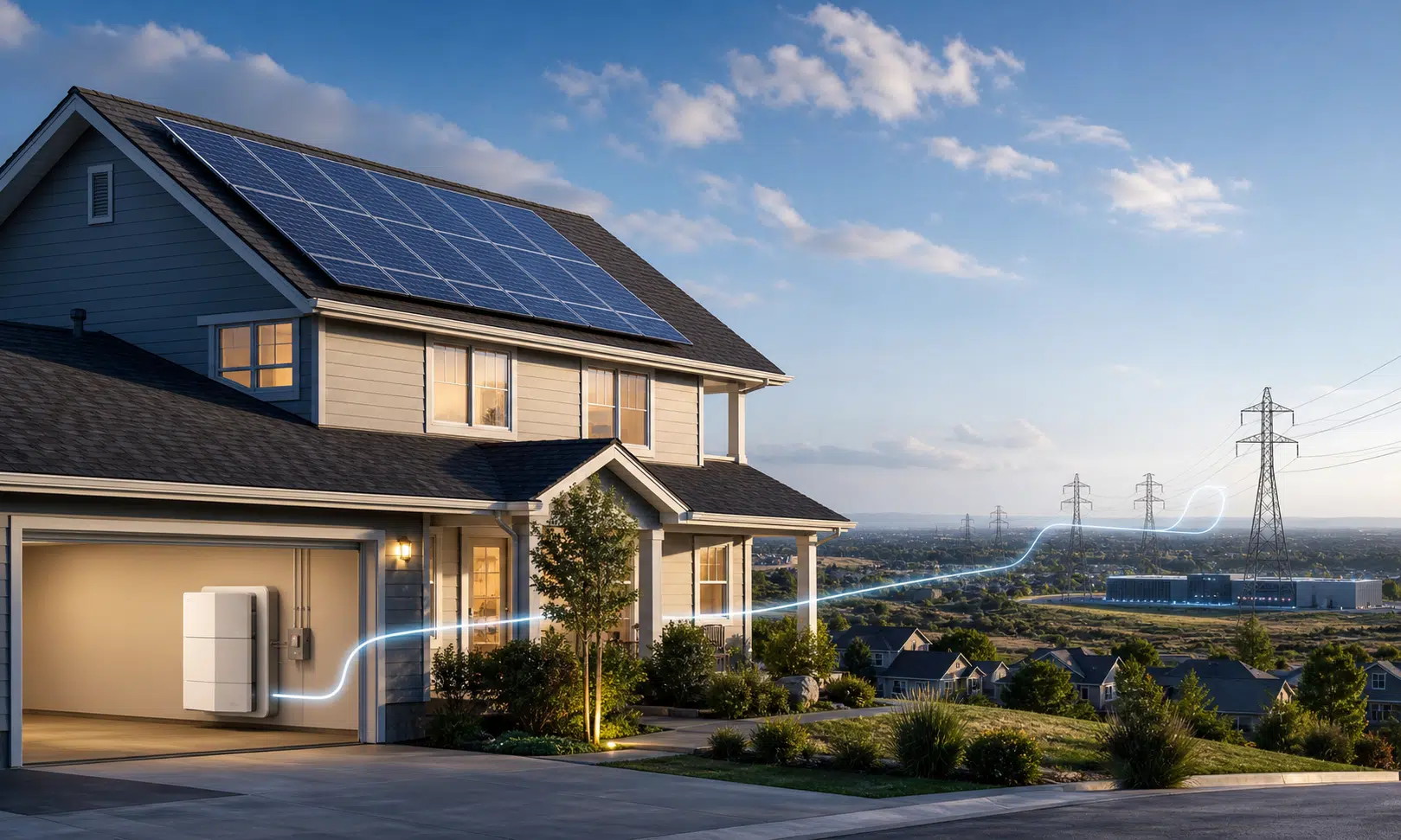

Tesla, Sunrun and Renew Home are teaming up on a plan to turn residential energy hardware into a large virtual power plant for the U.S. grid.
The companies say the project is designed to deliver more than 16 gigawatts of flexible capacity to utilities and hyperscale infrastructure operators, including data center customers facing rising electricity demand. Instead of building a single centralized power plant, the effort would aggregate capacity from equipment already installed in homes, including batteries and smart energy devices.
That makes the proposal different from a conventional grid expansion project. It is less about adding new land, transmission corridors or standalone generation, and more about coordinating millions of distributed assets so they can respond when electricity demand spikes.
A power plant made from home batteries and smart devices
The planned resource would draw on hundreds of thousands of home battery systems operated by Tesla and Sunrun. Renew Home would add capacity from more than 8 million smart thermostats and other connected devices under its management.
In practical terms, that means the system could reduce demand or supply stored energy during high-stress periods on the grid. Home batteries can discharge power when prices or demand rise, while thermostats and similar devices can shift energy use away from the most expensive hours without requiring a new gas plant or a long transmission buildout.
Tesla’s role is centered on its residential energy business, particularly Powerwall batteries already installed in homes. Sunrun brings its own large base of solar and battery customers. Renew Home adds a demand-management layer through connected home devices that can be coordinated across markets.
The companies are framing the project as flexible capacity rather than constant baseload power. That distinction matters: a virtual power plant is most useful when the grid needs fast help for a limited window, such as a hot evening, a winter peak, or a period when data center demand collides with household electricity use.
Why data centers are part of the pitch
The partnership is aimed partly at hyperscalers, the large technology and cloud infrastructure companies whose data centers are becoming a bigger load on the power system. AI computing has intensified that pressure, with utilities and grid operators trying to handle large new electricity requests while generation and transmission projects remain slow to permit and build.
Tesla, Sunrun and Renew Home are positioning residential energy aggregation as a faster option. The companies argue that home batteries, thermostats and other distributed devices can be coordinated in months rather than years, giving utilities and large power users a way to add capacity without waiting for traditional infrastructure.
That pitch is also meant to address a political and consumer concern: who pays for the grid upgrades needed to support data centers and electrification. If residential batteries can provide capacity during expensive hours, the companies say that could help reduce pressure for costly new infrastructure that would otherwise flow into customer bills.
Sunrun CEO Mary Powell put the argument in blunt terms, saying the grid built for an earlier era cannot carry the demands of 2026 without new kinds of coordination. Tesla executive Colby Hastings similarly pointed to data centers, electrification and manufacturing growth as pressures that no single infrastructure solution can address quickly enough.
What homeowners could get out of it
For households, the appeal depends on program design. Virtual power plant programs typically compensate participants when their batteries or devices help the grid, though the exact reward structure varies by market, utility and provider.
The companies have described the system as a way to lower household bills and create rewards for participating families, but the customer economics will depend on where a home is located, what hardware it has, and how much control the homeowner agrees to give the program during peak events.
A Powerwall owner, for example, may be willing to let a portion of stored energy discharge to the grid if the payment is worthwhile and backup reserves remain protected. A smart thermostat customer may participate through small temperature adjustments during peak demand windows. The value proposition has to work at the home level before the aggregate capacity can work at grid scale.
The hard part is coordination, not hardware
The most notable part of the plan is that it relies heavily on assets already in the field. That can make deployment faster, but it also creates a coordination challenge.
A centralized power plant has a single operator and a predictable dispatch model. A residential virtual power plant has to account for customer preferences, local utility rules, wholesale market requirements, battery state of charge, device availability and weather-driven demand. The software layer is the product as much as the hardware is.
That is why the partnership brings together companies with different kinds of residential energy reach. Tesla and Sunrun control large fleets of batteries. Renew Home manages flexible load through connected devices. If those assets can be reliably bundled, they become something utilities and large power buyers can plan around rather than a loose collection of individual homes.
The companies are also presenting capacity as something that can be allocated to interested utilities and infrastructure operators. That suggests the first wave of the project may focus on markets where the companies already have enough devices, regulatory access and grid demand to make the economics work.
A bigger test for residential energy
Virtual power plants have been discussed for years as a way to make the grid cleaner and more flexible, but the scale proposed here is unusually large. A 16 GW target would put residential energy devices into the same conversation as major utility-scale resources, even if the capacity is dispatchable only during certain periods.
The plan also reflects a broader shift in Tesla’s energy story. The company is best known for electric vehicles, but its energy business has grown around Powerwall batteries for homes and Megapack systems for larger storage projects. A large residential aggregation effort would tie that hardware more directly to grid services.
For Sunrun, the partnership gives its customer base another potential use case beyond rooftop solar and backup power. For Renew Home, it is a chance to show that smart thermostats and connected devices can serve as real grid infrastructure when managed at scale.
The open question is how quickly the companies can translate the headline capacity number into contracted, dispatchable resources that utilities and data center operators can use. The pieces are already distributed across American homes. The challenge is making them behave like one dependable power plant when the grid needs help.