

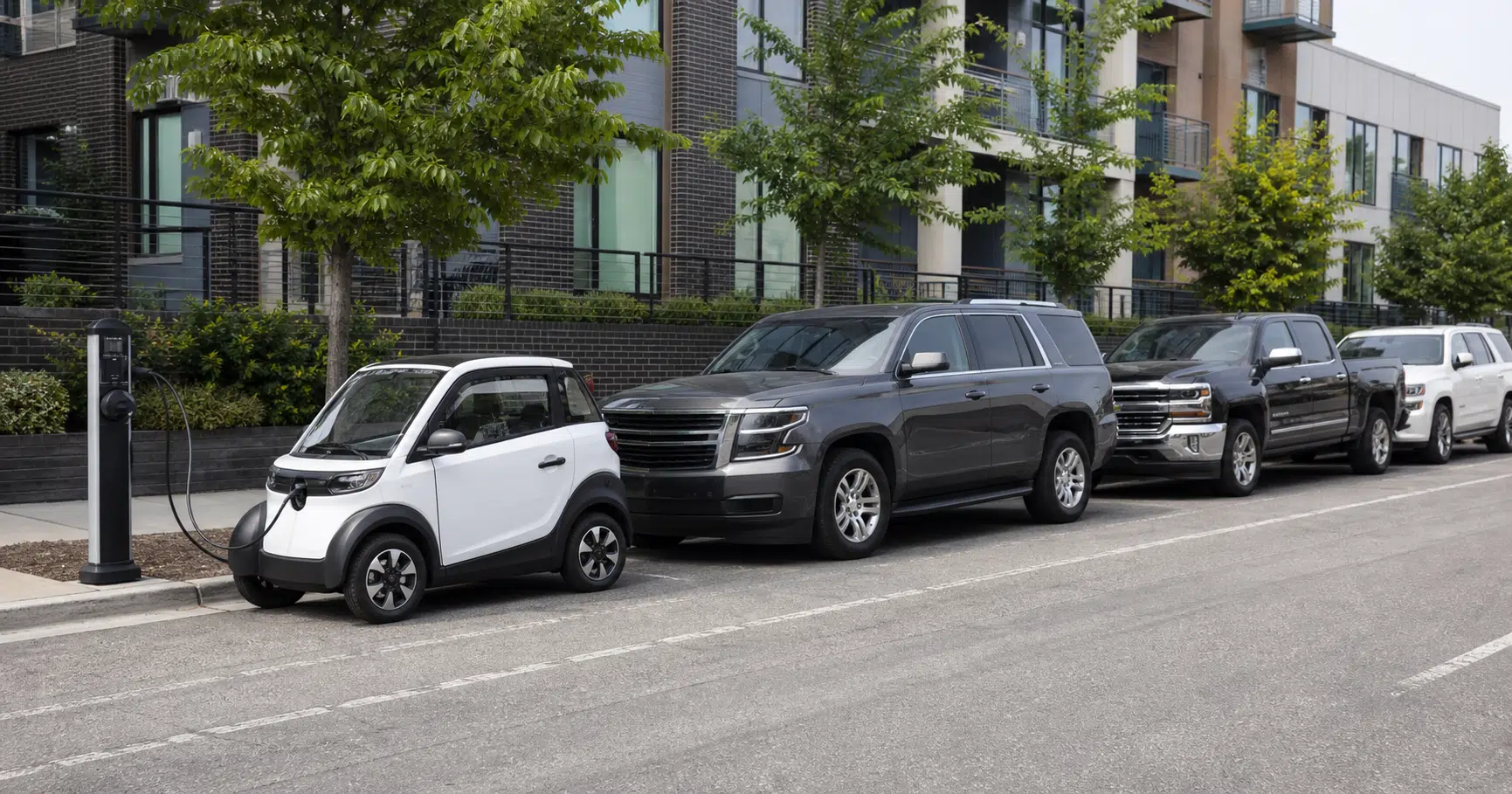

The appeal of tiny electric cars is easy to see. Japanese kei cars can start just above $10,000, while the average new vehicle in the US costs roughly $50,000. That enormous price difference gives automakers a reason to explore smaller, simpler alternatives—even if American demand remains far from proven.
The regulatory picture is less certain. Public claims that federal officials are preparing a pathway for kei-size vehicles have not been independently confirmed, and no firm timeline has been established. Until the National Highway Traffic Safety Administration produces a concrete policy, imported kei cars and comparable European microcars still face significant uncertainty.
That leaves manufacturers with another route: electric low-speed vehicles, or LSVs, designed to operate within existing rules.
Low-speed vehicles offer a way into the market
LSVs are intended for limited, lower-speed road use rather than highway travel. Their lighter regulatory framework can make them less expensive and mechanically simpler than conventional passenger cars. Many models can also recharge from a household outlet overnight.
Those characteristics make the category potentially useful for short errands, planned communities, campuses, resorts, and compact urban areas. They also create an important limitation: an LSV is not automatically a substitute for a highway-capable car. Buyers must consider local road rules, typical travel speeds, passenger needs, charging access, and expected safety equipment.
That distinction matters because the affordability pitch can obscure how narrowly some of these vehicles fit into daily life. A low purchase price is less compelling when the vehicle cannot cover a buyer’s regular routes.
Fiat and startups are testing the opportunity
Stellantis is the most recognizable automaker associated with the emerging US opportunity. Its Fiat Topolino has been discussed as a roughly $15,000 entrant, but US launch timing and final pricing have not been independently confirmed. Fiat’s broader ambition is to build a stronger position in micromobility, where modest sales could still be meaningful for a brand with a small American footprint.
Startup Chip Motors has outlined a similarly priced vehicle called the Chip, with four- and six-seat configurations. Its price, production plans, and delivery schedule should be treated as targets rather than settled product details.
Waev’s GEM brand represents the more established side of the low-speed market. The category has traditionally been associated with retirement communities, gated developments, and other controlled environments. New entrants are betting that the same basic format can extend to neighborhood errands and short urban trips, although the scale of that broader demand remains unclear.
America’s small-car history is the warning sign
The strongest argument against a tiny-car boom is the performance of conventional subcompacts. One market snapshot puts US subcompact sales below 89,000 units after an 86% decline over a decade, leaving the segment at less than 1% of total vehicle sales.
That does not mean micro-EVs will follow the same path. Their lower prices and specialized use cases differ from those of ordinary subcompacts. Still, the figures show that small size alone has not been enough to win over American drivers.
The golf-cart market offers a more encouraging comparison. Its value was estimated at roughly $1 billion before the pandemic and later at around $5 billion, helped by customized street-legal models spreading into suburban neighborhoods. That pattern suggests buyers may embrace compact vehicles when they are positioned as convenient local transportation rather than miniature replacements for full-size cars.
BYD sees an opening in Japan
BYD is testing the small-vehicle opportunity in a market where the format is already familiar. Its Racco mini EV entered Japan at a price below $12,000 after subsidies, with the company targeting 10,000 orders. Kei vehicles account for roughly one-third of Japanese auto sales, although domestic manufacturers have historically controlled most of that segment.
Japan provides a very different operating environment from the US, so BYD’s move is not evidence that Americans will adopt similar vehicles. It does show that a major global EV manufacturer considers ultra-compact cars worth pursuing when regulation, infrastructure, and consumer expectations align.
For the US, that alignment is still the missing piece. Lower prices give tiny EVs a credible commercial argument, and existing LSV rules provide a limited route to market. But broader adoption depends on confirmed regulation, practical road access, and buyers accepting a vehicle designed for local trips rather than every journey. Until those pieces come together, tiny electric cars look more like a promising niche than a replacement for America’s conventional car market.