

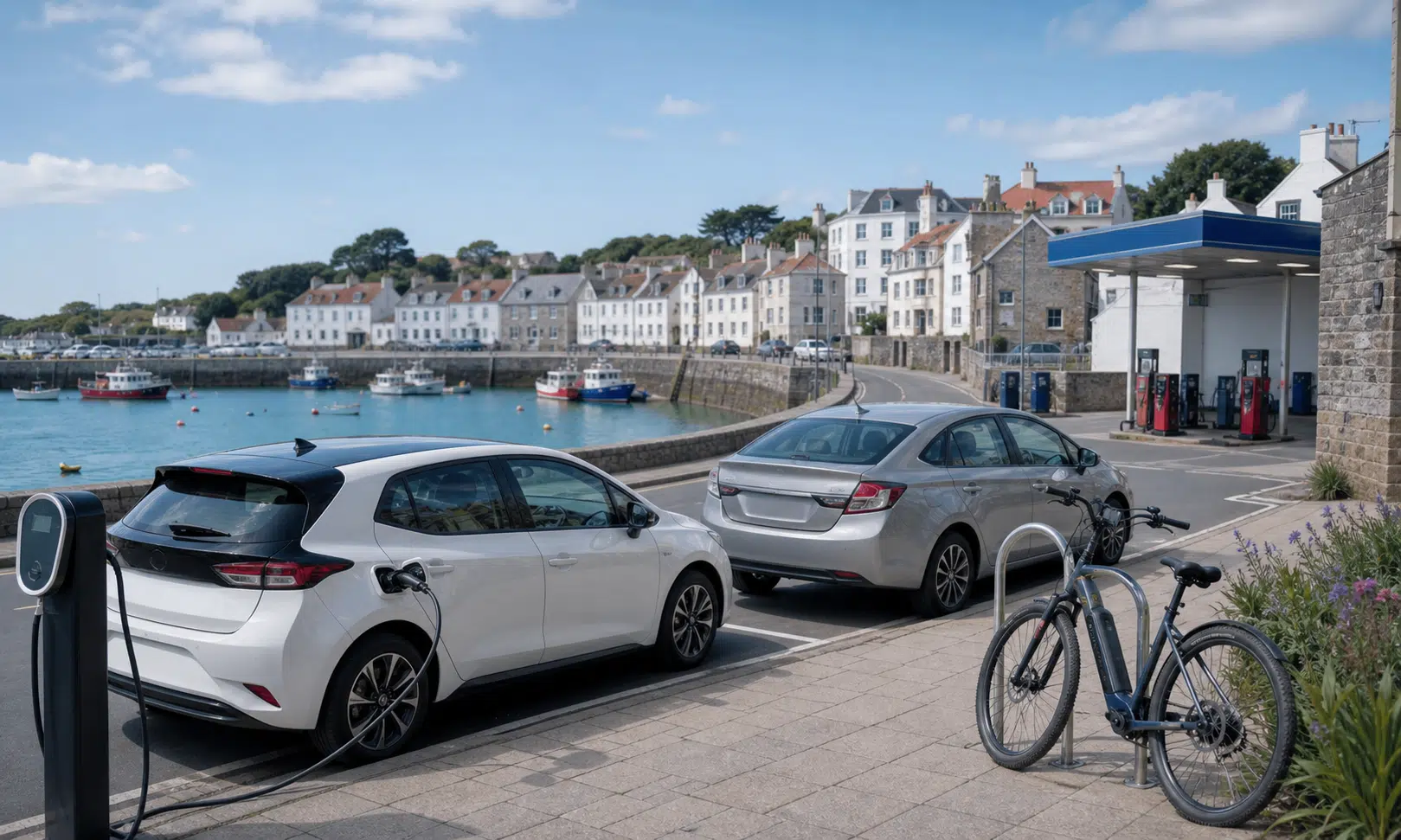

Guernsey motorists looking at their next car are paying closer attention to running costs, with local motor trade figures saying higher petrol prices are making electric and hybrid options harder to ignore.
The shift is not just about buying a new car. For some islanders, the question is whether a small electric car, a hybrid, or even an e-bike makes more financial sense for short local journeys.
Why electric is getting more attention
Pete Beausire, joint managing director of Le Mont Saint garage, has said demand for the electric Fiat 500 has increased sharply, with monthly sales described as roughly double the usual level. That sales figure has not been independently verified, but it reflects the wider point being made by local dealers: fuel prices are pushing buyers to compare day-to-day costs more closely.
Beausire also cited petrol at about £1.69 a litre, calling it the highest level he could remember. That price has not been independently verified here, so buyers should check current forecourt prices before making a cost comparison.
For drivers doing regular short trips around the island, the appeal is straightforward. Electric cars remove petrol from the weekly budget, though they bring other questions around purchase price, charging access, insurance, servicing and future tax policy.
Quick Comparison
| Image | Product | Best fit | Link |
|---|---|---|---|
 |
Type 2 EV Charging Cable | A Type 2 charging cable is a practical accessory for many UK and European EVs, especially where drivers use untethered home or public charge points. Check the car connector, charger type and cable length before buying. | Check Price on Amazon |
 |
EV Charging Cable Carry Strap | A cable strap helps keep an EV charging lead coiled in a boot, garage or shared parking space. It is a small accessory, but useful if the cable is handled often. | Check Price on Amazon |
 |
Heavy-Duty Bicycle U-Lock | A strong U-lock is a sensible first accessory for an e-bike used around town. Look for a lock that fits the frame and parking points you expect to use, and check current security certification before relying on it. | Check Price on Amazon |
 |
Rechargeable Bike Light Set | Rechargeable front and rear lights are useful for early starts, evening rides and dull weather. Choose a set with mounts that fit your handlebars, seatpost or helmet setup. | Check Price on Amazon |
As an Amazon Associate I earn from qualifying purchases.
EV, hybrid, petrol car or e-bike?
For buyers, the choice is less about a single winner and more about matching the vehicle to the journey. The source material points to four realistic options for cost-conscious islanders.
| Option | Best fit | Main tradeoff |
|---|---|---|
| Electric car | Drivers who want to cut petrol use and can charge conveniently | Higher upfront cost and uncertainty over future motoring taxes |
| Hybrid car | Drivers not ready to rely fully on charging | Still uses fuel, so savings depend on driving pattern |
| Petrol car | Drivers prioritising familiarity and existing infrastructure | Most exposed to fuel price rises and fuel duty |
| E-bike | Short commutes, local errands and lower-cost personal transport | Limited carrying capacity and weather dependence |
Matthew Joyce, speaking about e-bikes, said fuel cost is one factor bringing more people into the market. He described annual maintenance as relatively modest, alongside the electricity needed to keep a battery charged. The exact figure he gave for maintenance has not been independently verified, but the broader buyer point is clear: an e-bike can be a cheaper transport tool when the journey is short enough and the rider is comfortable using one.
The tax question buyers should not ignore
Robert Cornelius, president of the Guernsey Motor Trade Association, has said drivers are increasingly focused on cutting costs and considering electric or hybrid alternatives. That market view has not been independently verified, but it fits the practical decision many households now face.
The biggest uncertainty is future taxation. Cornelius said a large share of the petrol price is duty and noted that electric cars currently avoid some running costs faced by petrol drivers. The exact duty figure and any future policy changes should be checked against official Guernsey tax proposals before a buyer relies on them.
That matters because today’s cheapest-running option may not keep the same advantage forever. If Guernsey or the UK moves toward new charges for electric vehicles, the calculation could change.
Buyer takeaway
For Guernsey drivers, the sensible move is to run the numbers around actual use: weekly mileage, parking, charging access, fuel spend, insurance and likely resale value.
An electric car may make sense for drivers with predictable island mileage and easy charging. A hybrid may suit those who want lower fuel use without going fully electric. An e-bike could be the lowest-cost option for short daily trips. Petrol still offers familiarity, but it leaves drivers more exposed when fuel prices rise.
The decision is no longer just about vehicle preference. It is about how much certainty buyers want over their monthly transport costs.