

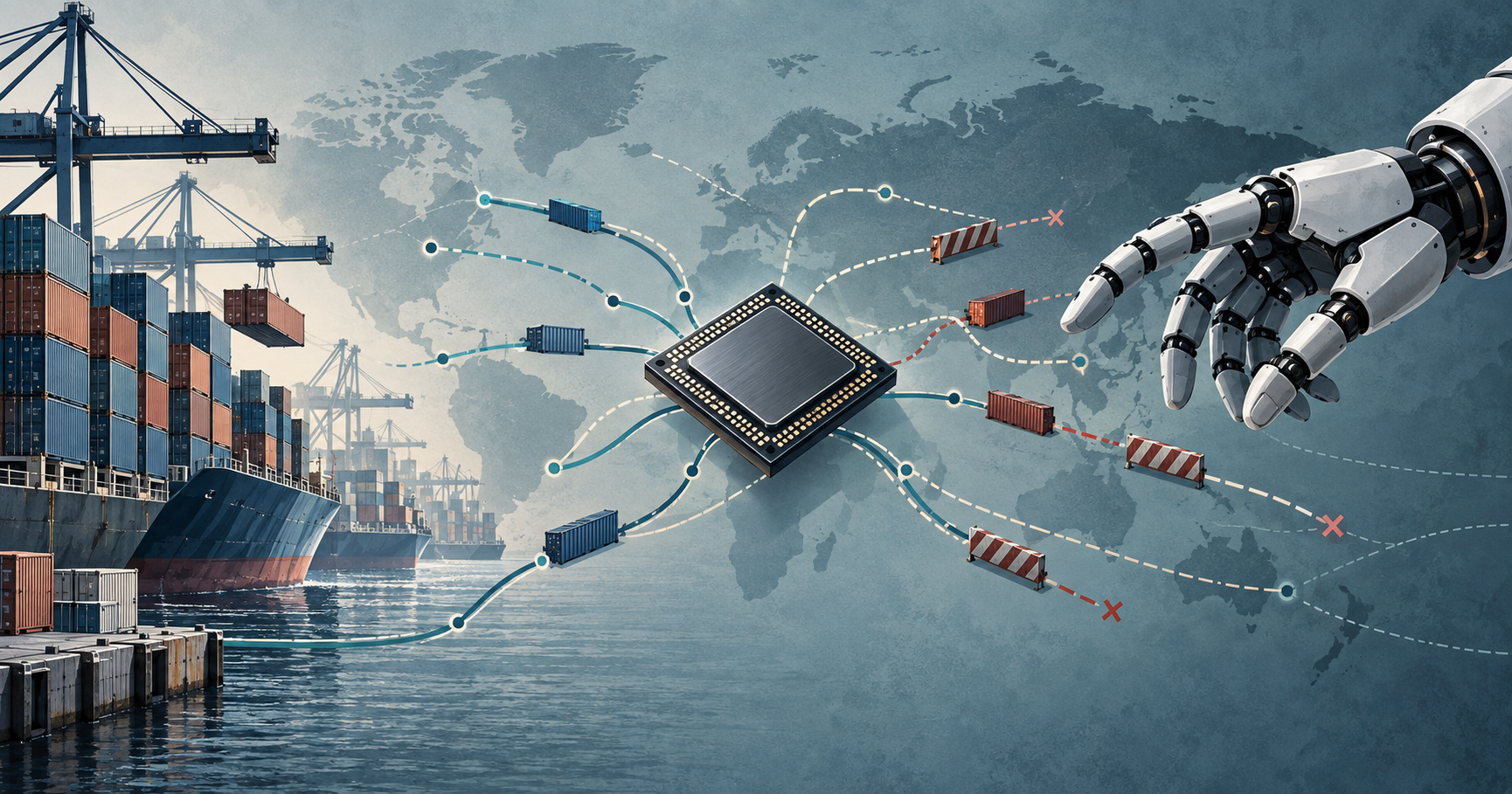

Trump trade policy is best assessed country by country. Tariffs, negotiations and restrictions on technology trade can affect a business in very different ways, even when they sit under the same political banner.
For investors, that makes the details more useful than a single prediction about whether trade tensions will rise or fall. A tariff concession could ease costs for one manufacturer while leaving another company’s access to chips or industrial components unresolved.
Canada: the product list matters
Canada’s finance department announced counter-tariffs ranging from 15% to 50%, with a September 8, 2026, effective date, following US duties on selected Canadian goods. That describes a targeted dispute, with consequences that depend on what a company sells and where those products cross the border.
The practical issue is exposure. A business affected by duties on its products faces a different problem from one whose main concern is uncertainty over future negotiations. Treating all Canadian operations as equally vulnerable would miss that distinction.
Autos also warrant separate attention. The terms covering cars and light trucks matter to manufacturers with Canadian operations, but a possible concession should not be treated as a settled improvement in their costs or outlook.
Mexico: potential relief depends on the terms
The US-Mexico-Canada Agreement provides the framework for reviewing North American trade arrangements. US and Mexican trade officials announced bilateral discussions in preparation for that review in March 2026.
That creates a negotiating opportunity, but it does not establish that an agreement is imminent or that a particular industry will benefit. For a business evaluating Mexican operations, the relevant question is what any eventual agreement changes for its products.
A favorable announcement could improve expectations. Its practical value would depend on the tariff treatment, coverage and timing that follow. Investors should distinguish the possibility of improved terms from an agreement that companies can actually use when planning production and sales.
China: access to technology cuts both ways
The technology dispute involves a different set of constraints. US export controls on advanced computing chips make access to equipment a central issue alongside tariffs. For AI hardware businesses, permission to supply a buyer can matter as much as the price of the shipment.
Supply constraints can also run in the opposite direction. In April 2025, Elon Musk said Chinese restrictions on rare-earth magnets had affected production of Tesla’s Optimus humanoid robots. That example shows why the technology relationship cannot be reduced to US control over advanced chips.
For investors assessing AI and robotics businesses, the distinction matters: customer access and component availability are separate risks. A change in tariff treatment would not, by itself, establish that either constraint had been resolved.
Brazil and Europe: talks and proposals need different treatment
The US announced a 25% tariff on certain Brazilian goods in July 2026. Brazilian officials subsequently reaffirmed their willingness to negotiate while rejecting Washington’s justification for the measures. Keeping dialogue open leaves room for an agreement, but it does not remove the underlying dispute.
Europe presents a different kind of proposition. Jamie Dimon has advocated a broad US-Europe trade agreement tied to economic and defense reforms. His proposal also envisages extending the arrangement to other allied economies.
That is an argument for a different trading relationship, rather than an agreement businesses can build into their forecasts. Its significance lies in the direction it proposes; any commercial benefit would depend on governments adopting and implementing it.
The verdict: assess the business behind the headline
The strongest approach is to examine how each policy reaches a company’s operations. Tariffs can change costs, export controls can restrict customers, and limits on industrial inputs can complicate production.
These distinctions are useful when reviewing manufacturers, chip suppliers and robotics businesses with international exposure. A diplomatic announcement becomes commercially meaningful when it changes the conditions under which those companies buy, make or sell their products.