

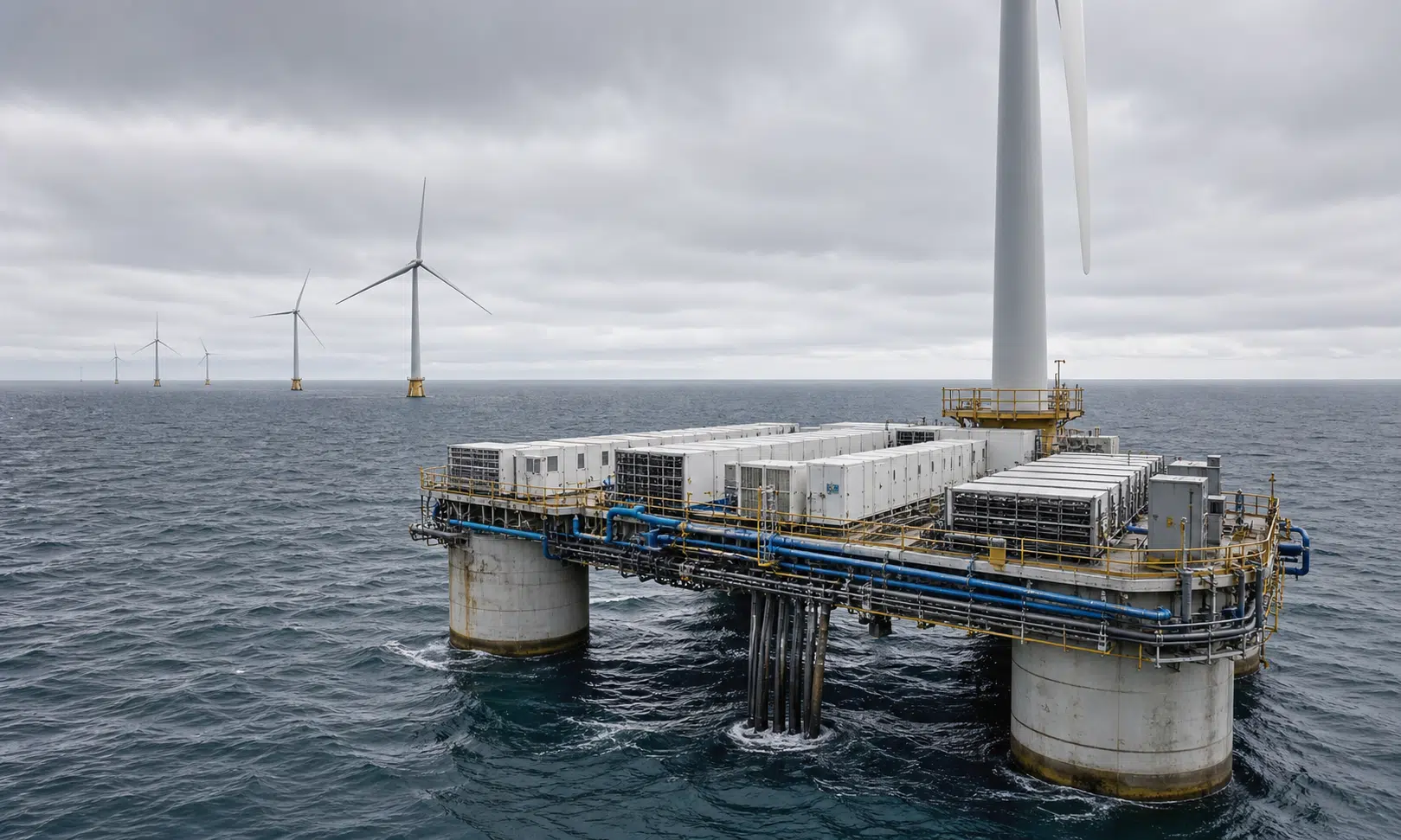

Wind turbines are usually discussed for one job: producing electricity. A newer idea being explored by engineers and technology companies would give them a more specialized role: supporting offshore AI data centers that need both power and cooling.
The concept centers on placing computing equipment close to offshore wind generation instead of building every data center on land. The idea is not yet something readers should treat as a proven, widely deployed model. A firm timeline has not been publicly confirmed, and several claims around the design remain difficult to verify independently. Still, the proposal shows how wind infrastructure could become part of the larger conversation about AI computing demand.
Why AI Data Centers Are Part of the Wind Energy Conversation
AI data centers require large amounts of electricity and cooling. That has pushed companies and engineers to look for designs that can reduce pressure on land, water supplies, and conventional power grids. Offshore wind is one possible fit because turbines can generate electricity near coastal industrial zones, and the surrounding seawater may offer a cooling advantage.
The basic challenge is simple: AI hardware produces heat, and removing that heat is a constant operating requirement. If a data center is placed offshore, its designers can explore passive or low-water cooling methods that transfer heat away from servers without depending on the same freshwater-intensive systems used by some land-based facilities.
That does not mean every offshore wind project can become a data center site. The approach would still need suitable marine conditions, grid or network connections, maintenance access, environmental review, and a business case that makes sense against conventional data center construction.
What Aikido Technologies Has Proposed
Aikido Technologies has been associated with a proposal for a floating offshore AI data center powered by wind energy. Because several details have not been independently verified, the safest way to describe the project is as a concept or early-stage design rather than a confirmed transformation of the AI market.
According to the source material, the proposed system would combine three main pieces:
- A wind turbine rated in the 15-18 MW range
- Battery storage to help manage supply
- A 10-12 MW computing system designed for AI workloads
The cooling approach described in the source is passive cooling that transfers heat into the surrounding seawater. That detail is important because cooling is one of the central constraints for AI infrastructure. If the design can work reliably, it could reduce some dependence on land-based cooling systems. However, the article should not present that outcome as proven at scale.
What This Could Change, and What Remains Unclear
The appeal of the design is that it tries to combine power generation, compute capacity, and cooling in one offshore unit. For companies building AI infrastructure, that could be attractive if it reduces land requirements or makes better use of offshore energy resources.
The unresolved questions are just as important. Offshore systems are harder to build and maintain than many land-based facilities. Saltwater, storms, corrosion, undersea cables, permitting, and service access all add complexity. Environmental effects would also need review, especially if waste heat is transferred into seawater around the installation.
There is also a difference between a promising engineering proposal and a commercial system that can operate reliably for years. The source mentions a proof-of-concept unit in Norway, but that point should be treated cautiously unless confirmed by primary project documentation. A broader rollout, if one happens, would likely depend on testing, financing, regulation, and customer demand.
The Practical Takeaway
Wind turbines are not being replaced by data centers, and the core purpose of wind power remains electricity generation. The more careful interpretation is that offshore wind could become part of new data center designs, especially where AI computing demand, power availability, and cooling needs overlap.
For now, the idea is best understood as an early infrastructure concept: use wind power near where it is generated, place computing equipment offshore, and use the marine environment as part of the cooling strategy. It is an interesting direction, but not yet a confirmed shift in how the AI market will be built.