

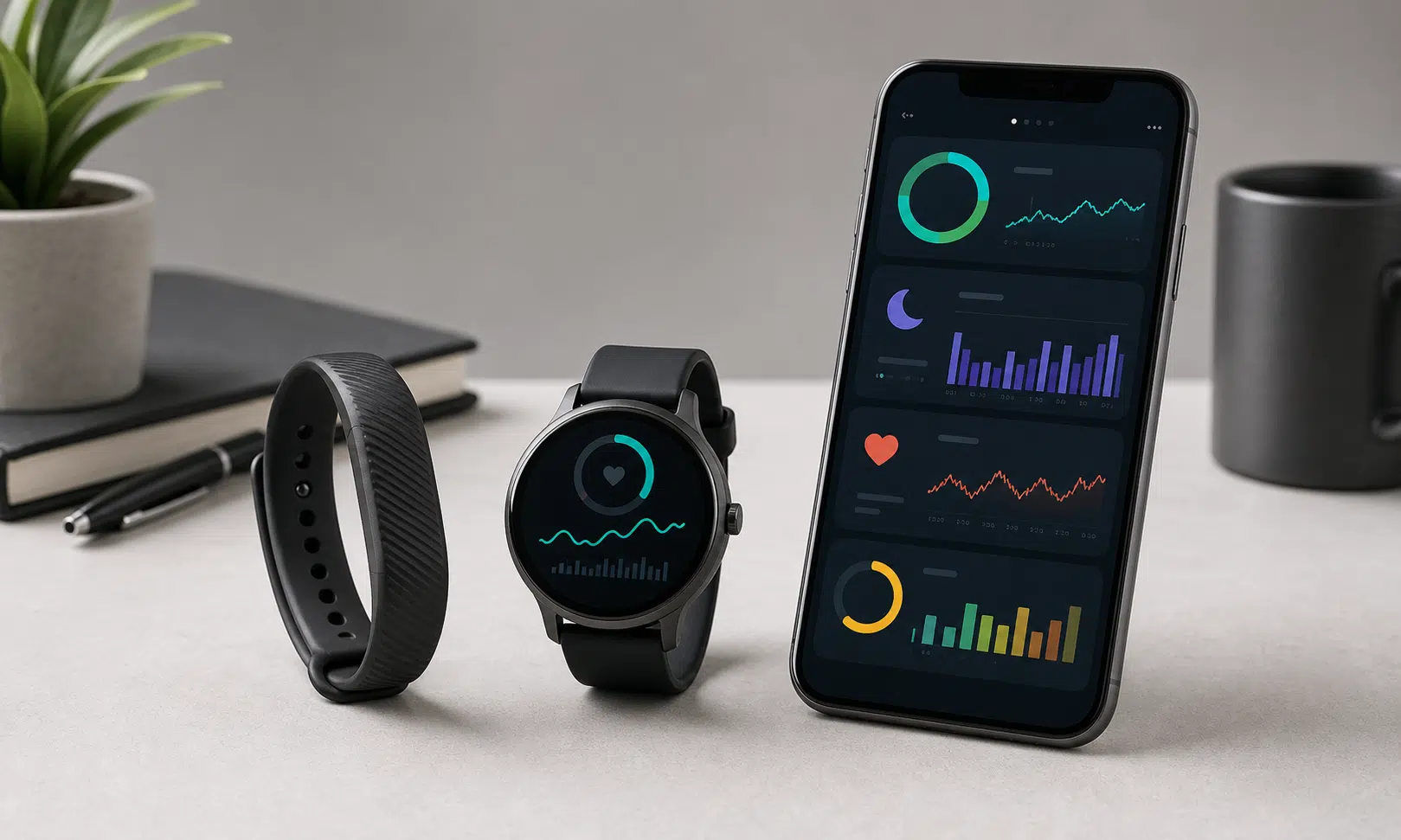

The Amazfit Helio Strap 2 has become a useful test case for Zepp Health’s wearable strategy. The obvious question is when it arrives. The better question is what it needs to do differently.
This article should be read as a practical expectation guide, not a launch report. A firm release date has not been publicly confirmed, and several details circulating around the device remain unverified. The safest position is that buyers should wait for official product information before treating any timing, specification, or feature claim as final.
That still leaves plenty to discuss. The first Helio Strap gave Amazfit a low-cost, screenless recovery and activity tracker. A second version would not need to reinvent the category to matter. It would, however, need to explain why an Amazfit watch owner should buy a strap as well.
The Release Window Is Still Unconfirmed
The most important timing point is simple: Zepp Health has not publicly announced a confirmed Amazfit Helio Strap 2 release date.
Some discussion has pointed toward a 2026 launch, and there has been speculation around a mid-year arrival. Treat that as speculation unless Zepp Health confirms it directly. A firm timeline has not been publicly confirmed, and buyers should avoid planning around a specific month until the company provides one.
That matters because screenless wearables are not impulse accessories for everyone. If you already own a Helio Strap, a smartwatch, a Whoop-style tracker, or another recovery band, the timing will affect whether you wait, upgrade, or ignore the next model entirely.
For now, the practical advice is:
- Do not assume a June or July launch unless Amazfit announces it.
- Do not treat leaked or regulatory-adjacent discussion as a complete product specification.
- If you need a tracker immediately, judge the current Helio Strap on its current features, not on expected Gen 2 upgrades.
- If you already own an Amazfit watch, wait to see whether the next strap improves multi-device training data rather than only daily activity totals.
That last point is the heart of the product story.
The Hardware Story Looks Limited
The Amazfit Helio Strap 2 is unlikely to be compelling because of a dramatic physical redesign. Based on the shape of the current product and the type of device this is, the realistic upgrades are likely to be incremental.
A screenless strap has a narrow job. It tracks activity, sleep, heart-rate-related metrics, recovery signals, and workouts without asking the user to wear a watch all day. It also needs to be comfortable enough for sleep and gym use, durable enough for daily wear, and cheap enough to make sense next to a smartwatch.
That leaves only a few hardware areas where a second generation can make a meaningful difference:
- Better charging speed
- Improved battery efficiency
- More consistent sensor performance
- A more convenient strap or module mechanism
- Continued support for useful external heart-rate broadcasting
Those are worthwhile improvements, but they are not category-changing. A slightly better strap does not automatically become a must-buy product. The upgrade has to solve a real user problem.
Fast charging is the most obvious candidate. The current Helio Strap experience is more convenient when users can top it up quickly before bed, before a gym session, or before a long day away from a charger. If the next model reduces charging friction, that would be a practical improvement even without a larger battery.
Battery life is more complicated. Without a confirmed final specification, it is not safe to make a hard claim about capacity or endurance. The important buyer-facing point is that major battery gains usually require either a larger physical battery, more efficient sensors and radios, smarter sampling, or some combination of those changes. If the form factor remains close to the current Helio design, expectations should stay modest.
Sensor improvements are more plausible than headline health features. A better accelerometer, improved motion detection, cleaner sleep recognition, or more reliable workout detection would be more believable than a jump into regulated medical features.
Do Not Expect Medical Watch Features
The Helio Strap 2 should not be treated as a likely ECG, AFib, or blood-pressure device.
Those features are not just software toggles. They generally depend on specific electrical sensors, validated algorithms, medical review, and regional approvals. That kind of feature set is easier to justify on more expensive health wearables than on a budget-friendly screenless strap.
So the cleaner expectation is this: the Helio Strap 2, if released, should be judged as a fitness and recovery tracker, not as a medical wearable.
That does not make it less useful. It just sets the buying decision correctly. The likely value is in everyday tracking, sleep, recovery context, gym wear, and integration with the rest of the Amazfit platform. If you are shopping specifically for ECG-style health features, this is probably the wrong product category to watch.
The Real Upgrade Needs To Be Ecosystem Sync
The biggest opportunity for the Amazfit Helio Strap 2 is not the strap itself. It is how the strap works with Amazfit watches.
A screenless band makes the most sense when it can cover the moments when a watch is annoying, intrusive, or unnecessary. That includes sleep, strength training, recovery tracking, and casual all-day wear. The watch then handles sports modes, display-heavy workouts, maps, notifications, and on-device controls.
That pairing only works properly if the data comes together in a way that feels complete.
Daily totals such as steps, calories, and distance are useful, but they are not enough for serious users. A buyer who owns an Amazfit watch will want the strap’s sessions to contribute meaningfully to training status, recovery context, readiness-style scores, and the broader physiological picture.
If the watch and strap do not share workout-level context, the system can feel fragmented. The watch may show one version of the user’s training life while the strap captures another. That is not ideal for anyone who wants one coherent view of recovery and load.
This is where Amazfit has the chance to make the Helio Strap 2 feel less like a standalone accessory and more like part of an Amazfit smartwatch ecosystem. The product does not need a bigger screen or a more complicated interface. It needs cleaner data handoff.
What Buyers Should Look For At Launch
When Amazfit eventually gives the Helio Strap 2 a proper launch, the feature list will matter less than the fine print. Buyers should look for language that explains exactly how the strap shares data with watches and the Zepp app.
The most important questions are:
- Do workouts recorded on the strap contribute to training load or recovery metrics on Amazfit watches?
- Does the watch recognize strap-recorded sessions as part of the same training history?
- Are sleep, recovery, and daily activity metrics merged cleanly across devices?
- Can users wear the strap and watch at different times without duplicate or missing data?
- Does the strap continue to support standard heart-rate broadcasting for external devices and apps?
The answer to those questions will say more than a small battery improvement or strap redesign.
If the Helio Strap 2 launches with deeper workout-level sync, the product becomes much easier to understand. An Amazfit watch owner could use the watch for outdoor training and sport-specific controls, then use the strap for sleep, gym sessions, and lower-profile daily wear. That would give Amazfit a more complete wearable system without asking every user to wear a watch constantly.
If the sync remains limited, the Helio Strap 2 becomes a more conventional screenless band. That can still be useful for first-time buyers who want recovery tracking without a large device on the wrist, but it is a weaker upgrade argument for existing Helio or Amazfit watch owners.
A Practical Feature Checklist
The most useful way to judge the Helio Strap 2 is to separate likely practical improvements from features that would need stronger evidence.
| Feature area | What to expect | Buyer impact |
|---|---|---|
| Charging | Faster charging would be a sensible upgrade to watch for. | High, because short top-ups make daily wear easier. |
| Battery life | Possible efficiency gains, but do not assume a major jump without confirmed specs. | Medium, especially for sleep and travel use. |
| Sensor accuracy | Incremental improvements are plausible. | Medium to high, depending on workout and sleep reliability. |
| Strap design | A simpler strap or module-swapping system would make sense. | Medium, especially for users who switch between sleep, gym, and daily wear. |
| ECG, AFib, blood pressure | Not a safe expectation for this type of product. | Low for the expected use case. |
| Multi-device workout sync | The key feature to verify at launch. | Very high for Amazfit watch owners. |
That table also shows why the Helio Strap 2 is not just a hardware question. The product can be physically modest and still matter if the ecosystem improves.
Where It Sits Against Other Screenless Trackers
The market around the Helio Strap has become more competitive. The original appeal was straightforward: a screenless tracker with no obvious need for a premium subscription could be attractive to users who wanted recovery-style data at a lower ongoing cost.
That argument is still useful, but it is less complete than it used to be. Buyers now compare screenless bands by more than price. They compare comfort, battery behavior, app quality, recovery scoring, workout handling, strength-training usefulness, and whether the device plays well with the watch they already wear.
That is why a simple Gen 2 refresh would feel incomplete. The Helio Strap 2 needs to answer a buyer question that the first version only partly answered: why choose this strap if you already own another wearable?
For an Amazfit watch owner, the answer should be integration. For a first-time buyer, the answer could be price, comfort, and no-subscription simplicity. For an athlete already invested in another platform, the answer is harder unless the strap continues to work cleanly with external devices for heart-rate use.

Amazfit Helio Strap
The current Amazfit Helio Strap is the most relevant product to compare against any expected second-generation model. It makes the most sense for readers who want a screenless fitness and recovery tracker now rather than waiting for unconfirmed Helio Strap 2 details.
As an Amazon Associate I earn from qualifying purchases.
Who Should Wait And Who Should Buy Now?
The buying advice depends on what you already own.
If you already have the current Helio Strap and it works well for your sleep, gym, and recovery tracking, there is no strong reason to plan an upgrade before Amazfit confirms what the Helio Strap 2 actually changes. A modest hardware refresh would not be enough on its own.
If you own an Amazfit watch and want a companion tracker, waiting makes more sense. The key question is whether the next strap improves how workout and recovery data move between devices. That is the feature that could turn the strap from an optional extra into a genuinely useful companion.
If you do not own any recovery tracker and need one soon, judge the current Helio Strap against available alternatives on today’s feature set. Do not buy it mainly because of rumored Gen 2 features.
If you need ECG, AFib detection, or blood-pressure features, look elsewhere. The Helio Strap line should be viewed as a fitness and recovery product unless Amazfit says otherwise.
The Bottom Line
The Amazfit Helio Strap 2 does not need to be a dramatic hardware upgrade. In fact, the more realistic expectation is a cleaner, slightly more refined version of the existing idea: better convenience, possible efficiency gains, and improved day-to-day usability.
But that is not enough to make the product important.
The real question is whether Amazfit uses the Helio Strap 2 to strengthen its wider wearable ecosystem. If strap-recorded activity, workouts, sleep, and recovery data flow cleanly into Amazfit watches and the Zepp app, the product becomes easy to recommend for existing Amazfit users. If not, it remains a decent standalone screenless tracker competing mostly on price and simplicity.
Until Zepp Health confirms the release date and final feature set, the safest conclusion is this: wait for the ecosystem details. That is where the Helio Strap 2 will either justify itself or feel like a minor refresh.
Frequently Asked Questions
When will the Amazfit Helio Strap 2 be released?
Zepp Health has not announced a confirmed release date. A firm timeline has not been publicly confirmed, so any specific launch-month claim should be treated as speculation until the company provides official details.
What is the difference between the Helio Strap and Helio Core?
The source material describes the Helio Core as the sensor module and the Helio Strap as the complete strap-based product. Buyers should confirm current accessory compatibility from official product information before purchasing modules, armbands, or sleeves separately.
Will the Helio Strap 2 have ECG or AFib detection?
That should not be expected unless Amazfit announces it. ECG and AFib-style features require specific hardware, validation, and approvals, and they are not safe assumptions for a low-cost screenless fitness strap.
Will the Helio Strap 2 broadcast heart rate to other devices?
That is a feature to verify at launch. Standard heart-rate broadcasting is useful for pairing a strap with watches, cycling computers, and fitness apps, so continued support would be important for many buyers.
What is the main feature Amazfit needs to improve?
The most important improvement would be deeper multi-device sync, especially workout-level data sharing between the strap, Amazfit watches, and the Zepp app. That would make the Helio Strap 2 more valuable as part of a complete wearable setup.