

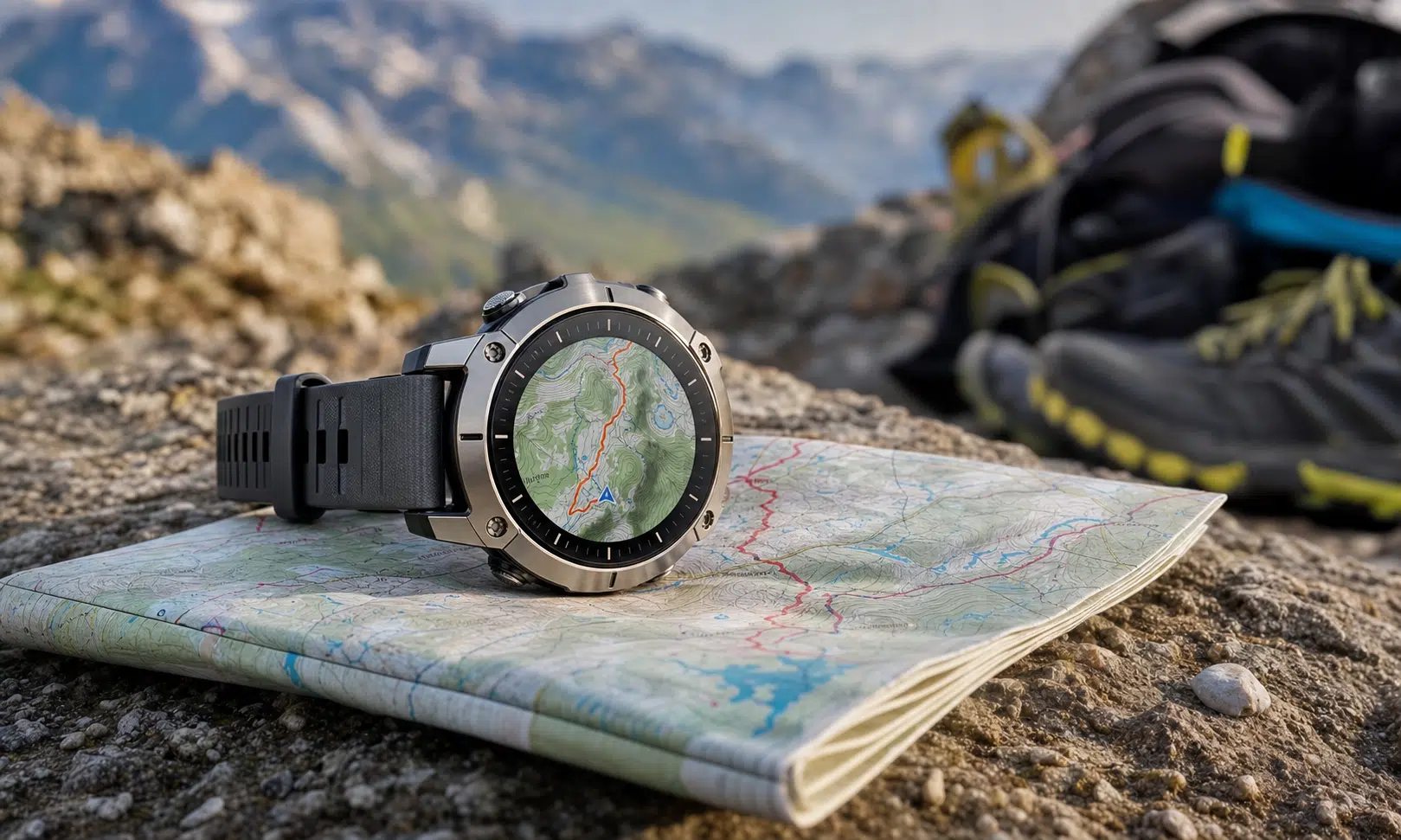

The Amazfit Cheetah 2 Ultra makes the Garmin question harder than it used to be. For years, Garmin has been the easy recommendation for runners who care about GPS accuracy, training tools and outdoor navigation. That reputation is still earned, especially at the top end. But the Cheetah 2 Ultra shows how much ground Amazfit has made up.
This is not a basic fitness watch dressed up for trail running. It has a titanium case and bezel, a bright AMOLED display, offline maps, dual-band positioning, strong battery claims and a feature list aimed squarely at serious runners and outdoor users. It also costs meaningfully less than Garmin’s Enduro 3 in the pricing cited by the tested source material, though buyers should always check live regional pricing before making a decision.
The short version: the Cheetah 2 Ultra does not fully replace Garmin’s more mature navigation ecosystem, and there was at least one heart-rate reading during testing that deserves caution. Even so, it feels like Amazfit’s most convincing endurance watch yet.
- Best for: runners and hikers who want premium hardware, long battery life and offline maps without paying Garmin flagship money.
- Less ideal for: buyers who rely heavily on Garmin’s route planning, solar charging or the deepest outdoor-navigation tools.
- Main tradeoff: Amazfit gets surprisingly close on hardware and core performance, while Garmin still has the more established ecosystem.
Amazfit Cheetah 2 Ultra vs Garmin and trail-running alternatives
| Image | Product | Best fit | Link |
|---|---|---|---|
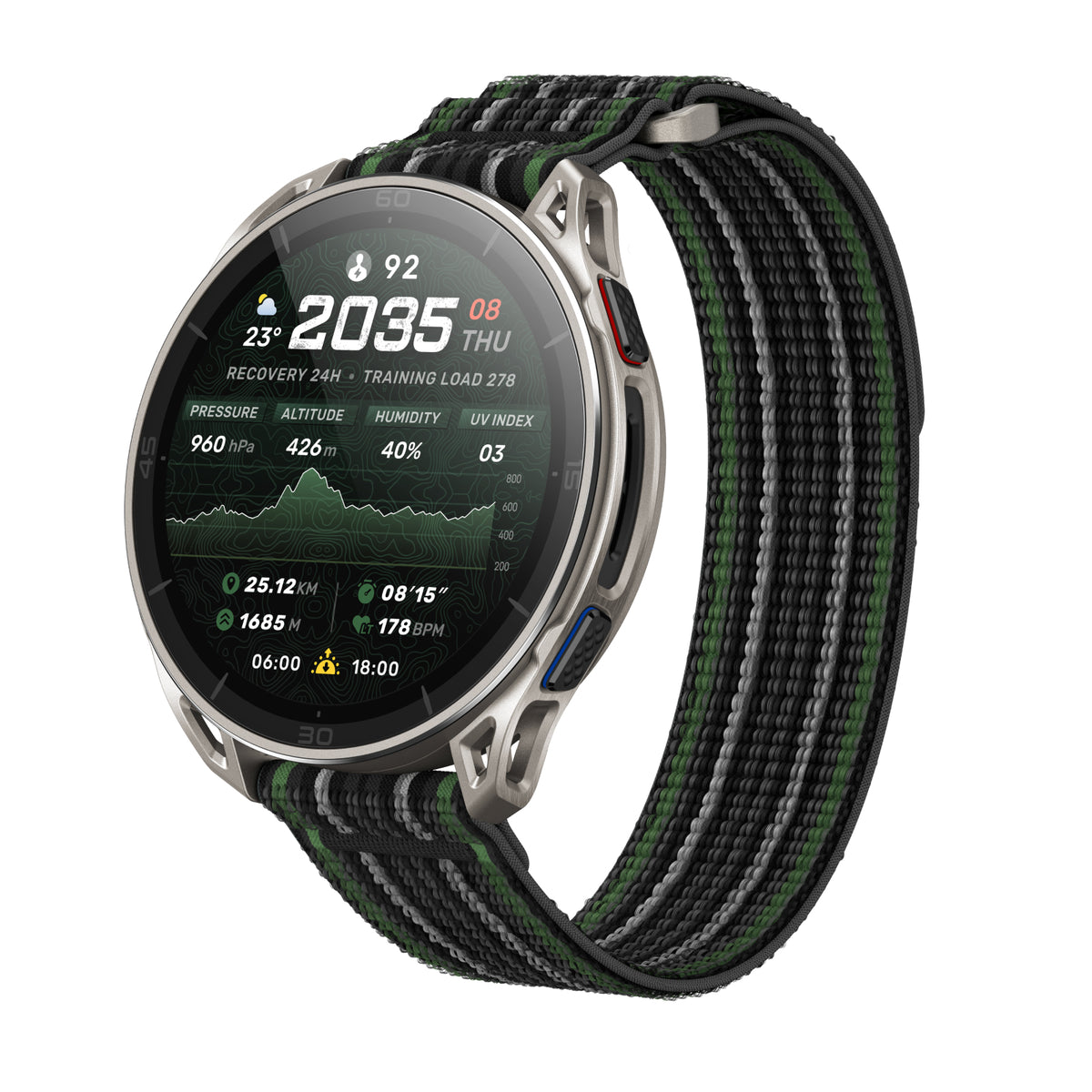 |
Amazfit Cheetah 2 Ultra | The Cheetah 2 Ultra is the main pick for readers who want a premium AMOLED trail-running watch with offline maps, long GPS battery life and a lower-positioned price than Garmin’s flagship endurance models. | Check Price on Amazon |
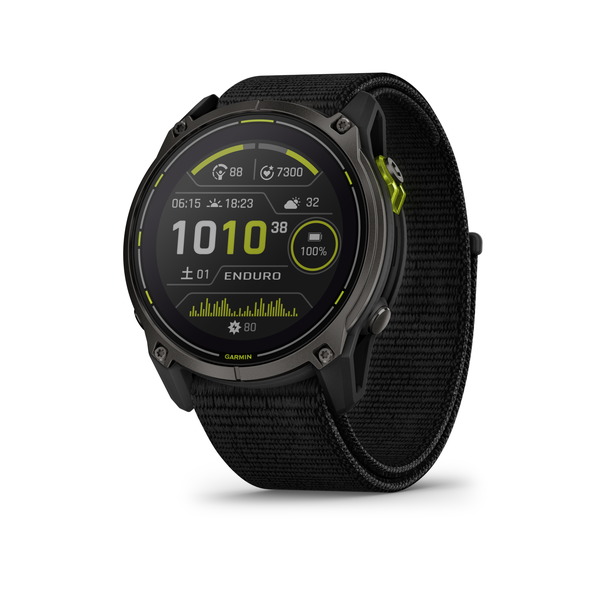 |
Garmin Enduro 3 | The Enduro 3 is the Garmin benchmark for buyers who value solar charging, established route tools and a mature outdoor-watch ecosystem. | Check Price on Amazon |
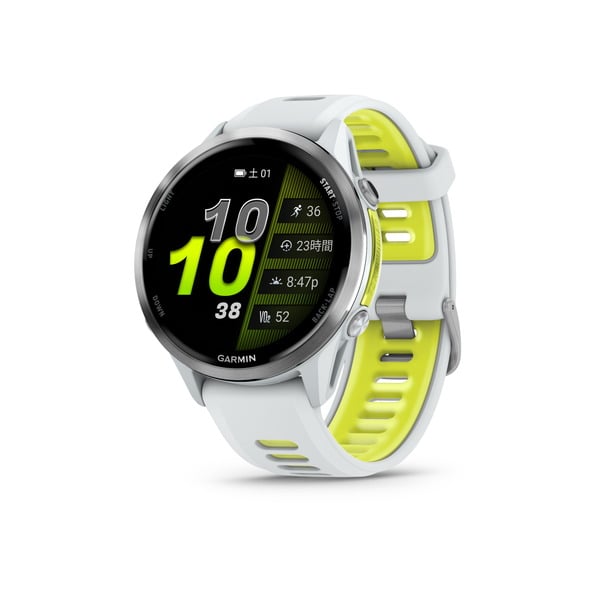 |
Garmin Forerunner 970 | The Forerunner 970 is a strong alternative for runners who want Garmin’s training platform in a more run-focused package than the Enduro line. | Check Price on Amazon |
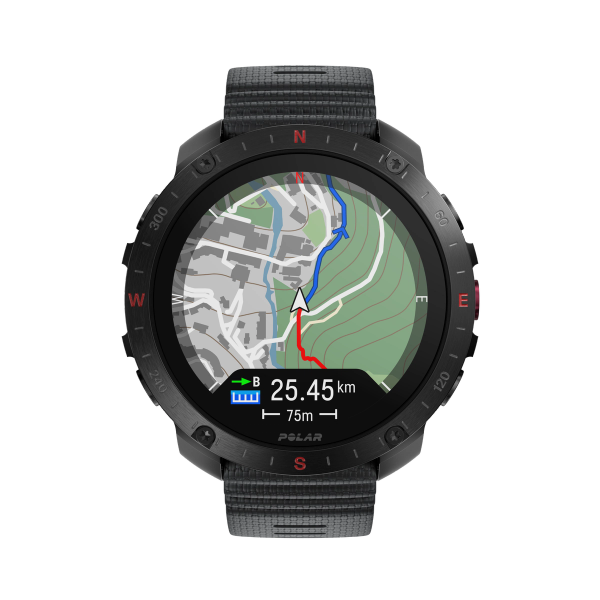 |
Polar Grit X2 Pro | The Grit X2 Pro belongs in the comparison for readers who want an outdoor-focused AMOLED watch with offline maps, dual-frequency GPS and Polar’s training tools. | Check Price on Amazon |
As an Amazon Associate I earn from qualifying purchases.
Price and positioning
The Cheetah 2 Ultra sits at the expensive end of Amazfit’s range. The source material places it around £600 / €600 / $600, with the Garmin Enduro 3 and Garmin Fenix 8 Pro positioned above it. Because retail prices and discounts move quickly, it is better to treat those figures as a pricing snapshot rather than a permanent buying fact.
What matters for the buying decision is the gap. The Cheetah 2 Ultra is being pitched as a premium endurance watch, not a cheap alternative. Its appeal comes from offering many of the features runners expect from high-end outdoor watches while undercutting the biggest Garmin rivals.
That makes the comparison more interesting than a simple cheaper-versus-better argument. If you want Garmin’s solar charging, map platform and long-established training environment, the Enduro 3 still has a clear case. If you mainly want a tough AMOLED running watch with maps, long battery life and credible GPS performance, Amazfit gives you a reason to pause before spending more.
Design and build quality
Amazfit’s rugged watches can sometimes look busy, but the Cheetah 2 Ultra is cleaner than that. It still looks like a sports watch, and it is not small, but it avoids some of the visual clutter associated with chunkier outdoor models.
The watch measures 47.4 x 47.4 mm and is 13.3 mm thick according to the supplied specifications. The case and bezel are listed as Grade 5 titanium alloy, with four push buttons around the edge of the case. That combination matters because trail-running watches need to be usable with sweaty hands, gloves or rain, and physical controls remain more dependable than a touchscreen during harder sessions.
At 52g, the Cheetah 2 Ultra is lighter than the 63g Enduro 3 figure cited in the source material. That difference may not sound huge on paper, but wrist weight is one of those details runners notice over longer efforts. The watch is still large enough to feel purposeful, yet it does not come across as a brick.
The display is a 1.5-inch AMOLED panel with a 480 x 480 resolution and a stated peak brightness of 3,000 nits. It is protected by sapphire glass. The brightness figure lines up with what many premium AMOLED sports watches now aim for, and it helps the Cheetah 2 Ultra feel like a modern alternative to memory-in-pixel watches.
There is also a built-in flashlight with white light, red light and SOS modes. It is a small feature until you need it: finding something in a tent, moving through a dark hallway before an early run, or adding a little visibility at the roadside.
Amazfit says the watch has military-standard testing, but the exact certification detail was not clear in the supplied material, so that claim is best treated cautiously. The more straightforward durability spec is 5 ATM water resistance. That is suitable for everyday water exposure and swimming-style use, but it is not a diving certification.
Core specs at a glance
| Feature | Amazfit Cheetah 2 Ultra | Why it matters |
|---|---|---|
| Case material | Grade 5 titanium alloy listed in supplied specs | Premium feel with lower weight than many steel designs |
| Display | 1.5-inch AMOLED, 480 x 480, up to 3,000 nits | Bright, sharp screen for maps and workout data |
| Water resistance | 5 ATM | Suitable for wet weather and pool use, not diving |
| Positioning | Dual-band GPS with six satellite systems listed | Important for reliable outdoor tracking |
| Storage | 64 GB | Mainly useful for offline maps |
| Battery claim | Up to 30 days typical use; up to 60 hours GPS | The headline endurance promise |
Health, training and smartwatch features
The Cheetah 2 Ultra is aimed at trail runners, but it includes a broad set of health and fitness tools. Around-the-clock tracking covers heart rate, blood oxygen saturation, stress and skin temperature. Sleep tracking includes sleep stages, HRV, breathing quality, daytime naps and a nightly sleep score.
There are alerts for unusually high or low heart rate, low blood oxygen and elevated stress, along with guided breathing prompts. Amazfit’s PAI health assessment system is also present, as are heart-rate recovery tracking and menstrual cycle monitoring.
For runners, the feature list is much more serious than step counting and pace summaries. The watch supports structured workouts, Zepp Coach training plans, running power, lactate-threshold analysis, ground contact time, virtual pacing and a track-running mode with trajectory correction. Those tools are available without requiring an external sensor, though external accessories can still be paired.
Supported sensor types include heart-rate straps, cycling power meters, cadence sensors and running power pods. That matters for buyers who may start with wrist-only tracking but later want more precise training data.
The watch also supports more than 180 sports modes. It can automatically recognise 25 strength-training movements and eight common sports activities. One useful distinction in the source testing is that automatically logged walks and runs can contribute to workout load, which may lead to more realistic recovery estimates for people who move a lot outside formal workouts.
Smartwatch features are broad rather than luxurious. You get phone notifications, weather, to-do lists, voice memos, event reminders, morning briefings, Pomodoro timers, Find My Phone and Bluetooth camera control for iPhone users. There are Bluetooth music controls, but no offline music storage was noted in the source material.
Zepp Flow, Amazfit’s AI voice assistant, is included. Whether that is useful depends on how much you actually want to talk to your watch. For many buyers, it will be secondary to GPS, battery life and maps.
Mapping is the biggest step forward
Offline mapping is one of the Cheetah 2 Ultra’s most important upgrades. The watch can show base maps, contour maps and ski resort maps, which makes it far more useful for trail running and hiking than a watch limited to breadcrumb navigation.
Maps are downloaded through the Zepp app rather than directly on the watch. The process described in the source material was straightforward, but it was not as polished as Garmin’s approach. Instead of downloading a full countrywide topo map, the user selected square map sections and transferred them individually.
That section-based method works, and one large selected area reportedly covered a substantial part of Great Britain with a 640 MB download including base map, contour and ski data. Still, it is less elegant than choosing a national map package and letting the watch ecosystem handle the rest.
Once maps are loaded, the experience sounds much stronger. Contour lines help with terrain awareness, while turn-by-turn navigation and route guidance make the watch more useful on unfamiliar trails. A software update also added full-route and segment elevation profiles with colour-coded gradient difficulty, plus waypoint saving with expanded icons.
That is exactly the kind of progress Amazfit needed. A premium trail-running watch cannot stop at long battery life and a bright display. It has to help you understand where you are, where the climb starts and how to get back on route when the trail gets messy.
Garmin still has the advantage in route planning and mature navigation tools. But the Cheetah 2 Ultra is close enough that many runners may care less about the ecosystem gap, especially if they usually load routes ahead of time and want clear on-watch guidance rather than deep expedition planning.
GPS and heart-rate performance
In the source testing, the Cheetah 2 Ultra was compared with Garmin’s Forerunner 970 and Fenix 8 Pro. On the tested routes, mile markers lined up with the Garmin watches, which is a strong practical sign for everyday running accuracy.
There is an important caveat: the testing area had a good view of the sky, so the watch was not pushed into the hardest GNSS conditions. Dense cities, wooded valleys and steep terrain are where GPS watches tend to reveal their weaknesses. Based on the supplied testing, the Cheetah 2 Ultra appears accurate in favourable conditions, but the evidence does not prove it will match Garmin everywhere.
Heart-rate performance was mostly encouraging, with one notable exception. During one 5K run, the Amazfit held the heart-rate reading above 160 bpm for the full run, while the Garmin Fenix 8 Pro suggested a lower range around 135-140 bpm. Other sessions looked more in line, so this may have been an isolated reading rather than a systematic problem.
Still, it is worth taking seriously. Wrist-based optical heart rate can be affected by fit, skin temperature, movement and cadence lock, and serious training decisions are still better made with a chest strap or reliable external sensor. The Cheetah 2 Ultra can connect to one, which gives buyers a practical way around the limitation.
Battery life and charging
Amazfit rates the Cheetah 2 Ultra for up to 30 days of typical use and up to 60 hours of GPS tracking from its 780mAh battery. Those are ambitious figures, but the source testing suggests they are not wildly out of reach.
In general smartwatch use, the watch dropped from 72% to 63% over two days without recorded workouts. If that rate continued, it would suggest around 22 days of smartwatch use. Battery drain is rarely perfectly linear, so that should be read as a rough indicator rather than a guarantee.
A short 23-minute outdoor run used about 1% of battery. A longer GPS walking session lasting one hour and 40 minutes dropped the watch from 28% to 25%, which points toward GPS endurance in the same broad area as Amazfit’s 60-hour claim.
For most buyers, the practical takeaway is simpler: the Cheetah 2 Ultra should be able to handle regular training without demanding constant charging. Heavy GPS use, mapping, high brightness and active health monitoring will reduce battery life, but the tested figures suggest it has the endurance expected from this class of watch.
Charging is serviceable rather than fast. The source test recorded around 80% in about 40 minutes and a full charge in roughly 85 minutes, with the watch drawing a modest 3W. That suggests Amazfit is prioritising controlled charging and thermal management over aggressive speed.
The missing feature, compared with the Garmin Enduro 3, is solar charging. If you want the longest possible off-grid endurance and you spend a lot of time outside, Garmin still has a meaningful advantage there. If you mostly train, hike and charge at home between longer outings, the Cheetah 2 Ultra’s battery life should be enough for many users.
How it compares with Garmin Enduro 3
The Cheetah 2 Ultra is best understood as a Garmin alternative, not a Garmin clone. It competes on the things many buyers notice immediately: build, display, GPS, battery life, mapping and price. Garmin fights back with ecosystem maturity, solar charging and deeper outdoor tooling.
| Decision point | Cheetah 2 Ultra advantage | Garmin Enduro 3 advantage |
|---|---|---|
| Display | Bright AMOLED with sharp map presentation | Designed for long outdoor endurance use |
| Battery | Strong claimed and tested endurance | Solar charging adds extra appeal for long outdoor use |
| Navigation | Offline maps, contours, route guidance and waypoints | More mature map downloads and route ecosystem |
| Price | Positioned lower than Garmin’s flagship endurance models in the source material | Higher cost, but with Garmin’s established platform |
| Training tools | Broad running metrics and external sensor support | Longstanding Garmin training environment |
The buyer decision comes down to how much Garmin’s platform matters to you. If your routes, workouts, accessories and history already live in Garmin Connect, the higher price may be easier to justify. If you are not tied to Garmin and want a premium trail-running watch with a strong spec sheet, the Cheetah 2 Ultra is much harder to dismiss.
Verdict: should you buy The Amazfit Cheetah 2 Ultra?
The Amazfit Cheetah 2 Ultra feels like the brand’s most credible shot at a true premium running watch. It combines a titanium build, bright AMOLED display, offline maps, practical navigation tools, broad training features and strong battery life in a package that undercuts Garmin’s top endurance watches in the pricing snapshot supplied.
Its best quality is balance. This is not simply a good watch for the money; it is a capable sports watch with enough substance to make the savings feel like a serious part of the decision rather than the whole argument.
There are reasons to hesitate. Garmin still has the more polished navigation ecosystem, solar charging remains a real Enduro 3 advantage, and Amazfit’s tile-based map downloads could be smoother. The heart-rate anomaly from one test run also means buyers who care about precise intensity data should plan to pair an external heart-rate strap.
But those issues do not erase the bigger point. For runners and hikers who want a premium endurance watch with offline maps, long battery life and a modern AMOLED screen, the Cheetah 2 Ultra is a strong Garmin alternative. It is especially compelling if you want the core outdoor-watch experience without paying for every part of Garmin’s flagship ecosystem.