


Google Fitbit Air is built around a simple pitch: health tracking without turning your wrist into another screen.
The $99.99 wearable is a screenless Fitbit tracker that focuses on passive monitoring, sleep tracking, automatic activity detection, and Google Health Coach features powered by Gemini. Instead of showing notifications, apps, or workout stats on the device itself, Fitbit Air pushes the experience into the Google Health app on a phone.
That makes it a very different buy from a Pixel Watch, Apple Watch, or more traditional Fitbit band. The appeal is not that it does more. It is that it tries to do less, stay out of the way, and keep collecting health data while you sleep, work, and exercise.
Fitbit Air at a glance
| Feature | What buyers should know |
|---|---|
| Price | $99.99 |
| Display | No screen |
| Main app | Google Health app |
| Battery life | Up to one week |
| Fast charging | Five minutes of charging can provide up to one day of use |
| Subscription | Includes a three-month Google Health Premium trial, then $9.99 per month unless cancelled |
| Compatibility | Most phones running Android 11 or newer, or iOS 16.4 or newer |
Why Fitbit Air is different
Most wrist wearables are trying to become smaller smartphones. They show texts, run apps, surface calendar alerts, stream workout data, take calls, and compete for the same few square inches of attention as a watch.
Fitbit Air goes the other way. It has no display and no smartwatch-style interface. The device is designed as a low-profile tracker that sits on the wrist and sends health and fitness data to the phone app.
That makes the screenless design both its biggest selling point and its biggest compromise. It is better suited to people who want background tracking than people who want glanceable stats during a run or quick notifications from their wrist.
It makes the most sense for buyers who want:
- Sleep tracking without wearing a bulky smartwatch
- Basic health and fitness data without constant notifications
- A lightweight tracker for all-day and overnight wear
- Longer battery life than many full-featured smartwatches
- Fitness insights they are comfortable checking on a phone
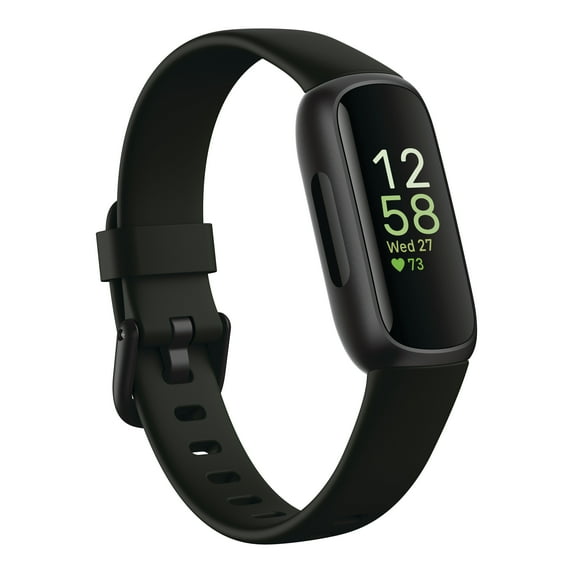
Fitbit Inspire 3
Fitbit Inspire 3 keeps the compact tracker format while adding a small screen for basic wrist checks. It is a better fit if you want sleep and activity tracking but are not ready to give up a display entirely.
As an Amazon Associate I earn from qualifying purchases.
Design and comfort
Fitbit Air uses a small pebble-style module that fits into swappable bands. That should make it easier to change the look or feel of the tracker without replacing the main device.
Google describes it as Fitbit’s smallest tracker so far, and the overall idea is clear: the less you notice it, the more useful it becomes for continuous tracking. That matters most at night, where even good smartwatches can feel too large, too bright, or too battery-constrained for some users.
There are also band options aimed at different use cases. The Stephen Curry Special Edition uses rye brown and game-day orange styling, with a raised interior print designed for airflow during more intense movement.
Health and fitness tracking
Fitbit Air is meant to cover the core Fitbit use cases: daily activity, sleep, heart-rate tracking, and general wellness signals. The device can automatically detect common workouts, and users can also start workouts from the Google Health app or manually log activity.
That matters because the lack of a screen changes how workouts feel. You are not buying this to stare at pace, splits, or detailed stats mid-session. You are buying it to record the session and review the data afterward.
For casual exercisers, that may be enough. For runners, cyclists, or anyone who wants live workout feedback on the wrist, a smartwatch or a more advanced fitness watch is still the better fit.
Google also notes that health tracking features are not medical tools. AFib-related features may have eligibility and availability limits, so buyers should treat Fitbit Air as a wellness tracker, not as a diagnostic device.
Sleep may be the strongest use case
Fitbit Air’s best argument may be sleep tracking. Many people who like smartwatches during the day do not want to wear them overnight. They can feel bulky, light up at the wrong time, or need to charge before morning.
Fitbit Air avoids some of that friction with a smaller, screenless design and up to a week of battery life. It can track sleep duration, sleep stages, and related health signals, with the results appearing in the Google Health app.
Google also positions the tracker as something that can work alongside a Pixel Watch, with the watch used during the day and Fitbit Air worn at night. That gives the Air a useful niche: it can be the quieter part of a broader wearable setup rather than the only device on your wrist.
Google Health Coach and the subscription question
The most important buying detail is the subscription model.
Fitbit Air includes a three-month Google Health Premium trial. After that, Google Health Premium renews at $9.99 per month unless cancelled. Google AI Pro and Ultra subscribers get Google Health Premium included at no extra cost.
The tracker still works without Premium, but the more advanced coaching experience is tied to the paid tier. Google Health Coach uses Gemini-powered guidance to provide more personalized fitness, sleep, and wellness recommendations based on user data.
That means Fitbit Air has two different value propositions. At $99.99, it is a relatively affordable screenless tracker for basic health and activity data. With Premium, it becomes part of a more guided coaching system. Buyers should decide which version they actually want before treating the low upfront price as the whole cost.
Fitbit Air vs. a smartwatch
| Choose Fitbit Air if… | Choose a smartwatch if… |
|---|---|
| You want passive tracking without a display | You want notifications, apps, and quick wrist controls |
| You mainly review data in a phone app | You want live workout stats on your wrist |
| You care most about sleep, comfort, and simplicity | You want calling, messages, maps, or music controls |
| You want a lower upfront price | You are willing to pay more for broader features |
Who should buy it?
Fitbit Air is not trying to replace every wearable. It is a better fit for people who already know they do not want a smartwatch, or for people who want a second wearable that is easier to sleep in.
It is worth considering if you want a quiet health tracker, care more about trends than live stats, and are comfortable using your phone as the main dashboard. It is less compelling if you want a display, built-in workout controls, or smartwatch features.
The bigger question is whether Google Health Premium is part of the appeal. If the AI coaching is the reason you are interested, the subscription cost matters. If you only want a small, screenless tracker for sleep, activity, and wellness data, Fitbit Air’s basic experience may be the more practical reason to buy.
At $99.99, Fitbit Air gives Google a lower-friction way into the screenless tracker category. Its success will depend on whether buyers see the lack of a screen as freedom from distraction, not as a missing feature.